Why Your Brain Might Be the Best Doctor

By Alan Chen
~ 4 minutes ~
Let’s talk about the infamous Henry Beecher: As the story goes, while treating wounded soldiers during World War II, Mr. Beecher ran out of the analgesic drug morphine. To continue his operations, he allegedly told his patients that he was injecting them with morphine when, in reality, he injected them with salt water instead. Surprisingly, despite the substitute having no pain-relieving effects, forty percent of patients reported experiencing no pain.* Mr. Beecher would go on to publish
The Powerful Placebo, a seminal paper establishing the placebo effect (Perry, 2012).
*It is important to note that this story is not backed by any modern evidence and is likely greatly exaggerated.
Imagine you’re playing a video game and your younger sibling asks if they can join. Naturally, you hand them a controller, one that is not plugged in and serves no purpose. In the following minutes, you watch as they flip the joystick around in circles and even press a button here and there. And as you notice the newfound glimmer in their beady little eyes, you can see that their underdeveloped brain really believes that they are controlling the game.
The placebo effect works similarly. A fake treatment, or a placebo, leverages a patient’s pre-existing expectations and natural brain chemistry to create a false positive effect (Better Health Channel, 2021). Since the brain controls the entire human body, if you believe a medicine is working, your body will respond accordingly. Even in the absence of an active treatment, the body can still increase dopamine and endorphin levels while lowering cortisol (Wager & Atlas, 2015). The conditions that are most affected by placebos are usually those already controlled by the brain itself, including stress, nausea, and fatigue. Primarily physical conditions, such as a broken bone, will not be as receptive to the placebo effect (Wager & Atlas, 2015).
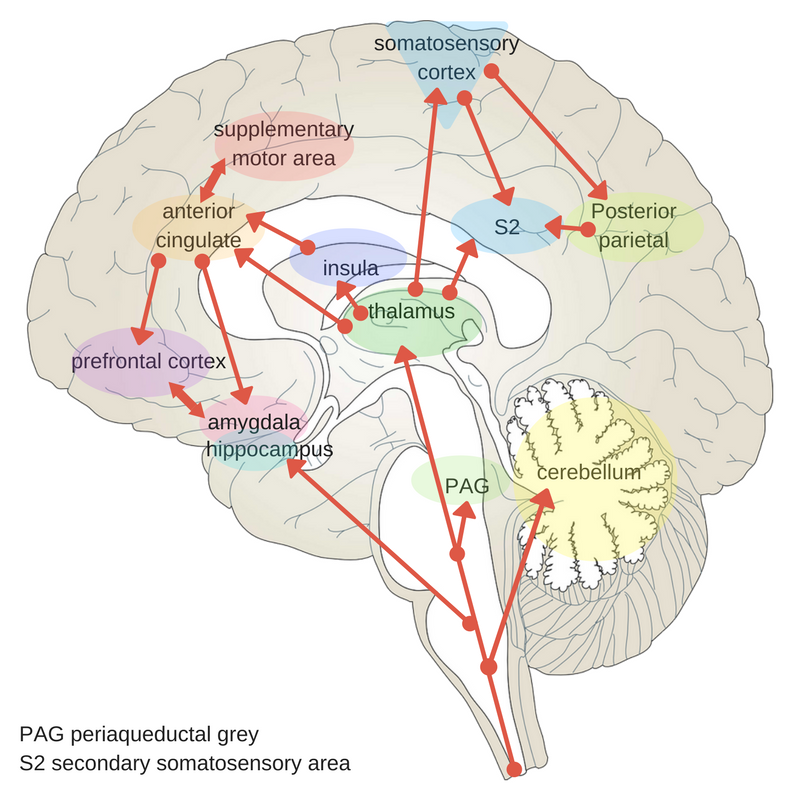
This effect has been widely documented in numerous clinical trials. Consider a study involving two groups: one group receives a genuine medicine, while the other receives an identical but inert one. Within the following days, many individuals from the placebo group report pain relief nonetheless. While it’s easy to chalk this up to imagination, there is a real neurological explanation for this. Placebo treatments produce reduced activity in brain regions associated with pain, including the medial thalamus, anterior insula, and dorsal anterior cingulate cortex (Wager & Atlas, 2015). Even though the individual has received no physical healing, the brain has nonetheless altered how it communicates pain.
The physical presentation of a placebo is also important. Studies have shown that larger pills produce a stronger effect than smaller ones, and that the quantity of pills has a positive relationship with the effect as well. Injections tend to produce more significant results compared to pills (Better Health Channel, 2021).
But just as the placebo effect can produce positive outcomes, the opposite phenomenon can produce negative ones. This “nocebo” effect occurs when negative expectations lead to negative physical results even in the absence of a harmful factor (Better Health Channel, 2021). Mentioning potential pain can cause the release of cortisol and other hormones (Wager & Atlas, 2015). Notably, one study found that when participants were warned about potential headaches, they released higher levels of prostaglandin, a pain-causing compound. Furthermore, these levels were able to be reversed via a placebo (Wager & Atlas, 2015). In other words, the brain is more active than it may seem; it is not only reacting to what happens but also to what it expects to happen. This draws attention to how doctors should describe a medication to a patient. While an exhaustive list of a medication's potential side effects is legally required, it may also increase the odds of a patient experiencing those same effects.
The power of the placebo has spurred significant debate over the ethics of its use. Placebo treatments are a key tool in research, helping separate the psychological effects of treatments from the actual benefits of a drug (Better Health Channel, 2021). This helps determine whether a developing medication really works or if its benefits are simply a result of the context in which it was administered. However, critics argue that the placebo effect violates the moral principles of medicine. The very concept of a placebo depends on the deception of the person receiving it. This deception, even with good intentions, naturally raises ethical concerns (Better Health Channel, 2021).
Scientists have experimented with ‘open-label’ placebos, where patients are told upfront that they are taking a non-functional pill. Shockingly, in these scenarios, the effect can persist despite the patient knowing the treatment should have no effect (von Wernsdorff et al., 2021). This may be because the context of a clinical study and the physical action of taking medicine are enough to cause the perception of improvement, but research is ongoing regarding this phenomenon (von Wernsdorff et al., 2021). Open-label placebos present the possibility of harnessing the healing responses triggered by the placebo effect without requiring any deception.
Of course, these capabilities do not mean that all pain is imaginary, nor that you can fool someone out of an illness. A placebo cannot shrink a tumor; it cannot close a wound or cure an infection. But what this effect shows is that the mind and the body are much more interconnected than one may assume, and that the lead-up to a treatment should be viewed as part of the treatment itself.
References
Better Health Channel. (2021, July 23). Placebo effect. Vic.gov.au. https://www.betterhealth.vic.gov.au/health/conditionsandtreatments/placebo-effect
Perry, S. (2012). The Power of the Placebo. Brainfacts.org. https://www.brainfacts.org/archives/2012/the-power-of-the-placebo
von Wernsdorff, M., Loef, M., Tuschen-Caffier, B., & Schmidt, S. (2021). Effects of open-label placebos in clinical trials: a systematic review and meta-analysis. Scientific Reports, 11(1). https://doi.org/10.1038/s41598-021-83148-6
Wager, T. D., & Atlas, L. Y. (2015). The Neuroscience of Placebo effects: Connecting context, Learning and Health. Nature Reviews Neuroscience, 16(7), 403–418. https://doi.org/10.1038/nrn3976