
The Golden Record: Earth's Time Capsule in Space

By Prisha Sagar
~ 6 minutes ~
What message would you send if you had the chance to represent all of humanity to the universe?
In 1977, NASA launched the fundamental ideas of life into the vast universe. The universe is defined as the entirety of all existence; this includes every concept known to man: life, matter, time, space, and energy. Meanwhile, the small 12-inch disk contains what we describe as life: the evidence of all living organisms. When NASA first launched the Golden Record into space, they had one main goal in mind: to “portray the diversity of life and culture on Earth” (NASA Science, 2025). To understand the message NASA hoped to send, we must first examine what the Golden Record contains, how it was intended to be used, and why it remains one of humanity's most remarkable achievements.
What is the Golden Record?
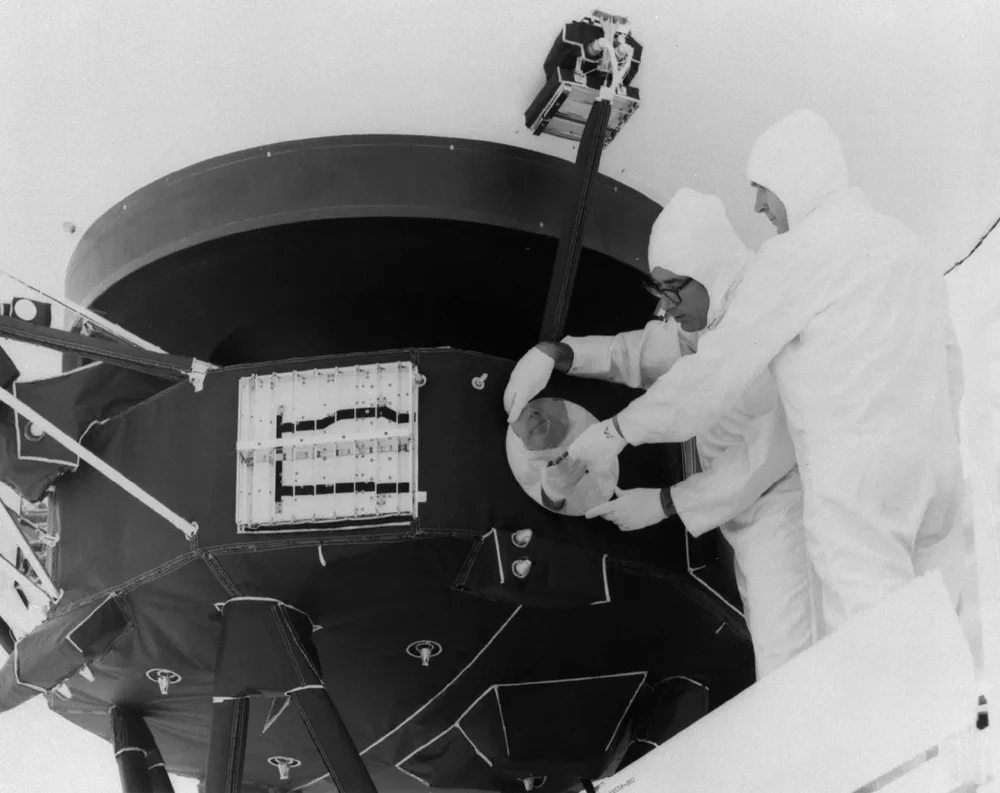
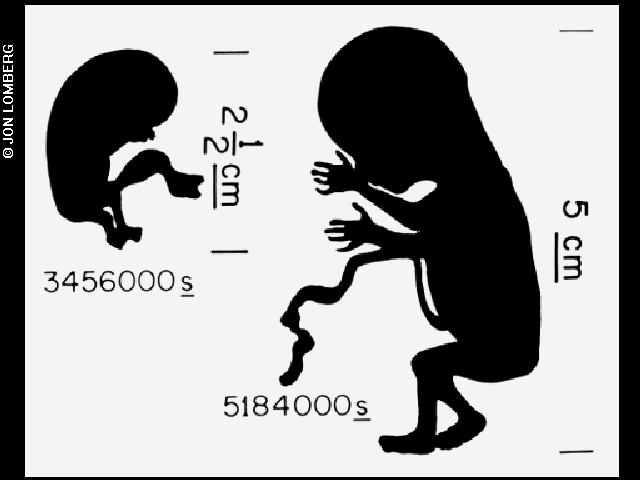
Although the Golden Record spans only 12 inches in diameter, it holds an extraordinary collection of Earth's history, culture, and life. The disk contains exactly 155 images to demonstrate what life on Earth is like. These images include birth, scientific concepts, music, space, education, exercise, culture, evolution, buildings, shopping, traffic, airplanes, and technology. Together, they were chosen to showcase the many aspects of humanity and life on Earth to extraterrestrial life.
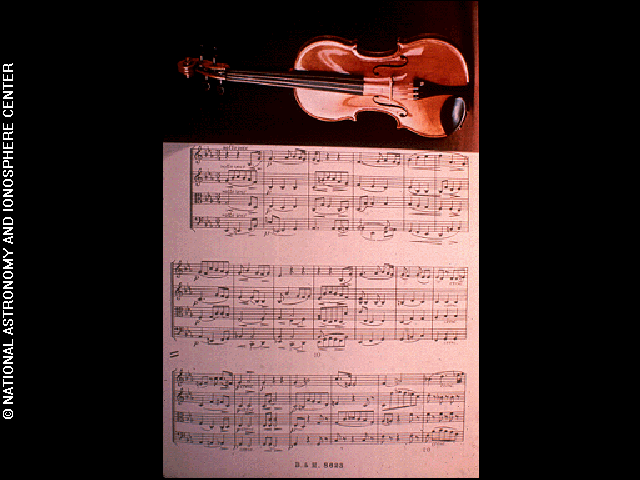
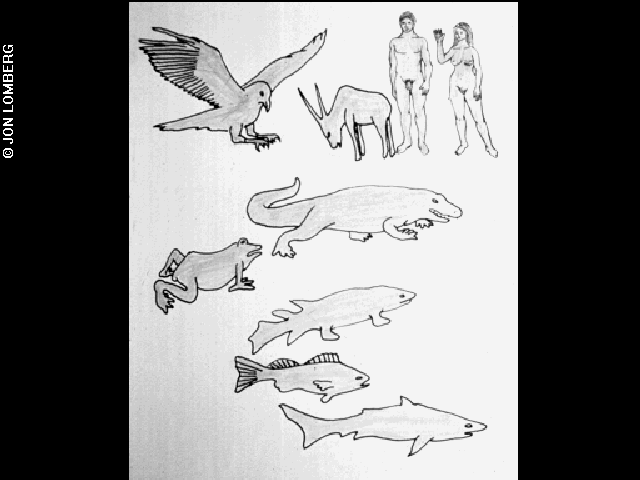
The designers of the Golden Record also selected a wide variety of sounds that they believed would depict the curious and intricate nature of humanity. They included animal sounds, 55 modern and ancient languages, weather, and music spanning different historical time periods. More specifically, the disc features whale noises, a baby crying, a heartbeat, and 90 minutes of music ranging from the medieval era to modern-day pop and jazz, all chosen to represent the diversity of life on Earth.
A deep-dive into each side of the record
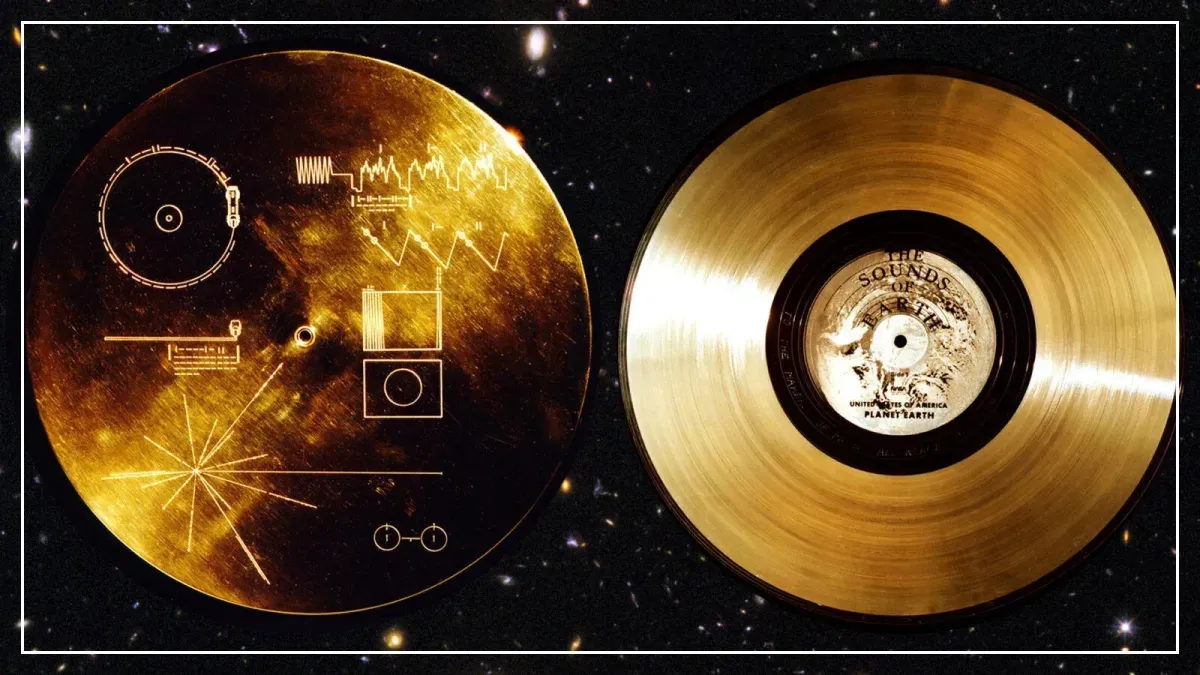
So, how would extraterrestrial beings decipher how to play the record? The record is engraved with a series of step-by-step diagrams that explain how to play and decode its contents. The circle diagram represents the record itself and the correct positioning of the stylus—the small needle that reads the grooves of the record and converts them into electrical signals. Beneath the engraving of the record is a side view of it, depicting the same message in a different way. The top-left diagram is surrounded by binary numbers that translate to 3.6, the number of seconds required for one rotation of the record. Instead of human-made measurements, the plaque uses binary numbers that another civilization would be more likely to understand. These symbols represent the time required for the hyperfine transition of a hydrogen atom, a universal constant equal to about 0.7 billionths of a second. Meanwhile, the diagram below the circle is the side view of the record surrounded by binary numbers that indicate the total amount of time required to play the entire record (60 minutes).
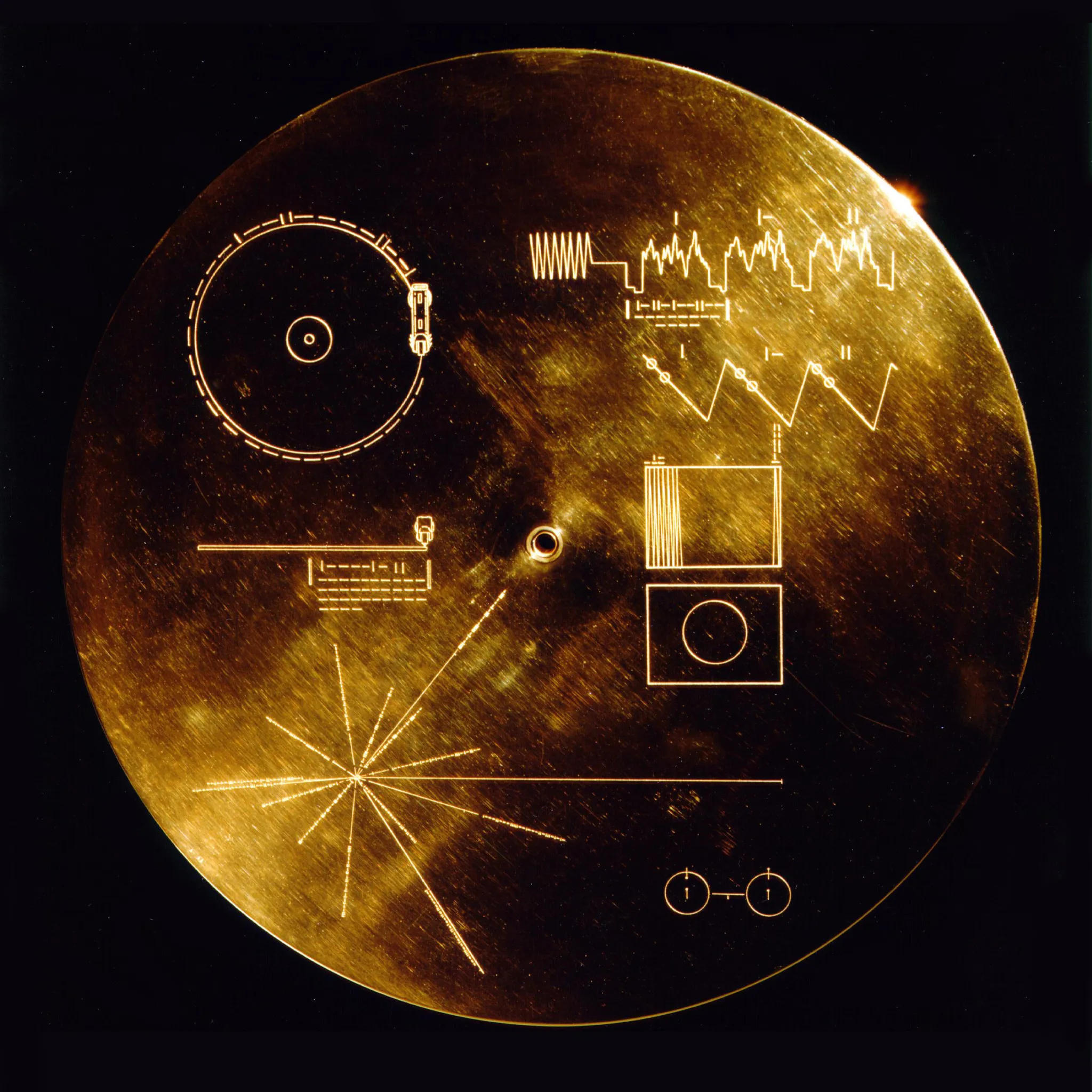
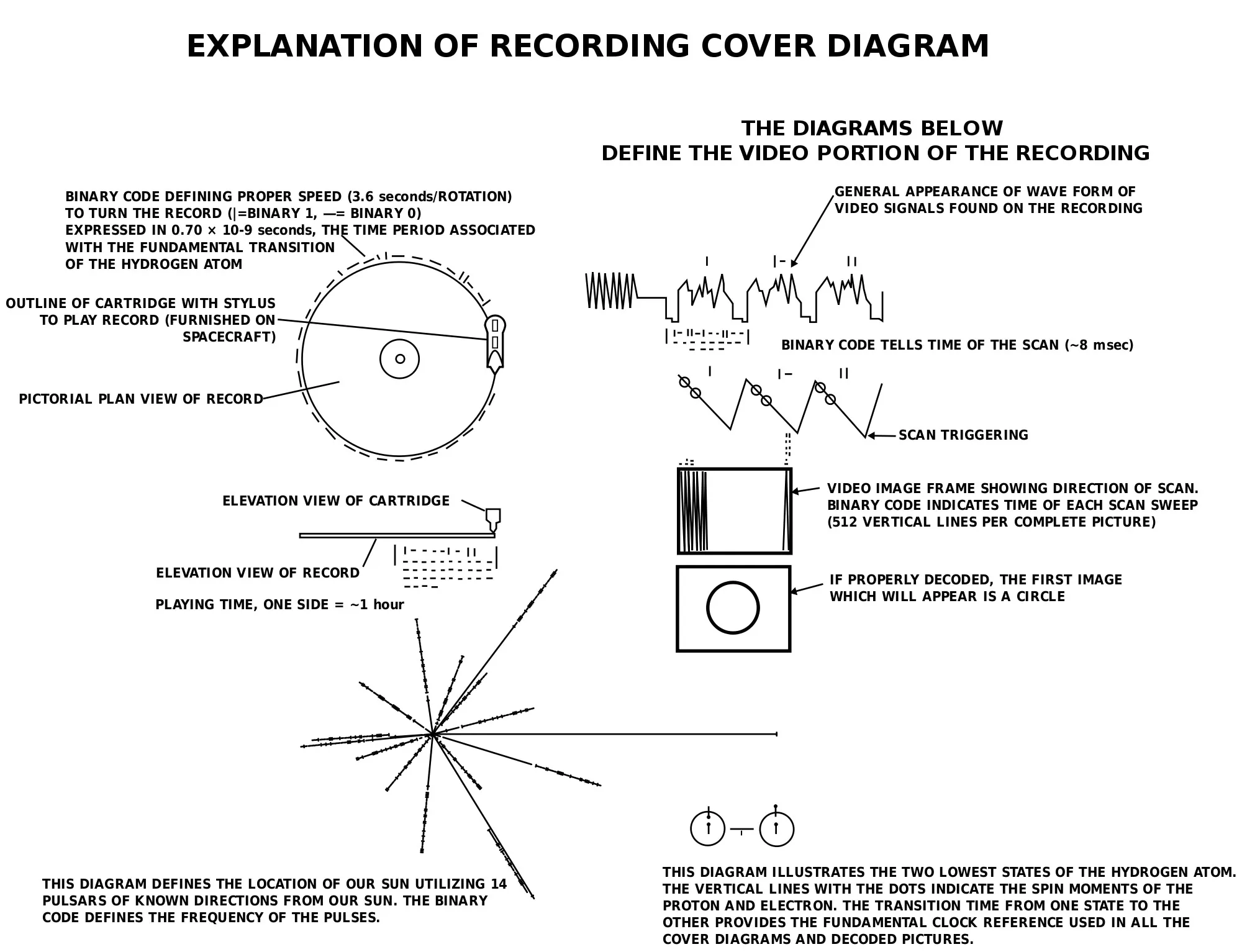
The binary numbers also indicate that each image contains 512 vertical lines and that each line lasts about 8 milliseconds. The bottom-left diagram, known as the pulsar map, symbolizes the location of the Sun. The large engraved star at the center of the radiating lines represents the Sun, while the 14 surrounding lines point toward nearby pulsars, each labeled with binary numbers representing its pulse frequency. Finally, the diagram in the lower right depicts two hydrogen atoms in different spin states; the small arrows extending from each circle represent the spins of the proton and electron. The line between the two states shows that they are interchangeable through a process known as the hyperfine transition of hydrogen. During this transition, a hydrogen atom emits a radio wave with a wavelength of 21 centimeters (1,420 MHz), creating a universal standard for measurement.
Together, they demonstrate how to reconstruct each image one line at a time. After all 512 lines are put together, an image should appear. NASA intentionally made the first image a circle so that whoever discovered the record could verify they had decoded it correctly. If the circle appeared stretched or distorted, they could assume something had gone wrong during reconstruction. Overall, the intricate diagrams engraved on the Golden Record serve a purpose far beyond decoration. Together, they provide a universal instruction manual that explains how to play the record, decode its images, and understand its measurements without relying on any human language.
In today's world, one might argue that the Golden Record no longer holds the same importance because it has gradually grown outdated. As time passes and life on Earth continues to evolve, the record may no longer provide a completely accurate representation of humanity. It’s also possible that aliens may never even find the disk in the first place! Howells, a public education specialist at The Planetary Society, believes otherwise;
“Even if that message in a bottle is never intercepted, the Voyager Golden Records have made the human species, our planet, and our love immortal in the Universe.”
Regardless of discovery, the Golden Record serves as Earth’s time capsule, a constant reminder of what drives us, what inspires us, what defines us.
When NASA was tasked with sending a message that had to represent all of humanity to the universe, they came up with the Golden Record.
This begs the question- what message would you send?
References
Davis, P. (Ed.). (n.d.). Golden record contents - NASA science. What are the contents of the Golden Record? https://science.nasa.gov/mission/voyager/golden-record-contents/
Carney, S. (Ed.). (2026, May 7). Golden record cover - NASA science. The Golden Record Cover. https://science.nasa.gov/mission/voyager/golden-record-cover
Davis, P. (2025, April 7). Making of the golden record - NASA science. Making of the Voyager Golden Record. https://science.nasa.gov/mission/voyager/making-of-the-golden-record/
The Voyager Golden Record: Humanity’s message to the Cosmos – Astrography. The Voyager Golden Record: Humanity’s Message to the Cosmos. (n.d.). https://astrography.com/blogs/news/the-voyager-golden-record-humanitys-message-to-the-cosmos
Barnett, A. (Ed.). (2025, February 28). Images on the golden record. Images on the Golden Record. https://science.nasa.gov/gallery/images-on-the-golden-record/
Understanding turntable stylus types | audio-technica. Understanding Turntable Stylus Types. (2022, June 1). https://www.audio-technica.com/en-gb/press/understanding-turntable-stylus-types
Tran, M. (Ed.). (2024, October 29). What is the Universe? - NASA science. What is the Universe? https://science.nasa.gov/exoplanets/what-is-the-universe/
How to read a Pulsar map. How to Read a Pulsar Map. (n.d.). https://www.pbs.org/the-farthest/science/pulsar-map/
Nave, C. R. (n.d.). The hydrogen 21-cm line. The Hydrogen 21-cm Line. http://hyperphysics.phy-astr.gsu.edu/hbase/quantum/h21.html
Howells, K. (2025, April 29). The Voyager Golden Records: A cosmic Love… | the planetary society. The Voyager Golden Records: A cosmic love letter. https://www.planetary.org/articles/the-voyager-golden-records