The Digitization of Misogynistic Beauty Standards in China

By Annabel Hao
~ 7 minutes ~
When I see my “raw” self, I see beauty staring back at me, but it’s obsolete beauty that in today’s beauty standards labels me as merely average-looking. As a young Chinese woman, I learned this the hard way.
Whenever I wear shorts, my parents seem to always say: “妹妹,你看一下你的大腿有多粗.” (Daughter, look at how thick your thighs are.)
When I forget to spread thick layers of sunscreen on my skin, my mom seems to always say: “妹妹,你会晒黑的.” (Daughter, you will tan and become dark-skinned.)
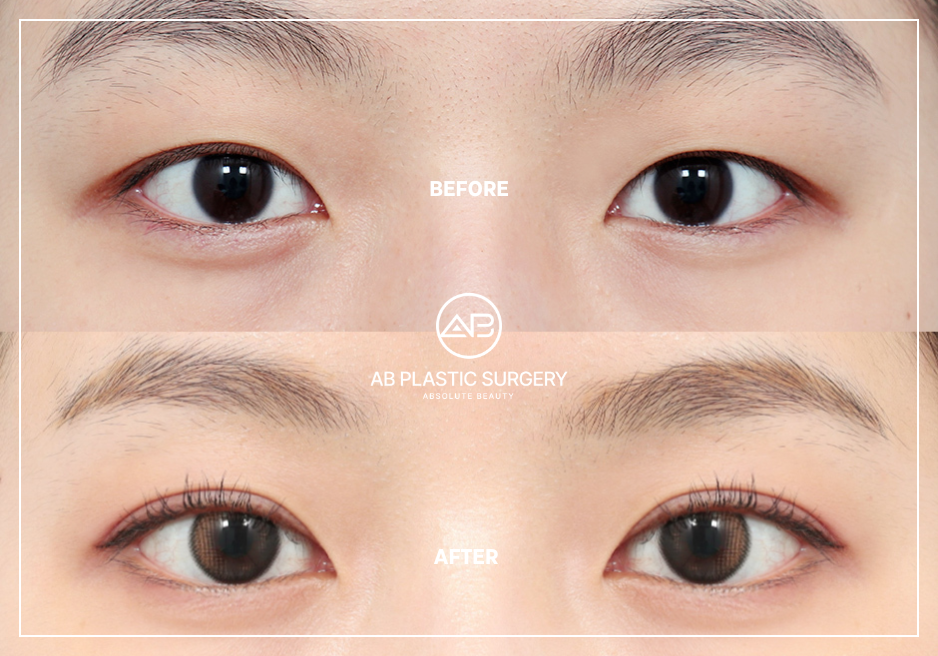
Whenever I visit my relatives back in China, they seem to alway say: “乐乐你的眼经这么真么小?” (Annabel, why are your eyes so small?) And when my double eyelids finally formed at the age of 12, my grandparents congratulated me earnestly- apparently relieved that they no longer needed to buy double eyelid tape for me anymore, or worry about my “ugliness” anymore.
Soon, the East Asian Beauty spectrum defined my own standard of beauty. I believed beauty meant an even skin complexion, pale and clear skin, an oval-shaped face, a V-shaped jaw, a narrow chin, pink lips, a well-defined Cupid’s bow, an obtuse jaw angle, a slim body figure, a small waist, square shoulders, defined collarbones, long legs, puffy aegyo-sal, double eyelids, a youthful appearance... the list goes on.
I recall a specific moment from the age of six: my family was traveling in Shanghai, and my mom told me to pose for a photo. As any other six-year-old would, I smiled for the camera and ran to see the photo after my mom beckoned me forward with a look of satisfaction. She proudly handed me the phone to look, but what I saw was a heavily filtered face that I was not familiar with. It was like a factory-made version of myself that was cut and shaved and manufactured to perfectly reflect those beauty demands. My eyes were bigger, my face smaller, the tip of my nose thinner, nose bridge higher, philtrum shorter, and chin pointier. That was my first exposure to beauty filters and face-editing apps. I was six years old.
It was obvious that my mom did not use the default camera app for my picture; instead, she used MeiTu - a popular Chinese beauty filter app that distorts and molds one’s features into a reflection of the beauty standards that define whether a female is attractive or not.
These filters quickly spread to the Chinese influencer world, scaling the so-called 美女 经济 or beauty economy, which captures Chinese society’s significant emphasis on a woman’s appearance and how one’s beauty dictates their success. Consumer capitalism describes the manipulation of consumer demand to the advantage of the sellers, and this concept directly ties a woman’s career success to her physical appearance. Oftentimes, industries are based entirely around a woman’s image and beauty, and women in these industries view their youth and appearance as an asset to be maximized before it depreciates.
When a woman’s economic mobility depends on her ability to appeal to the public, specifically male authority or patrons, the pressure to conform to beauty standards becomes a necessity rather than a personal choice.
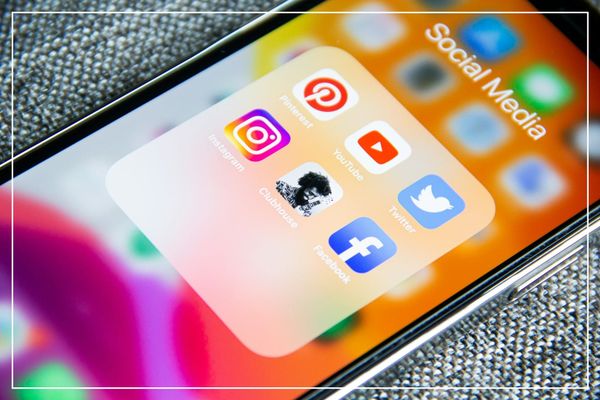
The beauty economy has existed in China across industries like sales, entrepreneurship, and entertainment for decades. However, platforms like Douyin, Xiaohongshu, and Meitu have effectively transformed the beauty economy into a global, digital market. Through live-streaming and short videos, everyday women can monetize their appearance via virtual “gifts” from viewers, sponsorships, and live-stream sales. This process birthed the concept “wanghong,” referring to the myriad of mainly female Chinese influencers who profit off of their own sexualization or beautification. Wealthy male viewers, often referred to as “big brothers” or “daddies” on platforms, spend massive sums of real money to buy digital gifts for female streamers. As a result, women in the wanghong economy feel compelled to mold their look in accordance with the male gaze, establishing the term “wanghonglian,” -or internet celebrity face- a standard facial model that many Chinese women seek to achieve. Many of the features that characterize a wanghonglian are only attained through plastic surgery or editing apps, leading to the popularization of beauty filters and cosmetic procedures among Chinese women.
Filters on apps like Meitu or Douyin do not just smooth skin or fix the lighting; they restructure the face and shape features. These filters reinforce a homogenous and rigid aesthetic that calls for a face so “perfect” that one’s original face and features must be surgically or digitally carved to resemble artificial ideals: pale skin, huge double-eyelid eyes, a high nose bridge, and an extremely pointed, V-shaped chin. Furthermore, fixation on extreme slenderness in China and across East Asia places intense pressure on female influencers to participate and create viral challenges that flaunt their collarbones, measure their waist, and lengthen their legs. These beauty trends, combined with the growth of filters in social media have encouraged uncanny and homogenous female beauty standards. Rather than highlighting the beauty of uniqueness, this beauty culture has insinuated an ideal of sameness across the demographic of young women who are encouraged to get cosmetic surgery to optimize their “bodily capital” in an intensely competitive beauty economy.
Evidently, the digital landscape for East Asian female influencers highlights the extreme convergence of beauty ideals, misogyny, and cultural fetishization in modern times. While social media platforms provide an opportunity for women to chase success and wealth, they also pressure women into rigid visual criteria, leaving these women uniquely vulnerable to dehumanization and sexualization from the public. Within platforms like Douyin and Xiaohongsu, female influencers are forced to navigate toxic double standards; they are encouraged to leverage their appearance but are simultaneously criticized for doing so. For example, live-streaming monetization heavily relies on viewers sending digital “gifts” that convert to cash, and as previously mentioned, this dynamic reinforces the “wanghong” concept, where female influencers are forced to satisfy the male-centric beauty ideals to succeed. Male patrons manipulate this dynamic to demand obedience and flirtation from female streamers. The moment an influencer asserts boundaries or refuses to perform, audiences frequently orchestrate massive online harassment campaigns, branding the woman a “lu cha biao” or green tea bitch- a term used to describe women who act innocent to get what they want. Additionally, the audience ironically harbors a deep resentment toward the very beauty filters and procedures they demand influencers to use. There is an entire subgenre of viral content dedicated to exposing what female influencers looked like before they received cosmetic surgery or when their beauty filters glitch. These exposures lead to violent body-shaming, punishing the influencer for failing to naturally embody an extreme standard that is impossible to achieve without technology. These trends only serve to emphasize the importance of a woman’s looks on social media, and it begs the questions when, how, and at what point can a woman’s safety, respect, and success no longer depend on her compliance with the male gaze?
While it’s undeniable that men in East Asia experience similar pressures to fit into beauty ideals, the standards for women are arguably much harsher and much more compulsory. Moreover, female beauty standards are not limited to East Asia; around the world, women are expected to turn their bodies into an object that alters itself for societal demands. In China, the demand is pale, thin, and youthful. In the Western realm, the demand shifts towards plump lips, tan skin, and hourglass figures. Both require intense, expensive, and often painful physical alterations to achieve.
Worldwide, female influencers face double standards. If they use their looks to build a successful platform online, they are dismissed as shallow, vain, or manipulative “clout-chasers.” If they refuse to conform to beauty standards, they are rendered invisible by an audience that prefers conventionally attractive bodies. Just like the live-streaming “gifting” culture in East Asia, Western platforms like OnlyFans, Twitch, and Instagram Live rely on wealthy patrons and parasocial relationships. Whether a woman is receiving gifts through livestreams in China or filming brand deals in America, the underlying structure is the same. Capitalism and patriarchy work hand-in-hand to ensure that a woman’s body remains a commodity used to build corporate wealth and status. Social media has not changed this historical power dynamic; it has simply digitized it and scaled it to a global level.
References
China Perspectives. (n.d.). China Perspectives [PDF document]. OpenEdition Journals. https://journals.openedition.org/chinaperspectives/pdf/6749
DiVA Portal. (n.d.). DiVA Portal [PDF document]. https://www.diva-portal.org/smash/get/diva2:1964802/FULLTEXT01.pdf
Honeysuckle Magazine. (n.d.). Current beauty standards, plastic surgery, racist trends, and the role of social media influencers. https://honeysucklemag.com/current-beauty-standards-plastic-surgery-racist-trends-and-the-role-of-social-media-influencers/
Internet Encyclopedia of Philosophy. (n.d.-a). Chinese philosophy. https://iep.utm.edu/category/traditions/chinese/
Internet Encyclopedia of Philosophy. (n.d.-b). Gender in Chinese philosophy. https://iep.utm.edu/gender-in-chinese-philosophy/
Monmouth University Library. (n.d.). Influence. Women's History Month Guides. https://guides.monmouth.edu/WHM/influence
New Books Network. (n.d.). John Osburg, Anxious wealth: Money and morality among China's new rich (Stanford UP, 2013) [Podcast episode]. https://newbooksnetwork.com/john-osburg-anxious-wealth-money-and-morality-among-chinas-new-rich-stanford-up-2013-2
Osburg, J. (2013). Anxious wealth: Money and morality among China's new rich. Stanford University Press. https://www.sup.org/books/asian-studies/anxious-wealth
PubMed. (2010). PMID 21114079. National Center for Biotechnology Information. https://pubmed.ncbi.nlm.nih.gov/21114079/
PubMed Central. (2024). PMC11144859. National Center for Biotechnology Information. https://pmc.ncbi.nlm.nih.gov/articles/PMC11144859/
SAGE Reference. (n.d.). Yin and Yang [PDF document]. SAGE Knowledge. https://sk.sagepub.com/ency/edvol/download/gender/chpt/yinyang.pdf
Taylor & Francis Online. (2025). Pedagogy, Culture & Society. https://www.tandfonline.com/doi/full/10.1080/14681366.2025.2459653
Wikipedia contributors. (n.d.). Chinese ideals of female beauty. Wikipedia, The Free Encyclopedia. Retrieved July 29, 2026, from https://en.wikipedia.org/wiki/Chinese_ideals_of_female_beauty
WRIT 150 at USC Fall 2020. (2020, Fall). Chinese epidemic: The thin ideal. Medium. https://medium.com/writ-150-at-usc-fall-2020/chinese-epidemic-the-thin-ideal-260c639c692b
Zenodo. (2020). Record 4325856. https://zenodo.org/records/4325856