About

Tag: travel

  • November Monthly Recap: Thankful for STEM

    November Monthly Recap: Thankful for STEM

    By Bela Koganti

    ~10 minutes


    November is about the three S’s: scarfing down Thanksgiving dinner, seeing family, and splurging on Black Friday. But we’d like to add a fourth: STEM! This November, we’ve advanced in everything from the environment to Jeff Bezos’ Blue Origin, so here’s what you need to know.

    November 3: Gone Glacier

    Antarctica’s Hektoria glacier recently became the quickest-retreating glacier in modern history, and a CU Boulder study published November 3 revealed how and why. From late 2022 to early 2023, over half of Hektoria disintegrated– that’s eight kilometers of ice, gone in just two months.

    Essentially, the flat bedrock (or ice-plain) under Hektoria set it afloat as it thinned, causing the glacier to shed parts into the sea. Such a shedding process is generally called “calving”, and it’s pretty rare. Here’s why it happened in Hektoria’s case:

    1. In the past, glaciers resting on ice-plains dissolved hundreds of meters each day, so Hektoria probably experienced the same process. 
    2. The ice-plain forced Hektoria to begin calving, and that exposure to the ocean created further cracks in the glacier. As the cracks met, they eventually calved the entire glacier.
    3. To confirm the process, scientists found a set of glacier-earthquakes that occurred in unison with the retreat.
    Between 2022 and 2023, broken fast ice allowed ocean water to reach the Hektoria glacier, shrinking it by half / Adrian Luckman / CNN Climate ©

    With this new discovery of how and why Hektoria retreated, scientists can now predict and expect other glacier retreats. However, prediction does not equal prevention. These models show that continued warming, driven largely by human greenhouse gas emissions, will only accelerate this process. In order to help out, let’s follow this guide from the University Corporation for Atmospheric Research (UCAR) to minimize our CO2 emissions; I mean, we might just save a glacier.

    November 8: Crispr for Cholesterol

    Cholesterol. We know it and sometimes fear it, but what is it? Cholesterol levels are determined by LDL cholesterol, a waxy compound that can clog arteries, and triglycerides, the most prominent type of fat in the body. Triglycerides can also harden arteries and artery walls. So, when we have high cholesterol, our arteries might be blocked and we have increased risk of heart attacks, heart diseases, and strokes.

    Around 25% of adults in the United States have increased levels of LDL and triglycerides. Ouch. But never fear, Crispr is here! Crispr, a Swiss biotechnology company that deals with gene-editing, recently tested a new infusion and presented its results on November 8. 

    Their one-time infusion of CTX310, a therapy delivered by liquid nanoparticles, attempted to turn off ANGPTL3, a gene in the liver. Because some people are born with a mutated ANGPTL3 gene that safely protects them from heart disease, the Crispr scientists tried to replicate that. The highest dose given reduced triglyceride and harmful LDL by about 50% in two weeks, and the results lasted through the end of the trial.

    With this initial success, Crispr plans to begin Phase II studies in 2026, and they hope to achieve an infusion that lasts a lifetime. Once safety of treatments is further explored and confirmed, CTX310 may even become a preventative measure. As senior author and chief academic officer of the Heart, Vascular, and Thoracic Institute at Cleveland Clinic Steven Nissen said,

    “This is a revolution in progress.” -Steven Nissen

    November 10: One of a Kind

    The universe cannot be replicated. We follow no simulation, no set mathematics, and no algorithm. Who knew? Well, physicists, apparently. At the University of British Columbia in Okanagan, physicists proved that the universe cannot be simulated.

    There’s a mathematical layer of quantum gravity dubbed the “Platonic realm” that creates even the concepts of space and time. However, these physicists proved that it cannot recreate reality purely with computation. Known as “Gödelian truths,” some things just cannot be understood with logic as they contradict themselves. Think about this for a minute: how would you prove the idea that “this true statement is not provable”? You can’t, and neither can a computer. Statements like this one exist all throughout our universe; when faced with them, computers’ logical algorithms fail.

    Thus, computers cannot know and compute everything about our universe, so they cannot replicate it. We are one of a kind.

    November 13: Bezos in Space

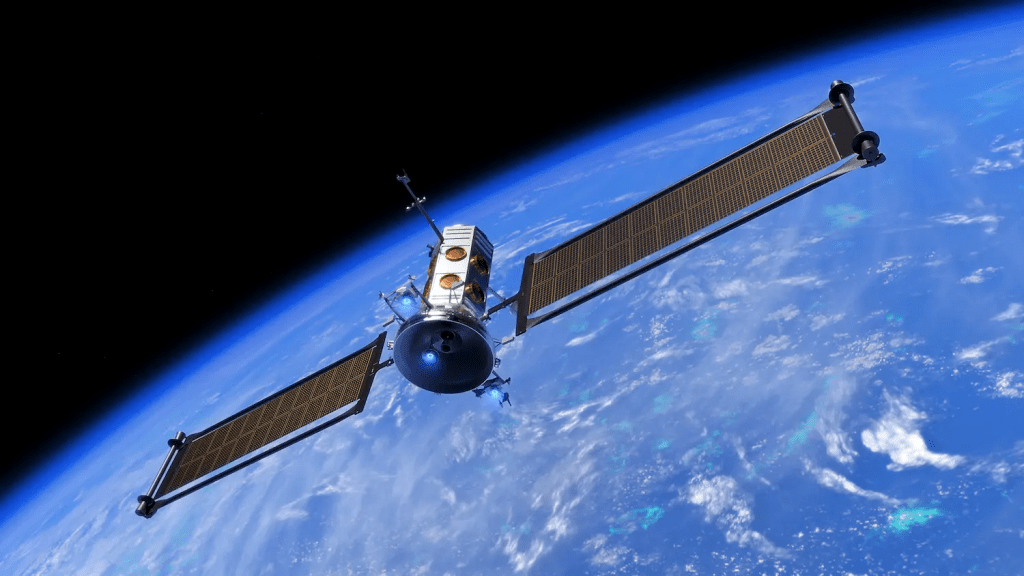
    On November 13, Jeff Bezos launched Blue Origin’s New Glenn rocket out of Florida. New Glenn deployed two of NASA’s Escapade Satellites to measure Mars’ atmosphere and magnetic field, and, for the first time, its reusable booster successfully made it onto a landing pad in the Atlantic Ocean. Blue Origin is now the second company in the world to do so, with Elon Musk in first. Watch the landing here. Okay, check back in 22 months—hm, that’s September of 2027—when the satellites arrive at Mars! 

    New Glenn Launches NASA’s ESCAPADE, Lands Fully Reusable Booster / Blue Origin ©

    November 14: Crispr for Cancer

    And for the second time in one article, Crispr’s here! This time, however, it tackles chemotherapy resistance in lung cancer. A gene called NRF2 can cause resistance to chemotherapy in some cases of cancer, so Crispr scientists looked at disabling it in lung squamous cell carcinoma, an aggressive type of lung cancer that makes up around a quarter of all lung cancer cases.

    They infused R34G, a mutation in NRF2 that can regulate cellular stress reactions; when NRF2’s is overactive, it causes cancer cells to resist chemotherapy, so they used R34G to subdue NRF2’s behavior. Even when they only calmed NRF2 in less than half of tumor cells, it still reduced tumors and improved chemotherapy response.

    “The power of this CRISPR therapy lies in its precision. It’s like an arrow that hits only the bullseye,” Kelly Banas, lead author of the study, said. As Crispr will continue to perform and study trials, R34G might just be the future of cancer treatment.

    November 18: Gemini 3’s Release

    We’ve all seen the AI overviews embedded into Google’s search results. You’re just wondering how long to bake your snickerdoodles for, but the AI’s answer ranges from 8 minutes to 25. What? Then, you look and see twelve recipes referenced. Huh? There’s no way it’s that difficult, you wonder. Yeah, we’ve all been there. 

    However, Google just launched Gemini 3, and they proclaim it their “most intelligent model” yet. Maybe we’ll get a more precise answer on those snickerdoodles now! More confident than ever in Gemini 3, Google embedded it into its search engine on the first day of its release, which they had never done before. Normally, they gradually implant new versions over weeks, or even months. 

    Gemini 3 also brings new features to the table. Or, well, to the phone. “Gemini Agent” can book travel plans, organize your overwhelmed email, and do other multi-step jobs. Additionally, they updated the Gemini app to respond to prompts with answers so thorough they look like websites.

    Well, if you’re looking for a new AI model, Gemini 3 may very well be what you need. And if you’re looking for ridiculously incorrect and vague answers to make fun of, the jury’s still out on whether Gemini 3 is the platform for you or not.

    November 18: A Milky Way Model

    We already discussed computers’ inability to model our universe, but I never said anything about the Milky Way! Researchers from the RIKEN Center for Interdisciplinary Theoretical and Mathematical Sciences (iTHEMS) in Japan, The University of Tokyo, and the Universitat de Barcelona in Spain managed to accurately simulate 100 billion stars over the course of 10 thousand years. 

    Researchers Create First 100-billion-star Milky Way Simulation Using AI / NRAO / Orbital Today ©

    These researchers trained an AI model using high-resolution simulations, and it eventually managed to predict resulting gas expansions. Thus, it created a simulation of the galaxy’s overall dynamics as well as its smaller phenomena. Previous models of the universe would struggle to predict on a small-scale, but this new one can do exactly that. Also, it did so quickly! In just under 3 hours, it created a simulation of the galaxy over 1 million years.

    This new model could become popular for making other simulations that need small- and large-scale accuracy. Like lead researcher Keiya Hirashima said,

    “This achievement also shows that AI-accelerated simulations can move beyond pattern recognition to become a genuine tool for scientific discovery—helping us trace how the elements that formed life itself emerged within our galaxy.” -Keiya Hirashima

    November 18: Antimatter Aplenty

    Have you noticed that this is the third event from November 18? Sounds like a hat trick to me! Anyways, CERN’s Antimatter factory recently undertook a new project called the ALPHA experiment, and they published their findings on November 18. Essentially, they managed to create over 15,000 antihydrogen atoms in under 7 hours.

    Antihydrogen is the most basic form of atomic antimatter, and antimatter is a substance with the same mass and particles as another substance but opposite charges. For example, antihydrogen has the same mass and particles as hydrogen, but hydrogen’s protons have positive charges and its electrons have negative charges while antihydrogen’s protons have negative charges and its electrons have positive charges. When antimatter and matter meet, they destroy each other, creating an immense amount of energy. Antimatter is normally found in particle accelerators, cosmic rays, and medical imaging, but it’s fairly rare as creating it is a lengthy process.

    However, with the ALPHA team’s new method, they’ve managed to make antimatter 8 times faster than normal. Normally, the process involves creating and trapping antiprotons and positrons separately before cooling and merging them together to form antihydrogen, but ALPHA’s unique success came from the way they create their positrons. The general problem with creating antimatter is that trapped positrons refuse to stay still once trapped, and they don’t cool down enough. So, the ALPHA team approached the antihydrogen by adding laser-cooled beryllium ions to the positron trap. The beryllium makes the positrons lose energy through sympathetic cooling, which cools the positrons to around -266 °C and makes them more likely to merge with the antiprotons and form antihydrogen, creating more antimatter.

    Scientists thoroughly study any antimatter they can get, so, with this new abundance, they plan to study gravity’s effect on antimatter in the ALPHA-g experiment. Stay tuned because they may discover new properties and behavior of antimatter, which wouldn’t be possible without ALPHA’s new process.

    Okay, that’s all I have for November. Consider this my holiday gift to you. Enjoy December, and come back for Stemline’s next recap!


    References

    Cai, K. (2025, November 18). Google launches Gemini 3, embeds AI model into search immediately. Reuters. https://www.reuters.com/business/media-telecom/google-launches-gemini-3-embeds-ai-model-into-search-immediately-2025-11-18/
    ChristianaCare Gene Editing Institute. (2025, November 17). CRISPR breakthrough reverses chemotherapy resistance in lung cancer. Eurek Alert! https://www.eurekalert.org/news-releases/1106182
    CRISPR Therapeutics AG. (2025, November 8). CRISPR Therapeutics announces positive phase 1 clinical data for CTX310® demonstrating deep and durable ANGPTL3 editing, triglyceride and lipid lowering. CRISPR Therapeutics. https://crisprtx.com/about-us/press-releases-and-presentations/crispr-therapeutics-announces-positive-phase-1-clinical-data-for-ctx310-demonstrating-deep-and-durable-angptl3-editing-triglyceride-and-lipid-lowering 
    Harris, R. (2025, November 18). Breakthrough in antimatter production. CERN. https://home.cern/news/news/experiments/breakthrough-antimatter-production
    Lohnes, K. (2025, June 13). What is antimatter?. Encyclopedia Britannica. https://www.britannica.com/story/what-is-antimatter 
    Mullin, E. (2025, November 8). A gene-editing therapy cut cholesterol levels by half. Wired. https://www.wired.com/story/a-gene-editing-therapy-cut-cholesterol-levels-by-half/ 
    Riken. (2025, November 18). The simulated Milky Way: 100 billion stars using 7 million CPU cores. Riken. https://www.riken.jp/en/news_pubs/research_news/pr/2025/20251117_2/index.html 
    UCAR. (2020). How do we reduce greenhouse gases? UCAR: Center for Science Education. https://scied.ucar.edu/learning-zone/climate-solutions/reduce-greenhouse-gases 
    University of British Columbia Okanagan campus. (2025, November 10). Physicists prove the Universe isn’t a simulation after all. ScienceDaily. Retrieved December 13, 2025 from http://www.sciencedaily.com/releases/2025/11/251110021052.htm 
    University of Colorado at Boulder. (2025, November 3). Antarctic glacier retreated faster than any other in modern history. Eurek Alert. https://www.eurekalert.org/news-releases/1104274 
    Watch: Blue Origin rocket successfully lands booster for first time [Video]. (2025, November 13). BBC. https://www.bbc.com/news/videos/c5yd0zd6eddo 

  • Aviation: Pros, Cons, and Innovations

    Aviation: Pros, Cons, and Innovations

    By Charlotte Lee

    ~ 7 Minutes


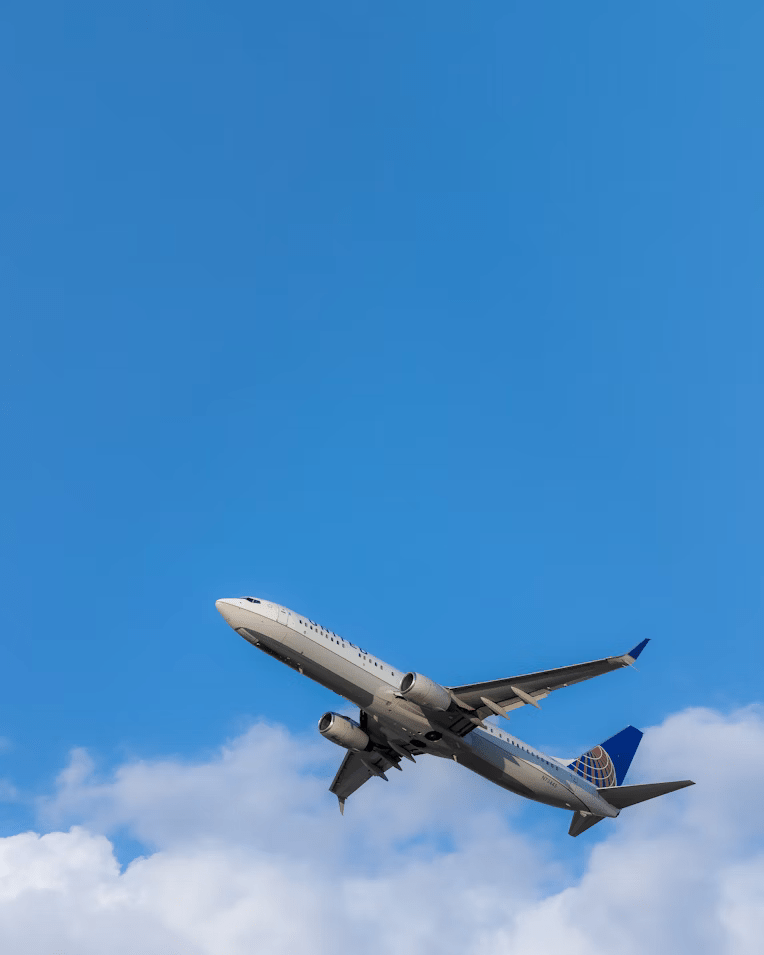
    Aviation facilitates long-distance travel, quick package delivery, and is essential to military operations. However, aviation plays a big part in daily life that often goes unappreciated. This can be both good and bad. Aviation enables quick medical transportation for operations like cross-state lung transplants, supports search and rescue operations, and creates jobs. However, it is also a significant factor in climate change, noise pollution, and airports can disproportionately affect the health and home values of residents nearby.

    What is Aviation?

    Aviation deals with the activities related to the flight, operation, and design of aircraft. Most commonly, the aviation industry is thought of as the commercial airline industry that is travel-based and includes brands like American Airlines, United Airlines, and Emirates.

    New model calculates how air transport connects the world / MIT News ©

    The Pros of Aviation:

    Transportation and Connection-

    Flying is the main source of transportation for international tourists, with 58% of travelers opting to fly. This connects people to their families, enables faster trips, offers a wider range of locations, and provides remote communities access to necessities like healthcare and education.

    Additionally, flight connects businesses to people across the globe, allowing them to ship their goods and reach new customers. The air freight industry is a large with approximately $ 6.8 trillion worth of goods relying on air cargo to reach their destinations. It also creates package delivery services like UPS, Amazon, and FedEx.

    Essential Services–

    Aviation facilitates emergency operations like disaster relief, search and rescue, and medical operations. In disaster relief, aviation allows for the delivery of supplies, outside personnel, and medical aid. 35,000 tons of food and 4,800 tons of health-related vital relief cargo were delivered using aircraft in 2023. Aircraft can also better aid in search and rescue because they are not obstructed by obstacles like difficult terrain or broken infrastructure. The equipment on search and rescue helicopters, like infrared cameras, saves lives by accelerating the process of locating survivors where time is of the utmost importance. This is why the Civil Air Patrol operates in about 90% of search and rescue missions in the US.

    Additionally, it is not always possible to transport the injured to medical care via a traditional ambulance. Air ambulances can reduce response time, access restricted areas, and provide life-saving care. They can also facilitate cross-state transplants where an organ may be available in one state and the receiving patient is in another. This can increase the pool and possibility for a person to receive the transplant that they need.

    Social and Cultural-

    Air travel connects people faster than any other transportation system. This allows for culture and traditions to spread across the globe, leading to international relations and a better appreciation for other countries. Ideas, books, and knowledge also pass through the aviation industry because every person who travels somewhere else has their unique ideas and important knowledge that they spread.

    Aviation Jobs and Careers / Technical Education Post ©

    Job Creation-

    The aviation industry creates about 86.5 million jobs internationally. Secure jobs drive international growth because they provide people with a stable source of income that can be invested back into their country’s economy and children’s education. This is especially growing in Africa and Latin America, where the number of jobs in the aviation industry is projected to double in Africa and increase by 20 million in Latin America by 2043. In North America alone, the industry has brought about 1.4 trillion dollars. 49.2 billion dollars were also invested in the building and renovation of airports, which created more construction.

    Fashion-

    Aviation Fashion is often supplemented by movies like Top Gun, The Aviator, and Catch Me If You Can, and social media. It combines practicality with fashion and has produced some of the most iconic pieces, like the Ray Ban aviator glasses. Some other notable pieces and brands are bomber jackets, pilot hats, and Aviator Nation.

    Bomber Jacket / Top Gun Store ©

    Cons of Aviation:

    Climate change impacts / National Oceanic and Atmospheric Administration

    Climate Change-

    Because there has been an increase in flights, emissions from aviation have grown more than any other type of transportation. Airplanes release CO2 when burning fossil fuels, but they also leave vapor trails, soot, water, and gases like Nitrogen Oxides, and Sulfur dioxide. These combined create contrail cirrus or artificial clouds, which can increase greenhouse gases. While climate change is usually connected to CO2 levels, these non-CO2 effects from aircraft have contributed twice as much to global warming as aircraft CO2 emissions.

    Uneven medical disparities-

    Aircrafts release CO2, NOx, and SOx, which can negatively affect the people living there, as shown through the higher respiratory disease, morbidity, and mortality rates among people who live near airports. The noise pollution from the airplanes not only lowers the value of homes nearby but also has detrimental effects on residents. It can lead to stress, negative results in children’s cognitive development, and increased rates of hypertension, cardiovascular disease, and hyperactivity.

    Innovations:

    So many advances have been made since the first airplanes. The average flight today already produces 54% less CO2 than a flight in 1990. Innovations continue to be made to decrease CO2 emissions.

    SAFs (sustainable aviation fuels)-

    A lower-carbon alternative to jet fuel, first commercially used by United Airlines. SAF, or sustainable aviation fuel, has 85% lower GHG emissions.  They are produced by converting renewable or waste materials—such as agricultural residues and used cooking oil—into fuel, sometimes using renewable energy in the process. This approach helps reduce both emissions and waste. 

    NextGen Aircraft Design is Key to Aviation Sustainability / NASA ©

    Recycling and Aircraft Design-

    Reducing fuel burn and greenhouse gas emissions are critical to minimizing the effects of climate change. This is accomplished through more efficient aircraft designs. One way of making the aircraft more efficient is with truss-based wings, as seen in the picture above. These wings produce as much lift as traditional wings, but much less drag, resulting in less fuel consumption. Another way of making the aircraft more efficient is by using recycled materials to build the plane. When made this way, aircraft are lighter, less expensive, stronger, and easier to repair.

    Airports are also doing their part in using recycled materials. The Galapagos Ecological Airport’s terminal is made of 80% recycled materials. It also runs entirely off of renewable energy and has its own desalination plants that allow the airport to use local seawater. This airport is the first ecologically friendly airport and has inspired other airports to be environmentally friendly, like the Bohol-Panglao Airport in the Philippines.

    Water usage-

    Water usage is an aspect often not associated with aviation, but aircraft need to be cleaned for hygiene, safety, and efficiency (since dirt and grime on the plane can make it heavier and increase fuel consumption). The traditional cleaning process can use up to 13,000 tons of water. However, innovations such as dry washing aircraft have lowered that amount by 95%.

    Dry washing, which Emirates Airlines introduced in 2016, uses little to no water. It is a liquid cleaning product that is manually applied and wiped off with a microfiber cloth. It also leaves a film on the airplane that allows planes to stay cleaner for longer and for Emirates to save 11 million liters of water a year.


    References

    Admin, T. O. C. (2018, April 19). Air Cargo: Facts & Figures. TOC Logistics International, LLC. https://www.toclogistics.com/air-cargo-facts-figures/
    Aviation-o-holic – By Kush. (2024, August 15). The Climate Change & Aviation Crisis | In 5 Minutes. YouTube. https://www.youtube.com/watch?v=lyvshz4VOMU
    Banke, J. (2020, April 16). NextGen Aircraft Design is Key to Aviation Sustainability – NASA. NASA. https://www.nasa.gov/aeronautics/nextgen-aircraft-design-is-key-to-aviation-sustainability/
    Biscontini, T. (2024). Environmental impact of aviation | EBSCO. EBSCO Information Services, Inc. | http://Www.ebsco.com. https://www.ebsco.com/research-starters/environmental-sciences/environmental-impact-aviation
    Dodd, H. (2023). Supporting economic & social development | ATAG. Atag.org. https://atag.org/industry-topics/supporting-economic-social-development
    Egere-Cooper, M. (2015, August 4). This airport runs on wind. CNN. https://edition.cnn.com/travel/article/galapagos-ecological-airport-wind-and-solar-power/index.html
    Emirates showcases environment friendly aircraft cleaning technique. (n.d.). Aviationbenefits.org. https://aviationbenefits.org/newswire/2017/06/emirates-showcases-environment-friendly-aircraft-cleaning-technique/
    Keller, R. (2023). Social and Environmental Impacts of Commercial Aviation. Social and Environmental Impacts of Commercial Aviation
    Lee, S. (2025). How Sustainable Aviation Innovations Create a Greener Flight. Numberanalytics.com. https://www.numberanalytics.com/blog/sustainable-aviation-innovations-greener-flight
    SDG 6: Clean Water and Sanitation. (n.d.). Aviationbenefits.org. https://aviationbenefits.org/un-sustainable-development-goals/sdg-6-clean-water-and-sanitation/
    SDG 7: Affordable and Clean Energy. (n.d.). Aviationbenefits.org. https://aviationbenefits.org/un-sustainable-development-goals/sdg-7-affordable-and-clean-energy/
    SDG 12: Responsible Consumption and Production. (2019). Aviationbenefits.org. https://aviationbenefits.org/un-sustainable-development-goals/sdg-12-responsible-consumption-and-production/
    SDG 13: Climate Action. (n.d.). Aviationbenefits.org. https://aviationbenefits.org/un-sustainable-development-goals/sdg-13-climate-action/
    T&E. (2024, April 19). Airplane pollution. http://Www.transportenvironment.org. https://www.transportenvironment.org/topics/planes/airplane-pollution
    Transportation Review. (2025, January 16). Transportation Review |The Role of Aviation in Emergency Response and Humanitarian Aid. Transportation Review. https://www.transportationreview.com/news/the-role-of-aviation-in-emergency-response-and-humanitarian-aid-nwid-636.html
    United Airlines. (2023). Our Sustainable Aviation Fuel (SAF) Program. United.com. https://www.united.com/en/us/fly/company/responsibility/sustainable-aviation-fuel.html