Over the past three years, a rush of excitement has emerged globally regarding artificial intelligence. In a student’s everyday life, discussions about artificial intelligence arise frequently- whether about the potential benefits of generative AI, using ChatGPT on homework assignments, or seeing AI’s growing presence on social media platforms like TikTok.
Claims that AI holds significant potential in the development of society and technology are impossible to ignore, with AI occupying numerous sectors seen throughout daily life. In fact, when I began writing this article, even clicking enter on a google search titled “Impact of AI on climate change” immediately caused an AI overview to pop up unprompted.
AI generated images / The Economic Times India
While the environmental repercussions of AI usage cannot be ignored, to deny the multitude of potential benefits from artificial intelligence would be absurd. Instead, it makes more sense that the use of (mostly generative) AI for recreational purposes is the issue– hundreds of thousands of people contribute to this environmental impact, not realizing that even a short prompt into ChatGPT has been proven by the International Energy Agency to equate to 4-10x the amount of energy that just one Google search consumes.
There are four key problems attributed to why AI can cause widespread harm to our environment. First, the mining required to extract critical minerals and rare earth elements for the microchips that power AI is incredibly destructive to the environments where these resources are found. Navigating New Horizonsconfirms this, stating,
“[The minerals and elements] are often mined unsustainably”.
The second is that AI servers are held in data centers which produce a shocking amount of electronic waste. They also contain hazardous substances such as mercury and lead, according to the United Nations Environment Program (UNEP). This is harmful because when they are (often) disposed of improperly, the wildlife, soil, air, and water around it are contaminated.
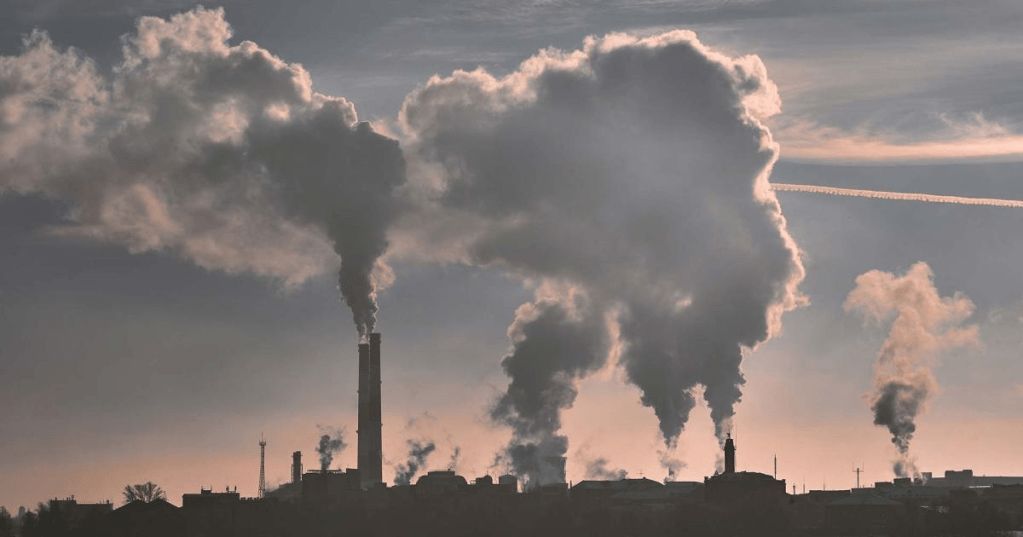
Thirdly, these AI data centers use preposterous amounts of electricity and energy, due to advanced technology seen in these models. Therefore, the energy used in most of these data centers comes from fossil fuels which produce greenhouse gases that further contribute to global warming. Research by the University of Nottingham shows that by 2026, AI data centers will likely account for nearly 35% of Ireland’s energy consumption. Added effects to climate change are something that we simply can’t afford currently, with the already increasing rate of rising global temperatures.
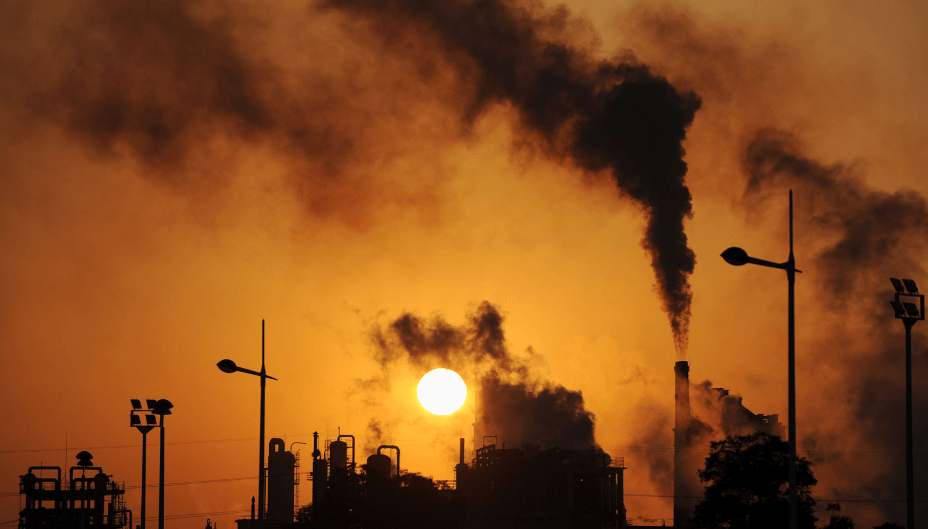
Pollution due to Elon Musk’s AI data center in Memphis / NAACP
Finally, and most of all, data centers consume a colossal amount of water, not only to construct but also to cool electrical components of AI. Chilled water absorbs heat from computing equipment. This water does not return to the water cycle; most of it is gone forever when used to cool these heated data centers. The centers use mechanical chillers which carry heat away from the servers, releasing it through a condenser, and so the water becomes water vapor where it does not cycle back through treatment systems like in a typical household. Even though some of it returns as rainfall, a majority of vapor in the air cannot be recovered. Not only this, but data centres are often located near locations which are already prone to droughts, which gives the inhabitants of this area even less access to water. This is a huge problem when a quarter of humanity already lacks access to clean water and sanitation. MIT Newstells us that for every single kilowatt hour of energy a data center consumes, it would need two entire liters of water for cooling. It is an atrocity to restrict so much life from access to clean water and instead use it on generating ‘a cartoon version of me’ or asking ChatGPT to write a quick email that could be written by the individual in just two minutes instead.
The impacts of these contributors on climate change are immense. It also doesn’t help that generative AI models have an extremely short shelf-life as AI companies such as ChatGPT and DeepSeek consistently deliver new models, provoked by rising demand for new AI applications. So, the energy used to train previous models goes to waste every few weeks, and new models use even more energy because they are more advanced than the previous ones. Sure, one person using Perplexity AI doesn’t do much to the environment, but if everyone follows this logic, the large scale of people using AI results in terrible repercussions.
On the other hand, popular articles repeat that because “500ml of water are used for every 20-50 ChatGPT prompts, not every prompt”, the amount of energy that ChatGPT uses is not that significant. However, like govtech.com states, even if 500ml sounds small, combined with the 122 million people who use ChatGPT daily, this is a lot of water that is wasted for purposeless reasons. AI’s energy use has exploded only because AI has exploded. It is not that each prompt uses a significant amount of energy, but that AI has had an explosive growth being the quickest adopted technology ever, therefore the energy adds up to be significant through the sum of people using AI.
As a society, we have to acknowledge that even though AI provides us an abundance of opportunities and ideas for our modern world, we must not forget the consequences to the already declining environment that overuse brings. We should take into consideration that life would most likely not be worse without generative AI for the average person. We should take into consideration that the tradeoff of mindless entertainment and having ChatGPT search for basic facts is worth a better chance at restoring our Earth. And ultimately, we should simply refrain from using AI for recreational reasons unless the purpose is absolutely urgent and necessary.
As someone born and raised in New York City (NYC), I can attest to the urgent need to upgrade the city’s climate control infrastructure. Current systems are outdated and hinder the city’s ability to meet emissions goals and address global warming; the encapsulation of this problem is the boiler. A staggering 72.9% of heating in NYC comes from fossil-fuel-burning steam boilers, one of the most carbon-intensive options available. Tenants of apartments pay for the maintenance of centralized boilers without control over the temperature, leading many to open their windows in winter to release excessive warmth. This heat and the fossil fuels used to produce it are wasted, highlighting the inefficiency and impracticality of NYC’s existing infrastructure.
Even when this heat remains indoors, steam boilers are only about 80-85% efficient at burning fossil fuels. Up to a fifth of a boiler’s fuel does not generate usable heat, but burning it still releases vast quantities of pollutants like CO2, exacerbating climate change. Furthermore, boilers continue to lose efficiency during their lifetimes and require frequent maintenance and replacement. While steam boiler systems were revolutionary in the 19th century, they may now become obsolete as NYC implements a technology that could change how the world thinks about climate control.
The innovation behind heat pumps comes from the mantra of use what is given; instead of generating heat through combustion, they simply move existing warmth between two places. Most of these fully-electric pumps remain functional well below 0℃, even though it may seem like there is no warmth to be moved. This operative capacity allows them to have heating efficiencies of 300-500%! Because of this, International Energy Agency partner Yannick Monschauer estimates that “Heat pumps could bring down global CO2 emissions by half a gigaton by the end of this decade.”
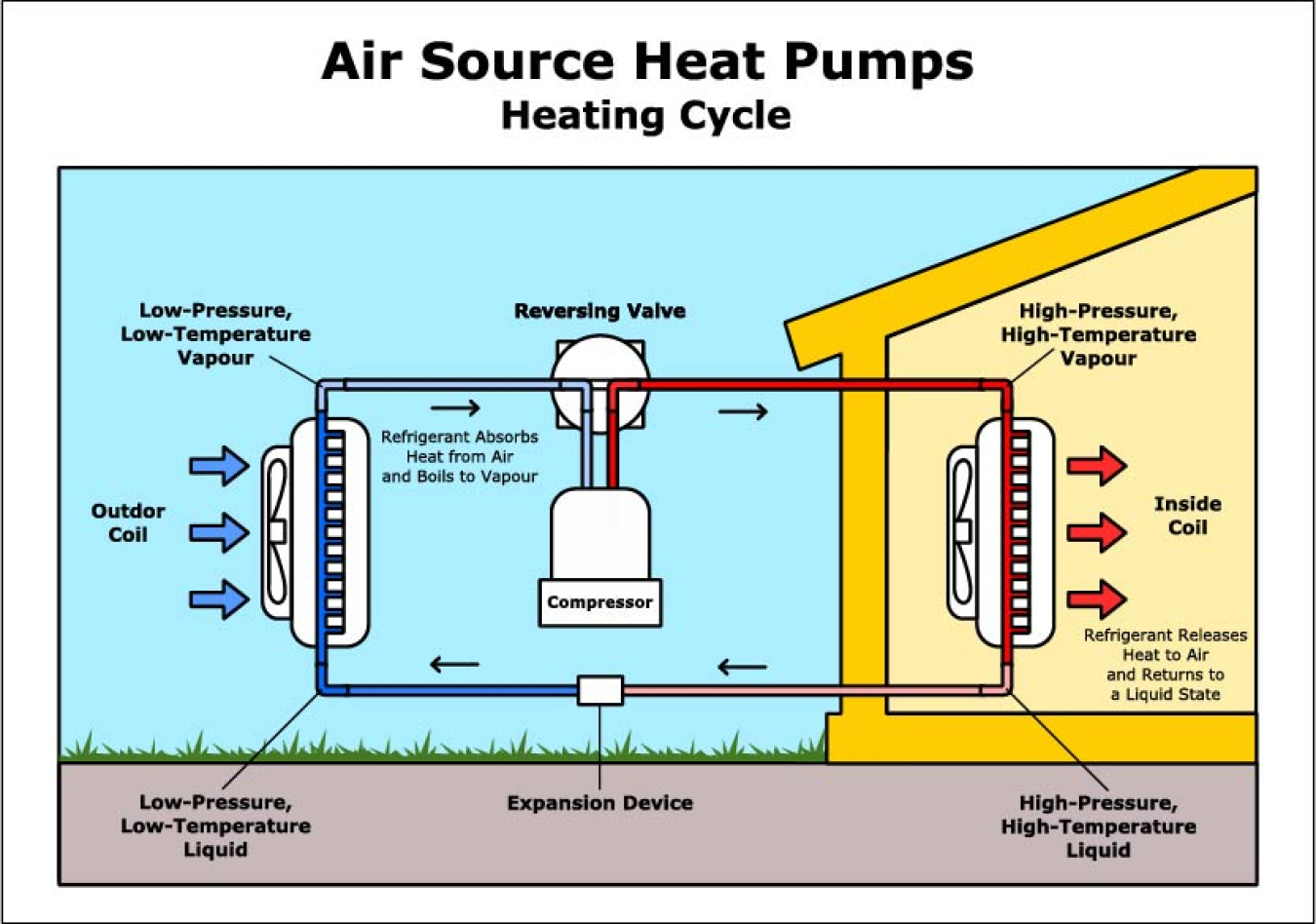
Heat pumps work by operating on the Second Law of Thermodynamics (SLOT), which states that heat will move from a hotter object to a colder one. In the wintertime, the pumps pull in outdoor air and blow it over fluids (called refrigerants) held in a closed-loop system. The air transfers warmth to the cold refrigerants through SLOT, and the heated fluids turn into gas. Heat pumps can work in freezing temperatures because these refrigerants have such unusually low boiling points, allowing them to vaporize easily; one of them, Refrigerant 12, has a boiling point of just -21.64°F!
The hot, gaseous refrigerants move into a compressor that compacts their molecules, making them even warmer. They then flow through a coil that exposes them to indoor air, and the refrigerants release their warmth inside through SLOT. As the refrigerants cool, they condense back into liquid and pass through an expansion valve, decreasing their temperature further. They move to an outdoor coil and are ready to restart the process, continuing to warm cold homes during the winter.
Even more significantly, heat pumps have reversing valves that switch the flow of their refrigerants. These valves allow the pumps to cool homes by pushing out warm, indoor air in the summertime. Thus, heat pumps make air conditioners, boilers, radiators, and related piping unnecessary, freeing space and alleviating material and labour costs that typically get passed on to homeowners.
Heat pumps in NYC
In 2024, NYC pledged to have heat pumps provide 65% of residential heating, air conditioning, and water-heating needs by 2030. This shift would drastically reduce the city’s carbon emissions from the climate control sector, which contributed to 10% of global energy-related CO2 emissions in 2021.
This pledge is logical both environmentally and practically: having one heat pump replace two systems saves valuable space, lowers costly installation and maintenance fees, and reduces energy demands. The NYC government realized this potential and signed a $70,000,000 contract to install 30,000 window heat pumps in NYCHA buildings, better known as public housing. Two heating companies, Midea and Gradient, will provide these units.
In late 2023, Gradient installed 36 preliminary test units in NYCHA buildings. Most NYC steam boilers, including those in NYCHA’s current system, are powered by gas with oil reserves in case of an emergency. Gradient found that their pump can lower tenants’ heating bills by 29-62% on moderate winter days compared to gas-powered boilers. Savings are as high as 59-78% compared to oil-burning boilers. In testimonials that Gradient collected, NYCHA tenants noted the heat pumps’ impressive air filtration, heating, and operational capabilities. Midea conducted similar tests and soon plans to release its heat pump for public purchase.
The Cold Drawbacks of Heat Pumps
Although technological faults remain, NYC is continuing its plans to install and promote heat pumps to replace its intensive, outdated systems. For one, Midea’s upcoming pump will cost ~$3,000 per unit, greatly exceeding the combined price of ~$460 for their bestselling, single-room heating and cooling systems. This is a misleading comparison, however, because heat pumps also act as heating systems. The technology can lower electricity and fuel bills over an extended period, but the current price point makes heat pumps an unaffordable investment for many households – despite government subsidies and incentives. Even the NYC government’s bulk order of Midea and Gradient pumps averages over $2,300 per unit.
Furthering the inaccessibility of these systems, the most advanced, aesthetically pleasing, and apartment-friendly heat pumps can only heat and cool individual rooms. This means that multiple units must be purchased, installed, and powered to service a home, and each must be replaced about every 20 years. Still, NYC’s firm stance on heat pumps indicates the climate control systems’ proven efficacy, practicality, and sustainability.
Heat Pumps Globally, and Plans for the Future
While technological challenges remain, NYC is continuing to deliver on its pledges. This decision on heat pumps is being made throughout the United States (US). In 2022, heat pump sales in the US significantly outpaced those of gas furnaces (a type of central heating system particularly popular in North America). This lead has continued into 2025 as more people realize that the pumps can lower fossil fuel emissions and energy bills.
This switch is not just happening in the US; countries worldwide are beginning – or continuing – to invest in these pumps. Sales in European countries have soared in the 21st-century, an accomplishment partly attributed to friendly government policy. The country with the most pumps relative to its population, Norway, has 632 heat pumps installed for every 1,000 households (the majority of these pumps service entire houses, unlike the Midea and Gradient systems discussed above). Despite this high ownership rate, 48 pumps were purchased in Norway for every 1,000 households in 2024.
In spite of these promising statistics, heat pump sales in most economies have either slowed or slumped in recent years – particularly in Europe. Analysts suspect this is due to high interest rates, rising electricity prices, low consumer confidence, and low gas prices. While this is discouraging, pump sales and ownership rates remain higher than they were several years ago. In 2023, New York Governor Kathy Hochul pledged to help the U.S. Climate Alliance (USCA) install 20,000,000 pumps across the U.S. The USCA is a coalition of 24 governors representing 54% of the United States population and 57% of its economy. The bipartisan group has successfully delivered on their promises of emissions reduction, climate resilience, economic growth, energy savings, and zero-carbon electricity standards that heat pumps are engineered to meet.
This coalition has proved that environmental action is popular, necessary, and possible. At a time when climate policy is under question, sustainable and feasible technologies – like heat pumps – need the investment of citizens, industries, and governments alike; no matter how small the scale.
So, how can you help? Since 2022, the US government has given a federal tax credit to citizens who install efficient heat pumps. The Energy Efficient Home Improvement Credit provides eligible homeowners up to $2,000 annually. Combined with other energy-efficient credits, US citizens can regain up to $3,200 every year. These monetary incentives offer another reason to consider switching to heat pumps, and similar policies are being enacted worldwide.
I am proud to live in a city that rewards and encourages the sustainability of citizens, corporations, and public works. As the severity and irreversibility of global warming loom, heat pumps offer us a breezy solution to polluting climate control systems. Eventually, NYC’s infamous boiler rooms and clanging pipes may become relics of the past.
Though seemingly unrelated, cow farts, climate change, and coffee have unexpected connections. For starters, cow farts produce methane – and lots of it. In fact, a single cow can produce a massive amount of methane – usually 250-500 liters per day. Now, think of how many cows we have here on Earth (I’ll give you a hint: it’s 1.5 billion). And while CO2 gets all the attention when it comes to climate change, methane has twice the effect on a per-unit basis. But we can’t just blame climate change on the cows: other livestock also contribute to the greenhouse gases that warm our planet. Well, it’s a good thing that climate change is a widely known issue around the world, right? We know that these gases will cause the heating of the Earth, resulting in ice melting and oceans rising. However, while these problems may take years to manifest, other negative effects won’t be nearly as delayed. One impending problem is the devastation that this heat will bring to both weather patterns and crops. Warmer temperatures cause more evaporation, meaning more water in the atmosphere and more storms. Many plants, coffee included, can’t grow in these changing and unstable climates. And while scientists are doing all that they can to fix these problems, individual citizens are unlikely to act unless they understand the full extent of what is going on.
What Is Climate Change?
Climate change is a universal issue backed by scientific evidence and recognized by most of the public. The Earth is warming, and rapidly at that. According to NASA, the average global temperature on Earth has increased by at least 1.1° Celsius (1.9° Fahrenheit) since 1880, and the majority of the warming has occurred since 1975, at a rate of roughly 0.15 to 0.20°C per decade. It may not seem like much, but the environment is not accustomed to adapting quickly, and if this goes on, the results could be devastating.
Greenhouse Gases
Greenhouse gases – let’s call them GHGs for short – are essential for our survival, but could very well be the key to our doom. The most common GHGs include water vapor, carbon dioxide, methane, and nitrous oxide. They absorb heat from the Sun and trap the warmth, preventing it from escaping into space. It’s the reason why life on Earth is possible: just like their name, these gases basically function as the glass in a greenhouse, raising the temperature so that we can thrive.
But greenhouses can also get too hot. The more gases in the atmosphere, the more effective the heat-trapping process is. This excess heat-trapping is precisely what has been occurring over the past few decades, especially since the Industrial Revolution
So, what is causing the surplus of GHGs warming our Earth?
One cause is transportation, which accounts for 14% of GHGs. Cars, buses, trains, airplanes – most of them use gasoline, diesel, or jet fuel to function. Burning these materials releases many harmful gases, the most relevant of them carbon dioxide, methane, or nitrous oxide. In some countries, like the US, transportation may be the leading cause of GHG emissions. However, there are many ways to combat these effects. You’ve most likely heard that walking and public transportation will reduce emissions, and they can! Even electric vehicles will help if you’re using clean electricity. Additionally, biofuels and hydrogen can replace fossil fuels in aviation and shipping.
Another significant cause is electricity and heat production, which accounts for a fourth of total GHGs alone. These processes still rely heavily on burning fossil fuels, such as coal, oil, and natural gas. Now that more and more homes and buildings are being constructed, there is a higher electricity demand than before. As a result, more fuel is burned – unless we switch to cleaner sources such as wind, solar, or hydro power. Transmission losses (electricity lost as it travels over power lines) require extra generation, further increasing emissions. Therefore, improving efficiency in buildings and the power grid could reduce the demand and associated GHGs.
Buildings can cause around 6-7% of GHG emissions. The production of materials like cement, steel, and aluminum all release gases such as carbon dioxide, and use the process of burning fossil fuels. According to the BBC, cement production contributes 8% of global GHGs. Not to mention, transporting those materials and the use of heavy machinery and equipment while building them also adds to emissions.
These are all large and well-known reasons that contribute to GHG emissions, so let’s take a look at something lesser known. Agriculture.
What About Cows?
Let’s be honest: your answer to the question about major sources of GHGs was probably not cows. But, in truth, these adorable creatures that we raise account for around 14.5 percent of greenhouse gases that warm our planet. Of course, it’s not cows alone: other livestock, including chickens, horses, pigs, and more, are all included in that percentage. We’re looking at cows specifically because a breakthrough with them could lead to resulting solutions with the other animals, and cows are large and easy to work with.
Cows make methane in two ways: through their digestive process and their waste. They are part of a group of animals called ruminants, with four distinct stomach chambers. The first is called the rumen, a home for microorganisms that break down the starch and sugar from plants. The next chamber is called the reticulum, where hard-to-digest plant materials are stored. The next chamber is called the omasum, which mechanically breaks the food down further. Finally, the last chamber is called the abomasum, which absorbs the nutrients from the food.
In the rumen, a process called enteric fermentation takes place. This is where the previously stated microorganisms and bacteria break down complex carbohydrates and turn them into sugars. The resulting products include volatile fatty acids (used as a major energy source for the cows), as well as GHGs such as carbon dioxide and methane. The gases are released from the cows either as burps or farts.
Scientists are attempting to find the most effective solution to this large problem. There have been many different approaches to this issue, some of which are below.
One method that has been used is seaweed in the cow feed. A 2018 study focused on mixing a seaweed species called Asparagopsis armata with hay and small amounts of molasses. Animal science professor Ermias Kebreab says they’re hoping that the seaweed can inhibit an enzyme that’s involved in producing methane in a cow’s gut, a chemical reaction discovered by researchers in Australia. After a day of eating this feed, the cow’s methane emission dropped by a drastic 50%. However, they also discovered a small dent in the amount of food consumed, as well as milk produced, due to the seaweed’s ocean smell. The next steps of this experiment are to find ways so the cows don’t notice the seaweed, and plan an experiment to use beef cattle instead of dairy cattle. Though there is still a long way before this can be implemented on a large scale, even the smallest start can lead to a bigger solution.
Another study from 2019 discovered that selective breeding can lead to a “cleaner cow.” Project’s leaders and co-author Professor John Williams says: “What we showed is that the level and type of methane-producing microbes in the cow is to a large extent controlled by the cow’s genetic makeup.” By selecting cattle that produce less methane than their counterparts, it may be possible to create a livestock industry that generates fewer GHGs. However, the breeding will also depend on other desired characteristics, such as meat quality, milk, and disease resistance.
Finally, Argentina’s National Institute of Agricultural Technology (INTA) created the cow-fart-backpack (the picture shown above). This device captures the methane from these cows through a tube in their skin, which scientists claim is painless. The gas is then condensed and ready to provide power for the farm. By utilizing this gas for power, farms would consume less purchased gas and thereby reduce the total emissions.
Where Does Coffee Come In?
Even with all these solutions, climate change is still one of the biggest issues out there. One common outcome that you may have heard of is the rising ocean levels. Because of the rapid heating, the northern and southern reaches of the planet are warming faster than any area on Earth, with the temperatures there rising twice as much as elsewhere. This damages the fragile ecosystems there, leaving less space for animals such as polar bears, seals, and penguins to venture. Not only that, but the sheer amount of ice that is melting each year has increased ocean levels drastically. According to NASA, the ocean levels have risen 10.1 centimeters since 1992.
But there’s another effect that’s less heard of. Agriculture will also be greatly impacted by climate change, as some plants need very specific temperatures and weather conditions to grow.
Let’s take a closer look at coffee.
Some plants need very specific temperatures and weather conditions to grow, and now that it’s all changing, the locations where the plants grow would need to change with it. For example, the coffee plant grows in temperatures of around 15-24 C, or 60-70 F. Areas such as Hawaii, Africa, and Brazil are all large coffee exporters, but if the temperatures keep rising, coffee would cease to grow in those places. Coffee plants are highly sensitive to temperature and moisture changes, and stress leads to lower yields and flavor quality. But, it’s okay, right? We can just plant coffee in different areas that are now suitable for coffee growth!
Not quite. Coffee takes 3-4 years to grow, and needs to be processed after. Processing plants will take even longer to build, not to mention the cost and GHG emissions. So, in that time, global coffee supply shortages would lead to higher coffee prices, affecting consumers and businesses. Millions of jobs in farming, processing, transport, and retail depend on coffee, leading to unemployment in producing regions. Countries that rely on coffee exports would suffer major losses in GDP and stability.
Now think of this on a large scale. Not just coffee, but other plants as well. The world would be in chaos: jobs lost, prices increased drastically, and businesses shut down. These are the results of climate change.
Conclusion
Ultimately, climate change is affecting our world fast. With the temperatures rising each year and GHG emissions growing, the world is in dire need of a solution. Though there isn’t a single “correct” fix to this problem, everything that we do to prevent it counts. The effects of climate change can be disastrous – environments are being destroyed, oceans are rising, and plants are dying. But…if everyone helps, if everyone contributes, and understands just how dangerous and volatile climate change can be…perhaps we can prevent the problem that we are causing in the first place.
References
Center for Climate and Energy Solutions. 2019. “Main Greenhouse Gases | Center for Climate and Energy Solutions.” Center for Climate and Energy Solutions. June 6, 2019. https://www.c2es.org/content/main-greenhouse-gases/.
Imagine a world where every surface—the walls, the roof of your car—harnesses the sun to power your surroundings. Not with stiff, bulky solar panels, but with something as simple and inconspicuous as paint.
Thanks to new and evolving technology, this vision inches closer and closer to reality. Perovskite-based photovoltaic paint is a developing technology with the potential to turn any paintable surface into a solar panel.
What are Perovskites?
Perovskites are a class of crystalline materials with the structural formula ABX₃. ABX₃ means that perovskites have a Large Cation(A), a Smaller Cation(B), and an Anion(X₃, often a halide). Their unique structure makes them incredibly efficient at converting sunlight into electricity, with recent developments reaching over 25% efficiency (25% of energy from the sun was converted into electricity), while traditional solar panels usually have 15-25% efficiency.
The Parts of Perovskite Solar Paint:
Perovskite-based solar paint must be applied in multiple layers. The six main layers, in order, are: the transparent conductive layer (front/top electrode), electron transport layer, perovskite absorber layer, hole transport layer, back electrode, and substrate.
The transparent conductive layer functions as the front electrode. It must be transparent, to allow sunlight to pass through, and conductive, to carry the extracted electrons.
Next is the electron transport layer, which extracts and transports electrons from the perovskite layer to the electrode and prevents holes from moving in the wrong direction.
The perovskite absorber layer is located at the center and is made of a perovskite compound that absorbs sunlight to create electron-hole pairs (excitons). It acts as the photoactive layer where sunlight is converted into electricity.
The hole transport layer lies below, which extracts and transports holes (the positive charges) to the back electrode and blocks electrons from going backward, aiding in charge separation.
The back electrode then collects the holes and completes the electrical circuit, allowing current to flow through an external device.
Finally, the substrate is the surface being painted (can be glass, plastic, metal, etc.) and provides structural support.
How Perovskite Solar Paint Works:
Sunlight first hits a perovskite layer, and the perovskite material absorbs photons. This excites electrons from the valence band to the conduction band, creating electron-hole pairs (excitons). In perovskites, excitons require little energy to separate into electrons and holes, which improves efficiency. Electrons are pushed toward the electron transport layer and holes toward the hole transport layer. The front and back electrodes collect the charges, and because oppositely-charged electrons and holes are separated and collected on different sides, a voltage builds up between the two electrodes. When the painted solar surface is connected to a circuit, the voltage drives electrons through the wire, powering a device or charging a battery.
A Game-Changer for Clean Energy
Perovskite-based photovoltaic paint could radically transform the solar energy industry. Unlike traditional silicon, which requires high temperatures and vacuum conditions for production, perovskite materials are cheap and efficient. Perovskite paint can also be applied to a wide variety of surfaces, allowing homeowners to harness solar power in places where solar panels are impossible.
The Challenges to Implementation
As promising as perovskite solar paint is, several significant challenges stand in the way of widespread implementation. Current perovskite materials are highly sensitive to moisture, heat, and UV light, meaning they degrade quickly outdoors. While silicon panels can last 25 years or more, early perovskite prototypes can lose efficiency after months or just weeks. Researchers are working on protective coatings and new formulations to address this, but achieving long-term durability remains a hurdle. Most high-efficiency perovskite formulas also contain lead or other toxic heavy metals, raising concerns about environmental contamination and safe handling.
Efforts to develop lead-free perovskites are ongoing (tin being a promising alternative), though they currently offer lower efficiency and a shorter lifespan. While perovskite solar paint and panels work well in laboratory settings, scaling up to commercial production is complex. A uniform coating that ensures proper perovskite crystallization must be applied over large areas, and surfaces must be treated to ensure adhesion and conductivity. In addition, regulatory bodies are still developing safety and performance standards for perovskite technologies. Gray areas remain about how these materials will be certified/recycled at the end of their lifespan.
Global Progress and Investment
In the U.S., the Department of Energy recently allocated over $40 million to perovskite R&D, focusing on improving durability and scaling up production methods. Startups like SolarPaint, Oxford PV, and Saule Technologies compete to bring the first market-ready products to consumers, while well-known companies like Mercedes-Benz seek to implement solar paint in their newest vehicles.
Conclusion
Perovskite-based photovoltaic paint is still in the early stages, but it represents one of the most exciting frontiers in renewable energy. If challenges like stability and toxicity can be solved, any painted surface could soon become a power source. Keep an eye on your walls—they might power the world someday.
Glossary
Valence Band:
The highest range of electron energies where electrons are normally present at low energy (ground state)
Valence electrons reside in the valence shell of atoms
In any given material, atoms are packed closely together so their valence shells overlap and form the valence band
Electrons here are bound to their atoms and don’t move freely.
Band Gap:
The energy gap between the valence band and conduction band.
Electrons must absorb enough energy (like from sunlight) to jump across this gap.
The larger the gap, the more energy it takes to jump across, and the less conductive a material is
Semiconductors like perovskites have a small gap(1-2 electron volts) and can conduct electricity if energy is added(sunlight)
Conduction Band:
The higher energy band where electrons are free to move through the material.
Electrons in this band can carry electricity.
Electron-hole pairs:
When a photon(light) hits the perovskite, it transfers energy to an electron, exciting it from the valence band to the conduction band.
The excited electron in the conduction band moves freely and can conduct electricity.
The “hole” is the spot the electron left behind—a positive charge in the valence band.
There is now an electron-hole pair
Exciton:
An exciton is the state where an electron and a hole are bound together, still attracted to each other by opposing charges
Formed right after light absorption, before the electron fully separates from the hole/jumps to the conduction band.
Neutral overall, so they don’t conduct electricity until they break apart.
Common in some perovskites
Front and Back Electrode:
They collect and transport electrical charges (electrons and holes) generated by sunlight.
They’re like the “wires” of the solar paint that let electricity flow out into a usable circuit.
Front electrode: Lets light in and collects electrons or holes(depends on design, usually electrons)
Back electrode: Collects the opposite of what the front electrode does(back electrode usually collects holes) and helps drive current through an external circuit
Electron transport layer:
Extracts and transports electrons to the correct electrode
Hole transport layer:
Extracts and transports holes to the correct electrode
The transport layers guide the charges(electrons(-) and holes(+)) to the correct electrodes, helping to prevent recombination (when electrons and holes meet and cancel each other out).
Voltage:
Voltage is defined as the electric potential difference between two points.
It tells you how much “push” electrons are getting.
Measured in volts (V)
Voltage is like water pressure in a pipe. The higher the pressure, the more push the water (electrons) is getting
Current:
Definition: Current is the rate at which electric charge flows past a point.
Measured in amperes (A), or amps
More current = more electrons moving through the wire per second
Current is like the amount of water flowing through the pipe. The wider or faster the flow, the higher the current.
Power:
Definition: Power is the rate at which electrical energy is used or produced
Measured in watts
Formula: Power (P) = Voltage (V) × Current (I)
Power is like how much water pressure × amount of water is turning a waterwheel—how much work is being done.
Alanazi, T. I. (2023). Current spray-coating approaches to manufacture perovskite solar cells. Results in Physics, 44, 106144. https://doi.org/10.1016/j.rinp.2022.106144
Bishop, J. E., Smith, J. A., & Lidzey, D. G. (2020). Development of Spray-Coated Perovskite Solar Cells. ACS Applied Materials & Interfaces, 12(43), 48237–48245. https://doi.org/10.1021/acsami.0c14540
Chowdhury, T. A., Bin Zafar, Md. A., Sajjad-Ul Islam, Md., Shahinuzzaman, M., Islam, M. A., & Khandaker, M. U. (2023). Stability of perovskite solar cells: issues and prospects. RSC Advances, 13(3), 1787–1810. https://doi.org/10.1039/d2ra05903g
Khatoon, S., Kumar Yadav, S., Chakravorty, V., Singh, J., Bahadur Singh, R., Hasnain, M. S., & Hasnain, S. M. M. (2023). Perovskite solar cell’s efficiency, stability and scalability: A review. Materials Science for Energy Technologies, 6, 437–459. https://doi.org/10.1016/j.mset.2023.04.007
Aviation facilitates long-distance travel, quick package delivery, and is essential to military operations. However, aviation plays a big part in daily life that often goes unappreciated. This can be both good and bad. Aviation enables quick medical transportation for operations like cross-state lung transplants, supports search and rescue operations, and creates jobs. However, it is also a significant factor in climate change, noise pollution, and airports can disproportionately affect the health and home values of residents nearby.
What is Aviation?
Aviation deals with the activities related to the flight, operation, and design of aircraft. Most commonly, the aviation industry is thought of as the commercial airline industry that is travel-based and includes brands like American Airlines, United Airlines, and Emirates.
Flying is the main source of transportation for international tourists, with 58% of travelers opting to fly. This connects people to their families, enables faster trips, offers a wider range of locations, and provides remote communities access to necessities like healthcare and education.
Additionally, flight connects businesses to people across the globe, allowing them to ship their goods and reach new customers. The air freight industry is a large with approximately $ 6.8 trillion worth of goods relying on air cargo to reach their destinations. It also creates package delivery services like UPS, Amazon, and FedEx.
Essential Services–
Aviation facilitates emergency operations like disaster relief, search and rescue, and medical operations. In disaster relief, aviation allows for the delivery of supplies, outside personnel, and medical aid. 35,000 tons of food and 4,800 tons of health-related vital relief cargo were delivered using aircraft in 2023. Aircraft can also better aid in search and rescue because they are not obstructed by obstacles like difficult terrain or broken infrastructure. The equipment on search and rescue helicopters, like infrared cameras, saves lives by accelerating the process of locating survivors where time is of the utmost importance. This is why the Civil Air Patrol operates in about 90% of search and rescue missions in the US.
Additionally, it is not always possible to transport the injured to medical care via a traditional ambulance. Air ambulances can reduce response time, access restricted areas, and provide life-saving care. They can also facilitate cross-state transplants where an organ may be available in one state and the receiving patient is in another. This can increase the pool and possibility for a person to receive the transplant that they need.
Social and Cultural-
Air travel connects people faster than any other transportation system. This allows for culture and traditions to spread across the globe, leading to international relations and a better appreciation for other countries. Ideas, books, and knowledge also pass through the aviation industry because every person who travels somewhere else has their unique ideas and important knowledge that they spread.
The aviation industry creates about 86.5 million jobs internationally. Secure jobs drive international growth because they provide people with a stable source of income that can be invested back into their country’s economy and children’s education. This is especially growing in Africa and Latin America, where the number of jobs in the aviation industry is projected to double in Africa and increase by 20 million in Latin America by 2043. In North America alone, the industry has brought about 1.4 trillion dollars. 49.2 billion dollars were also invested in the building and renovation of airports, which created more construction.
Fashion-
Aviation Fashion is often supplemented by movies like Top Gun, The Aviator, and Catch Me If You Can, and social media. It combines practicality with fashion and has produced some of the most iconic pieces, like the Ray Ban aviator glasses. Some other notable pieces and brands are bomber jackets, pilot hats, and Aviator Nation.
Climate change impacts / National Oceanic and Atmospheric Administration
Climate Change-
Because there has been an increase in flights, emissions from aviation have grown more than any other type of transportation. Airplanes release CO2 when burning fossil fuels, but they also leave vapor trails, soot, water, and gases like Nitrogen Oxides, and Sulfur dioxide. These combined create contrail cirrus or artificial clouds, which can increase greenhouse gases. While climate change is usually connected to CO2 levels, these non-CO2 effects from aircraft have contributed twice as much to global warming as aircraft CO2 emissions.
Uneven medical disparities-
Aircrafts release CO2, NOx, and SOx, which can negatively affect the people living there, as shown through the higher respiratory disease, morbidity, and mortality rates among people who live near airports. The noise pollution from the airplanes not only lowers the value of homes nearby but also has detrimental effects on residents. It can lead to stress, negative results in children’s cognitive development, and increased rates of hypertension, cardiovascular disease, and hyperactivity.
Innovations:
So many advances have been made since the first airplanes. The average flight today already produces 54% less CO2 than a flight in 1990. Innovations continue to be made to decrease CO2 emissions.
SAFs (sustainable aviation fuels)-
A lower-carbon alternative to jet fuel, first commercially used by United Airlines. SAF, or sustainable aviation fuel, has 85% lower GHG emissions. They are produced by converting renewable or waste materials—such as agricultural residues and used cooking oil—into fuel, sometimes using renewable energy in the process. This approach helps reduce both emissions and waste.
Reducing fuel burn and greenhouse gas emissions are critical to minimizing the effects of climate change. This is accomplished through more efficient aircraft designs. One way of making the aircraft more efficient is with truss-based wings, as seen in the picture above. These wings produce as much lift as traditional wings, but much less drag, resulting in less fuel consumption. Another way of making the aircraft more efficient is by using recycled materials to build the plane. When made this way, aircraft are lighter, less expensive, stronger, and easier to repair.
Airports are also doing their part in using recycled materials. The Galapagos Ecological Airport’s terminal is made of 80% recycled materials. It also runs entirely off of renewable energy and has its own desalination plants that allow the airport to use local seawater. This airport is the first ecologically friendly airport and has inspired other airports to be environmentally friendly, like the Bohol-Panglao Airport in the Philippines.
Water usage-
Water usage is an aspect often not associated with aviation, but aircraft need to be cleaned for hygiene, safety, and efficiency (since dirt and grime on the plane can make it heavier and increase fuel consumption). The traditional cleaning process can use up to 13,000 tons of water. However, innovations such as dry washing aircraft have lowered that amount by 95%.
Dry washing, which Emirates Airlines introduced in 2016, uses little to no water. It is a liquid cleaning product that is manually applied and wiped off with a microfiber cloth. It also leaves a film on the airplane that allows planes to stay cleaner for longer and for Emirates to save 11 million liters of water a year.