About

Tag: Stem

  • November Monthly Recap: Thankful for STEM

    November Monthly Recap: Thankful for STEM

    By Bela Koganti

    ~10 minutes


    November is about the three S’s: scarfing down Thanksgiving dinner, seeing family, and splurging on Black Friday. But we’d like to add a fourth: STEM! This November, we’ve advanced in everything from the environment to Jeff Bezos’ Blue Origin, so here’s what you need to know.

    November 3: Gone Glacier

    Antarctica’s Hektoria glacier recently became the quickest-retreating glacier in modern history, and a CU Boulder study published November 3 revealed how and why. From late 2022 to early 2023, over half of Hektoria disintegrated– that’s eight kilometers of ice, gone in just two months.

    Essentially, the flat bedrock (or ice-plain) under Hektoria set it afloat as it thinned, causing the glacier to shed parts into the sea. Such a shedding process is generally called “calving”, and it’s pretty rare. Here’s why it happened in Hektoria’s case:

    1. In the past, glaciers resting on ice-plains dissolved hundreds of meters each day, so Hektoria probably experienced the same process. 
    2. The ice-plain forced Hektoria to begin calving, and that exposure to the ocean created further cracks in the glacier. As the cracks met, they eventually calved the entire glacier.
    3. To confirm the process, scientists found a set of glacier-earthquakes that occurred in unison with the retreat.

    Between 2022 and 2023, broken fast ice allowed ocean water to reach the Hektoria glacier, shrinking it by half / Adrian Luckman / CNN Climate ©

    With this new discovery of how and why Hektoria retreated, scientists can now predict and expect other glacier retreats. However, prediction does not equal prevention. These models show that continued warming, driven largely by human greenhouse gas emissions, will only accelerate this process. In order to help out, let’s follow this guide from the University Corporation for Atmospheric Research (UCAR) to minimize our CO2 emissions; I mean, we might just save a glacier.

    November 8: Crispr for Cholesterol

    Cholesterol. We know it and sometimes fear it, but what is it? Cholesterol levels are determined by LDL cholesterol, a waxy compound that can clog arteries, and triglycerides, the most prominent type of fat in the body. Triglycerides can also harden arteries and artery walls. So, when we have high cholesterol, our arteries might be blocked and we have increased risk of heart attacks, heart diseases, and strokes.

    Around 25% of adults in the United States have increased levels of LDL and triglycerides. Ouch. But never fear, Crispr is here! Crispr, a Swiss biotechnology company that deals with gene-editing, recently tested a new infusion and presented its results on November 8. 

    Their one-time infusion of CTX310, a therapy delivered by liquid nanoparticles, attempted to turn off ANGPTL3, a gene in the liver. Because some people are born with a mutated ANGPTL3 gene that safely protects them from heart disease, the Crispr scientists tried to replicate that. The highest dose given reduced triglyceride and harmful LDL by about 50% in two weeks, and the results lasted through the end of the trial.

    With this initial success, Crispr plans to begin Phase II studies in 2026, and they hope to achieve an infusion that lasts a lifetime. Once safety of treatments is further explored and confirmed, CTX310 may even become a preventative measure. As senior author and chief academic officer of the Heart, Vascular, and Thoracic Institute at Cleveland Clinic Steven Nissen said,

    “This is a revolution in progress.” -Steven Nissen

    November 10: One of a Kind

    The universe cannot be replicated. We follow no simulation, no set mathematics, and no algorithm. Who knew? Well, physicists, apparently. At the University of British Columbia in Okanagan, physicists proved that the universe cannot be simulated.

    There’s a mathematical layer of quantum gravity dubbed the “Platonic realm” that creates even the concepts of space and time. However, these physicists proved that it cannot recreate reality purely with computation. Known as “Gödelian truths,” some things just cannot be understood with logic as they contradict themselves. Think about this for a minute: how would you prove the idea that “this true statement is not provable”? You can’t, and neither can a computer. Statements like this one exist all throughout our universe; when faced with them, computers’ logical algorithms fail.

    Thus, computers cannot know and compute everything about our universe, so they cannot replicate it. We are one of a kind.

    November 13: Bezos in Space

    On November 13, Jeff Bezos launched Blue Origin’s New Glenn rocket out of Florida. New Glenn deployed two of NASA’s Escapade Satellites to measure Mars’ atmosphere and magnetic field, and, for the first time, its reusable booster successfully made it onto a landing pad in the Atlantic Ocean. Blue Origin is now the second company in the world to do so, with Elon Musk in first. Watch the landing here. Okay, check back in 22 months—hm, that’s September of 2027—when the satellites arrive at Mars! 
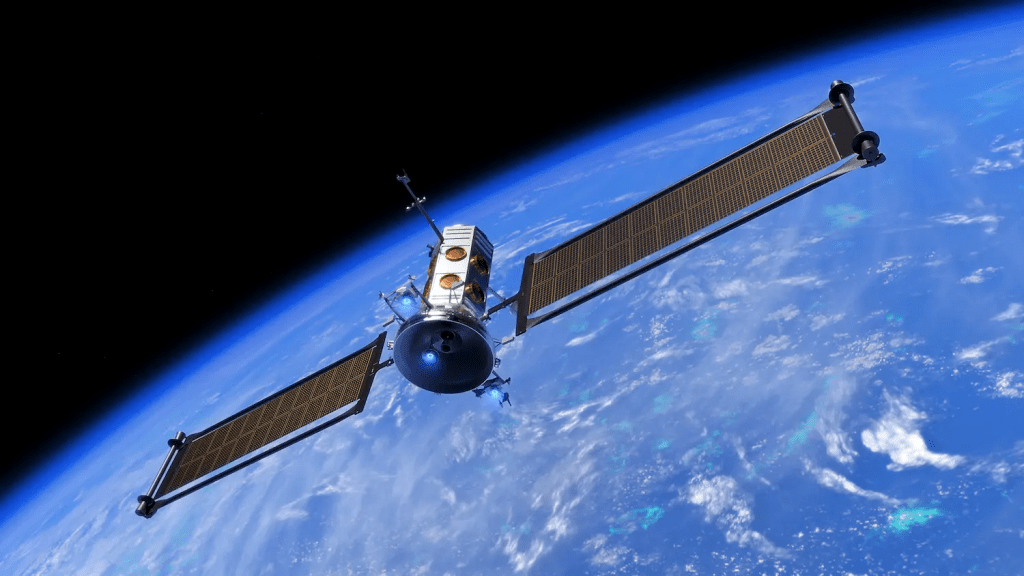
    New Glenn Launches NASA’s ESCAPADE, Lands Fully Reusable Booster / Blue Origin ©

    November 14: Crispr for Cancer

    And for the second time in one article, Crispr’s here! This time, however, it tackles chemotherapy resistance in lung cancer. A gene called NRF2 can cause resistance to chemotherapy in some cases of cancer, so Crispr scientists looked at disabling it in lung squamous cell carcinoma, an aggressive type of lung cancer that makes up around a quarter of all lung cancer cases.

    They infused R34G, a mutation in NRF2 that can regulate cellular stress reactions; when NRF2’s is overactive, it causes cancer cells to resist chemotherapy, so they used R34G to subdue NRF2’s behavior. Even when they only calmed NRF2 in less than half of tumor cells, it still reduced tumors and improved chemotherapy response.

    “The power of this CRISPR therapy lies in its precision. It’s like an arrow that hits only the bullseye,” Kelly Banas, lead author of the study, said. As Crispr will continue to perform and study trials, R34G might just be the future of cancer treatment.

    November 18: Gemini 3’s Release

    We’ve all seen the AI overviews embedded into Google’s search results. You’re just wondering how long to bake your snickerdoodles for, but the AI’s answer ranges from 8 minutes to 25. What? Then, you look and see twelve recipes referenced. Huh? There’s no way it’s that difficult, you wonder. Yeah, we’ve all been there. 

    However, Google just launched Gemini 3, and they proclaim it their “most intelligent model” yet. Maybe we’ll get a more precise answer on those snickerdoodles now! More confident than ever in Gemini 3, Google embedded it into its search engine on the first day of its release, which they had never done before. Normally, they gradually implant new versions over weeks, or even months. 

    Gemini 3 also brings new features to the table. Or, well, to the phone. “Gemini Agent” can book travel plans, organize your overwhelmed email, and do other multi-step jobs. Additionally, they updated the Gemini app to respond to prompts with answers so thorough they look like websites.

    Well, if you’re looking for a new AI model, Gemini 3 may very well be what you need. And if you’re looking for ridiculously incorrect and vague answers to make fun of, the jury’s still out on whether Gemini 3 is the platform for you or not.

    November 18: A Milky Way Model

    We already discussed computers’ inability to model our universe, but I never said anything about the Milky Way! Researchers from the RIKEN Center for Interdisciplinary Theoretical and Mathematical Sciences (iTHEMS) in Japan, The University of Tokyo, and the Universitat de Barcelona in Spain managed to accurately simulate 100 billion stars over the course of 10 thousand years. 
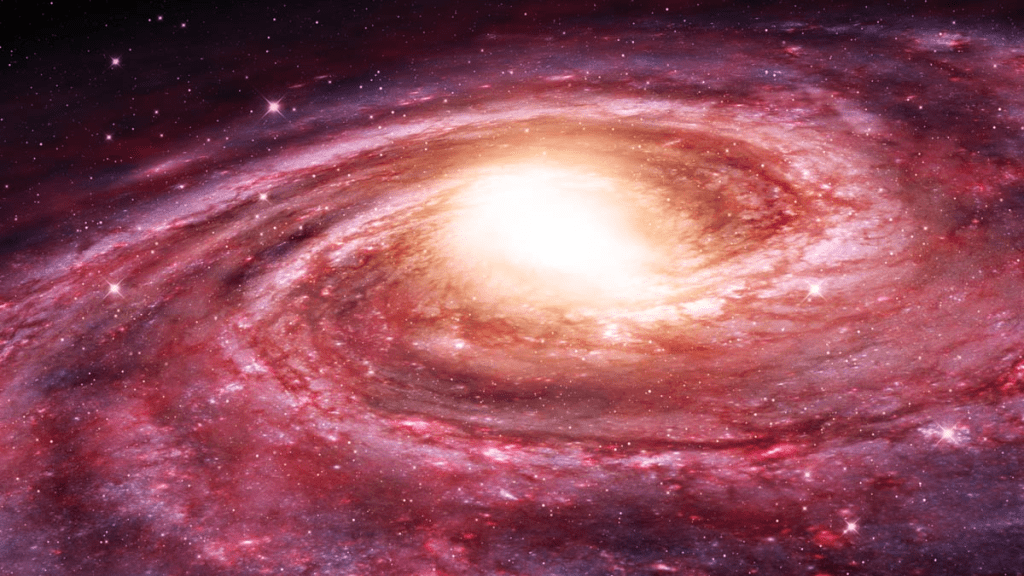
    Researchers Create First 100-billion-star Milky Way Simulation Using AI / NRAO / Orbital Today ©

    These researchers trained an AI model using high-resolution simulations, and it eventually managed to predict resulting gas expansions. Thus, it created a simulation of the galaxy’s overall dynamics as well as its smaller phenomena. Previous models of the universe would struggle to predict on a small-scale, but this new one can do exactly that. Also, it did so quickly! In just under 3 hours, it created a simulation of the galaxy over 1 million years.

    This new model could become popular for making other simulations that need small- and large-scale accuracy. Like lead researcher Keiya Hirashima said,

    “This achievement also shows that AI-accelerated simulations can move beyond pattern recognition to become a genuine tool for scientific discovery—helping us trace how the elements that formed life itself emerged within our galaxy.” -Keiya Hirashima

    November 18: Antimatter Aplenty

    Have you noticed that this is the third event from November 18? Sounds like a hat trick to me! Anyways, CERN’s Antimatter factory recently undertook a new project called the ALPHA experiment, and they published their findings on November 18. Essentially, they managed to create over 15,000 antihydrogen atoms in under 7 hours.

    Antihydrogen is the most basic form of atomic antimatter, and antimatter is a substance with the same mass and particles as another substance but opposite charges. For example, antihydrogen has the same mass and particles as hydrogen, but hydrogen’s protons have positive charges and its electrons have negative charges while antihydrogen’s protons have negative charges and its electrons have positive charges. When antimatter and matter meet, they destroy each other, creating an immense amount of energy. Antimatter is normally found in particle accelerators, cosmic rays, and medical imaging, but it’s fairly rare as creating it is a lengthy process.

    However, with the ALPHA team’s new method, they’ve managed to make antimatter 8 times faster than normal. Normally, the process involves creating and trapping antiprotons and positrons separately before cooling and merging them together to form antihydrogen, but ALPHA’s unique success came from the way they create their positrons. The general problem with creating antimatter is that trapped positrons refuse to stay still once trapped, and they don’t cool down enough. So, the ALPHA team approached the antihydrogen by adding laser-cooled beryllium ions to the positron trap. The beryllium makes the positrons lose energy through sympathetic cooling, which cools the positrons to around -266 °C and makes them more likely to merge with the antiprotons and form antihydrogen, creating more antimatter.

    Scientists thoroughly study any antimatter they can get, so, with this new abundance, they plan to study gravity’s effect on antimatter in the ALPHA-g experiment. Stay tuned because they may discover new properties and behavior of antimatter, which wouldn’t be possible without ALPHA’s new process.

    Okay, that’s all I have for November. Consider this my holiday gift to you. Enjoy December, and come back for Stemline’s next recap!
    References

    Cai, K. (2025, November 18). Google launches Gemini 3, embeds AI model into search immediately. Reuters. https://www.reuters.com/business/media-telecom/google-launches-gemini-3-embeds-ai-model-into-search-immediately-2025-11-18/
    ChristianaCare Gene Editing Institute. (2025, November 17). CRISPR breakthrough reverses chemotherapy resistance in lung cancer. Eurek Alert! https://www.eurekalert.org/news-releases/1106182
    CRISPR Therapeutics AG. (2025, November 8). CRISPR Therapeutics announces positive phase 1 clinical data for CTX310® demonstrating deep and durable ANGPTL3 editing, triglyceride and lipid lowering. CRISPR Therapeutics. https://crisprtx.com/about-us/press-releases-and-presentations/crispr-therapeutics-announces-positive-phase-1-clinical-data-for-ctx310-demonstrating-deep-and-durable-angptl3-editing-triglyceride-and-lipid-lowering 
    Harris, R. (2025, November 18). Breakthrough in antimatter production. CERN. https://home.cern/news/news/experiments/breakthrough-antimatter-production
    Lohnes, K. (2025, June 13). What is antimatter?. Encyclopedia Britannica. https://www.britannica.com/story/what-is-antimatter 
    Mullin, E. (2025, November 8). A gene-editing therapy cut cholesterol levels by half. Wired. https://www.wired.com/story/a-gene-editing-therapy-cut-cholesterol-levels-by-half/ 
    Riken. (2025, November 18). The simulated Milky Way: 100 billion stars using 7 million CPU cores. Riken. https://www.riken.jp/en/news_pubs/research_news/pr/2025/20251117_2/index.html 
    UCAR. (2020). How do we reduce greenhouse gases? UCAR: Center for Science Education. https://scied.ucar.edu/learning-zone/climate-solutions/reduce-greenhouse-gases 
    University of British Columbia Okanagan campus. (2025, November 10). Physicists prove the Universe isn’t a simulation after all. ScienceDaily. Retrieved December 13, 2025 from http://www.sciencedaily.com/releases/2025/11/251110021052.htm 
    University of Colorado at Boulder. (2025, November 3). Antarctic glacier retreated faster than any other in modern history. Eurek Alert. https://www.eurekalert.org/news-releases/1104274 
    Watch: Blue Origin rocket successfully lands booster for first time [Video]. (2025, November 13). BBC. https://www.bbc.com/news/videos/c5yd0zd6eddo 

  • October Monthly Recap: How’s It Falling?

    October Monthly Recap: How’s It Falling?

    By Bela Koganti

    ~ 14 minutes


    This October, STEM has reached new heights in astronomy, medicine, and awards. So, here’s an outline of what you need to know to stay informed.

    October 1: Enceladus

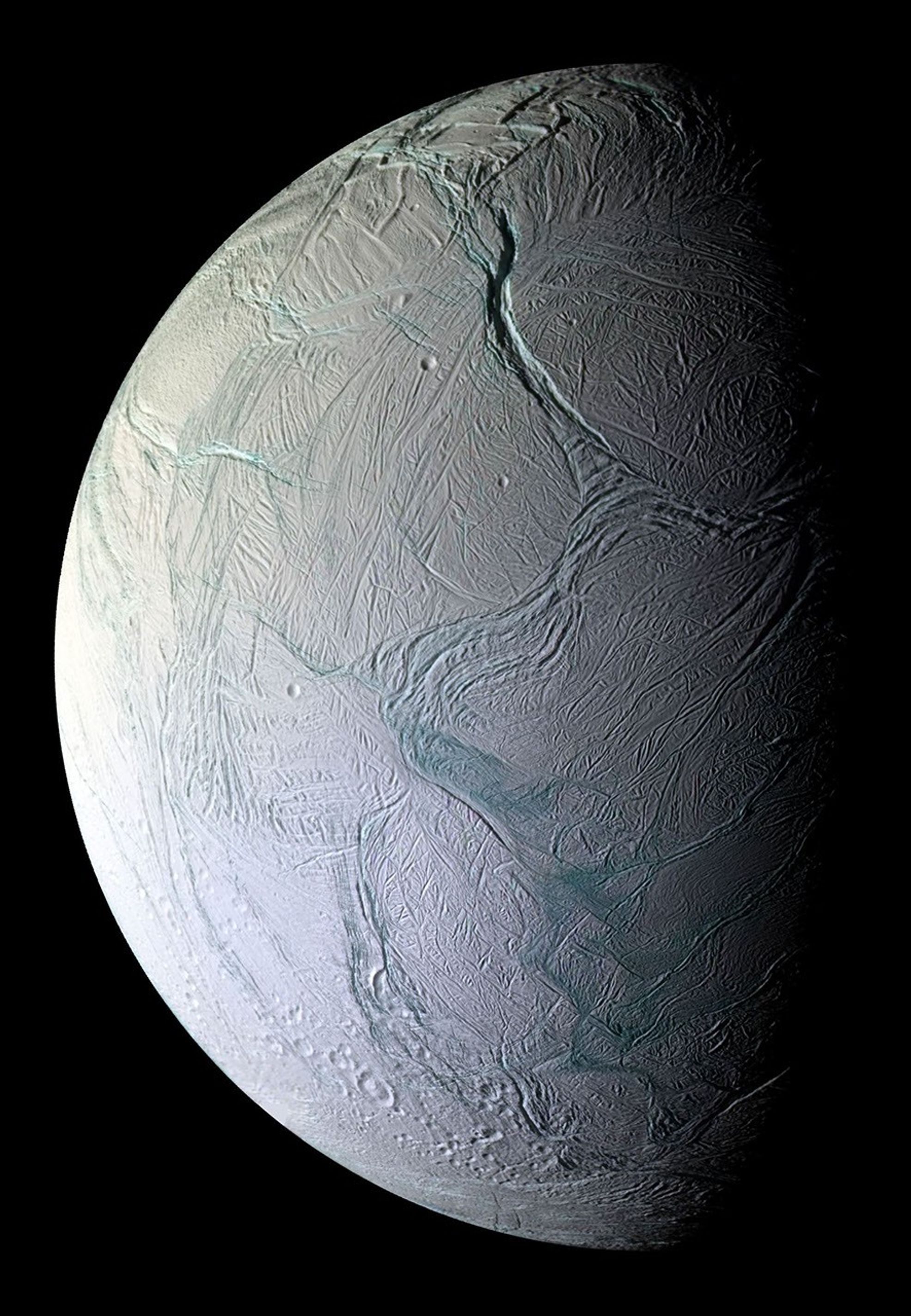
    Enceladus / NASA Science ©

    Saturn already has the highest number of known moons in our solar system, with 250, but it could also become the only planet with a habitable moon. Greedy, right? The 2005-2017 Cassini-Huygens mission to Saturn revealed clefts in the surface of Enceladus (one of Saturn’s moons) that shoot out water vapor ‘plumes’ into space as a ring (dubbed the E-ring) that circles Saturn. These clefts are believed to receive their water from an ocean below Enceladus’ surface. When the Cassini spacecraft flew through the plumes as they sprayed, it collected ice grains. Since the mission, scientists have been researching these grains, and they’ve found that Enceladus’ plumes hold carbon-containing molecules like aliphatic, heterocyclic esters, alkalines, ethers, ethyl, possibly nitrogenic, and possibly oxygenic compounds. They published their most up-to-date findings this October 1. 

    To break all this down, these carbon-containing molecules basically mean that the moon Enceladus might have the potential to house life. But don’t get too excited— it’s also possible that these molecules only become organic due to radiation, where ions in Saturn’s magnetosphere chemically react with the E-ring particles. To find out the truth, the European Space Agency might send an orbiter to Enceladus to sample fresh ice. Their orbiter wouldn’t arrive till 2054, so I suppose we’ll just cross our fingers till then. 

    October 3: From Type A to Type O

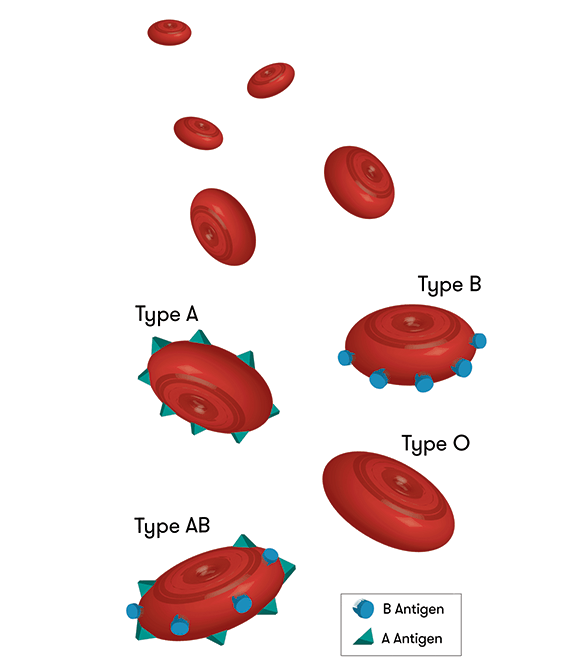
    We all know and love universal blood type O, but what about those who actually have it? For kidney transplants, type-A positive, -B positive, and -AB positive patients can receive their own respective type and type-O; however, type-O patients can only receive type-O kidneys. Thus, when these other patients receive type-O kidneys, people with type-O lack donors, end up waiting two to four years longer for their kidneys, and often die during the wait. Oh, and let’s not forget that type-O patients comprise over half of the kidney waiting lists!

    Scientists from the University of British Columbia have been tirelessly studying this catastrophe for over a decade, and they published their first successful transplant this October 3. They managed to place two reactive enzymes in a type-A kidney so that the kidney changed to universal type-O. Sugars that coat organs’ blood vessels determine blood type, so they created an enzyme reaction to strip away the defining sugars. While past conversions have needed live donors and changed antibodies within patients, compromising their immune systems, this new method changes the kidney itself and uses deceased donors.

    Blood Types / Australian Academy of Science ©

    So, here’s what happened in their transplant test:

    1. Scientists converted a type-A kidney using the enzymes
    2. Placed the kidney in a deceased recipient (with the family’s permission)
    3. Days 1-2: the body showed no signs of rejecting the kidney
    4. Day 3: a few of the type-A attributes reappeared, which is a slight reaction, but nothing as severe as in previous conversions
    5. The body showed signs of tolerating the kidney anyway
    6. Success!

    October 6: 2025 Nobel Prize in Physiology or Medicine

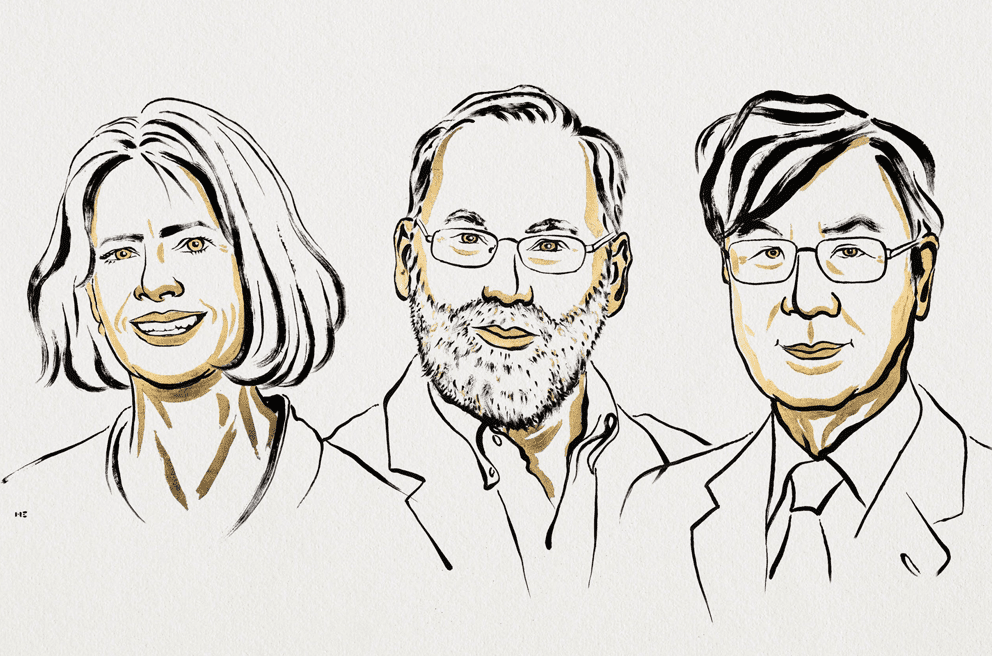
    This year, the 2025 Nobel Prize in Physiology or Medicine has been awarded to three people! Mary E. Brunkow, Fred Ramsdell, and Shimon Sakaguchi earned it for their advancements on ‘peripheral immune tolerance’, the mechanism that ensures the immune system doesn’t hurt the body. Essentially, peripheral immune tolerance prevents humans from having all kinds of autoimmune diseases. However, prior to these three, scientists had no real understanding of why or how this system worked. Brunkow, Ramsdell, and Sakaguchi built on each other’s findings to discover ‘regulatory T cells’, the agents behind peripheral immune tolerance.

    Nobel Prize in Medicine / Lindau Nobel Laureates ©

    Here’s how they did it:

    1. 1995: Sakaguchi debunked the popular theory of ‘central tolerance’ by discovering a new group of immune cells. 
    2. 2001: Brunkow and Ramsdell explained why a certain type of mice was particularly defenseless against autoimmune diseases. They found that strain to have a mutation in what they dubbed their ‘Foxp3’ gene, and they showed that humans have a similar gene, which also causes an autoimmune disease when mutated. 
    3. 2003: Sakaguchi showed that the Foxp3 gene dictates the growth of the cells he previously found. These cells became known as ‘regulatory T cells’, and they supervise cells in the immune system as well as the immune system’s tolerance of the human body.

    All this is awesome, but let’s see how their discovery actually impacted modern medicine. Scientists have found that regulatory T cells can actually protect tumours from the immune system, so, in this case, they are looking for a way to dismantle the cells. However, to combat autoimmune diseases, scientists can implant more regulatory T cells into the body to help prevent the immune system from attacking the body. So, just as Ann Fernholm proclaimed, “they have thus conferred the greatest benefit to humankind.”

    October 7: 2025 Nobel Prize in Physics

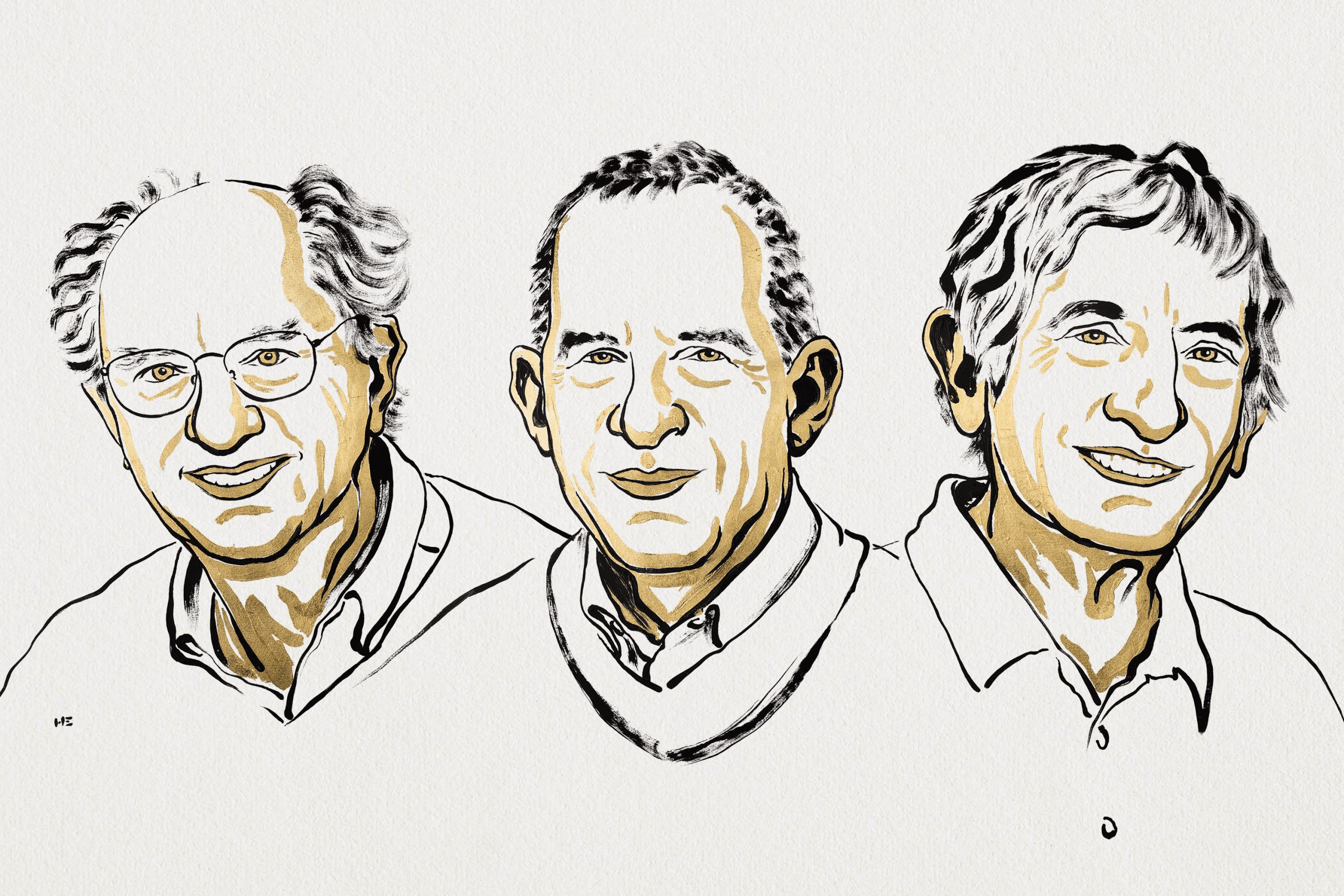
    Get this: another trio received the 2025 Nobel Prize in Physics! The Royal Swedish Academy of Sciences bestowed the honor onto John Clarke, Michel H. Devoret, and John M. Martinis for their experiments demonstrating quantum physics within a larger system. Quantum physics, or quantum mechanics, allows tunneling, which is when particles pass through barriers. Normally, the effects of quantum mechanics become negligible once they start working with large particles, but Clarke, Devoret, and Martinis showed that tunneling can still happen in a larger system.

    Nobel Prize in Physics / Lindau Nobel Laureates ©

    Just like with our last trio, here’s how they did it: 

    1. 1984-1985: They experimented with passing a current of charged particles through a controlled circuit containing superconductors. They found that the multiple particles acted like one large particle when going through the superconductor. The quantum part of this was that the system used tunneling to go from zero-voltage to a voltage. So, they concluded that quantum mechanics can still cause tunneling in a macroscopic system.

    And why do we care? Well, Olle Eriksson, the Chair of the Nobel Committee for Physics, said, “It is wonderful to be able to celebrate the way that century-old quantum mechanics continually offers new surprises. It is also enormously useful, as quantum mechanics is the foundation of all digital technology.” I don’t know about you, but I think I’ll take his word for it.

    October 8: 2025 Nobel Prize in Chemistry

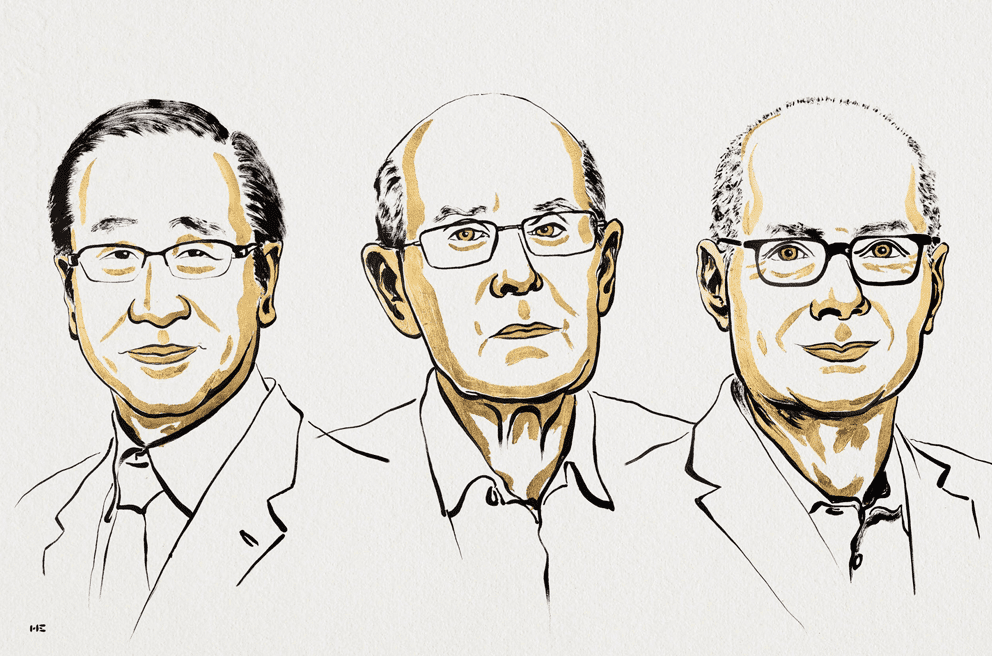
    Our LAST Nobel Prize trio of October comes in Chemistry! Susumu Kitagawa, Richard Robson, and Omar M. Yaghi received the 2025 Nobel Prize in Chemistry from the Royal Swedish Academy of Sciences for their ‘metal-organic frameworks (MOFs)’. These frameworks are from their new molecular construction, where carbon-based molecules link together metal ions so that the two form MOFs, which are essentially porous crystals. Scientists can then manipulate these MOFs to take in and guard particular substances. MOFs can also create chemical reactions and direct electricity. So, with these MOFs, scientists can design materials with particular functions of their choosing.

    Nobel Prize in Chemistry / Lindau Nobel Laureates ©

    You know the drill– here’s how they did it:

    1. 1989: Robson began testing the properties of atoms by combining copper molecules with four-pronged molecules, and this created porous crystals similar to MOFs. However, these MOF impersonators were unstable and needed someone to fix them.
    2. 1992-2003: Enter- Kitagawa and Yaghi. From his experiments, Kitagawa concluded that MOFs could be changed and modified as gases could run through them. Then, Yaghi made a stable MOF and showed that they could be manipulated to have new properties.

    Since their discoveries, scientists have made tons of their own unique MOFs, each equipped to solve a different problem. We can thank MOFs for giving us a safer Earth. I mean, any kind of chemical substance that can make clean water, grab carbon dioxide from the air, or produce water from desert air sounds like a good one to me. 

    October 11: The Surprising Link Between COVID-19 and Anxiety

    Covid. The word that teleports Gen-Z right back to online school in pajamas, Roblox, and Charli D’Amelio. We all know and hate it, but did we realize that it might be affecting future generations who weren’t even alive in 2020? 

    A study published on October 11 revealed that male mice who contracted COVID-19 birthed children with more anxiety-like behaviors than those of uninfected mice’s children. Basically, COVID-19 changes RNA molecules in the male’s sperm, which then dictates his children’s brain development. In female offspring specifically, their brain’s hippocampus region, which deals with behaviors including anxiety and depression, was altered. The authors of the study believe that these changes may cause increased anxiety levels.

    Okay, okay. Remember: this study was done on mice, not humans. More research is needed to see if humans will experience similar effects, but for now, we’re safe.

    October 12: Light Years Away

    “A long time ago in a galaxy far, far away…” Wait, what? A long time ago? Evidence suggesting that the closest alien civilization may be 33,000 light-years away did come out this October 12, but for the estimate to be feasible, the civilization would need to have already existed for at least 280,000 years. Yeah, that feels like a long time ago. And don’t worry about the far, far away part– I’d call 33,000 light-years pretty far. 

    At a recent meeting in Helsinki, research was shown indicating such a possibility. Here’s the criteria for a planet to have extraterrestrial life and actually sustain itself:

    1. Carbon dioxide in the atmosphere (so photosynthesis can work and support life)
    2. An atmosphere of at least 18% oxygen (complex animals need more oxygen, and there must be enough oxygen for fire because blacksmithing must happen to technologically advance)
    3. Average lifetime of about 10 million years (so they can exist at the same time as us)
    4. Already existed for at least 280,000 years (so civilization can develop and they can exist at the same time as us)

    Keeping these in mind, scientists have concluded that if there is an alien civilization existing at the same time as us in the same galaxy, it would have to be at least 33,000 light-years away. To put that into perspective, our Sun is about 27,000 light-years away from us. Yeah. Pretty far.

    October 20: Enteral Ventilation

    Sometimes, CPR isn’t enough to save respiratory failure. Then, patients turn to mechanical ventilation. But sometimes mechanical ventilation is too much, and the lungs end up even further damaged. Enteral ventilation, however, may just be the sweet spot. Enteral ventilation is a practice where perfluorodecalin, an exceptionally oxygen-soluble liquid, is administered through the intestine to deliver oxygen to the body while the lungs heal. Published on October 20, the first in-human study of enteral ventilation succeeded and was demonstrated to be safe. The only side effects were bloating and stomach pain, but those quickly resolved, and perfluorodecalin concentrations nearly disappeared from the bloodstream (a good thing!). 

    After this safe and tolerated success, more studies on enteral ventilation will soon develop, and lungs everywhere may be saved.

    October 20: CI Chondrite on the Moon

    Before we get into any of this moon stuff, you may be wondering what in the world (or should I say galaxy) CI Chondrite is. I’m here to help! CI Chondrite, a porous and the most water-dense meteorite, generally breaks before it can reach Earth because its properties make it so crumbly. CI Chondrite actually makes up less than one percent of all meteorites on Earth. That means it also barely ever reaches the moon. However, during their Chang’e-6 mission published on October 21, the China National Space Administration found traces of CI Chondrite dust on the moon.

    A Chondrite Meteorite

    Here’s how they did it:

    1. They looked at thousands of fragments from the Apollo Basin, a sub-basin in the South Pole-Aikten Basin that acts as a hotspot for debris since it covers one-fourth of the moon.
    2. They looked for pieces with olivine, a mineral normally in meteorites. 
    3. Then, they analyzed the olivine pieces and found seven with properties identical to CI Chondrite
    4. When analyzing, they found that the pieces did not have the chemical ratios expected for lunar debris.
    5. However, they realized that the seven fragments’ ratios did align with those of a CI Chondrite asteroid that crashed, melted, and solidified on the moon early in the solar system’s history.

    With these discoveries, the team found the first solid evidence that CI Chondrite once hit the moon and that CI Chondrite can be preserved after such a crash. Actually, they found that CI Chondrite could comprise up to 30 percent of the Moon’s meteorite debris. Additionally, their study provided evidence to help back up the theory that CI Chondrite once created water and volatiles on the Earth and Moon. More research is needed to see if it’s really true, but those missions will now be much easier with the China National Space Administration’s new process to find CI Chondrite.

    October 27: Back to the Basics

    Nope, not like the song. On October 27, in the Astrophysical Journal Letters, scientists described their findings of what they believed to be Population III stars, one of the first groups of stars in the galaxy. With the James Webb Space Telescope, they pinpointed them in LAP1-B, a cluster of stars 12 billion light-years away from Earth. Scientists believe Population III stars are some of the first stars made after the Big Bang, and they have a unique property of being a billion times brighter than and a million times the mass of our Sun. 

    Here’s why they believe their discovered stars to be Population III:

    1. Emission lines on the stars’ spectra indicated high-energy photons, which are consistent with Population III stars.
    2. Their spectra showed them to be extremely large.
    3. Their masses aligned with astronomers’ guesses for those of Population III stars.
    4. They were in LAP1-B, whose properties agree with the criteria for Population III.
      1. It’s a low hydrogen and helium environment.
      2. Its temperature can support star formation.
      3. It’s a low-mass cluster, and it had few large stars before those of Population III.
      4. It meets mathematical criteria for forming stars and keeping them alive.

    Seems pretty feasible, right? Anyways, these scientists were the first to find a group of stars that meets all criteria for being Population III, and these ancient stars can actually explain the galaxy’s construction and development. That’s all for STEM this October, but don’t worry, because this November’s looking like a great one.

    References

    Cooper, K. (2025, October 2). Saturn’s moon Enceladus is shooting out organic molecules that could help create life. Space.com. https://www.space.com/astronomy/saturn/saturns-moon-enceladus-is-shooting-out-organic-molecules-that-could-help-create-life 
    Europlanet. (2025, October 12). Closest alien civilization could be 33,000 light years away. Science Daily. https://www.sciencedaily.com/releases/2025/10/251011105533.htm 
    Fernholm, A. (2025, October 6). Popular science background: They understood how the immune system is kept in check. Nobel Prize. https://www.nobelprize.org/uploads/2025/10/popular-medicineprize2025-2.pdf 
    The Florey. (2025, October 11). COVID-19 causes changes in sperm that lead to increased anxiety in offspring. The Florey. https://florey.edu.au/news/2025/10/covid-19-causes-changes-in-sperm-that-lead-to-increased-anxiety-in-offspring/ 
    Howell, E. (2017, September 15). Cassini-Huygens: Exploring Saturn’s system. Space.com. https://www.space.com/17754-cassini-huygens.html 
    Howell, E. (2025, October 27). James Webb telescope may have found the first stars in the universe, new study claims. Live Science. https://www.livescience.com/space/cosmology/james-webb-telescope-may-have-found-the-universes-first-generation-of-stars 
    Kungl. Vetenskaps-Akademien. (2025, October 7). Press release (Nobel Prize in Physics 2025). Nobel Prize. https://www.nobelprize.org/prizes/physics/2025/press-release/ 
    Kungl. Vetenskaps-Akademien. (2025, October 8). Press release (Nobel Prize in Chemistry 2025). Nobel Prize. https://www.nobelprize.org/prizes/chemistry/2025/press-release/ 
    Med. (2025, October 20). Safety and tolerability of intrarectal perfluorodecalin for enteral ventilation in a first-in-human trial. Cell. https://www.cell.com/med/abstract/S2666-6340(25)00314-9 
    Nobelförsamlingen. (2025, October 6). Press release (Nobel Prize in Physiology or Medicine 2025). Nobel Prize. https://www.nobelprize.org/prizes/medicine/2025/press-release/ 
    Starr, M. (2025, October 21). China brought something unexpected back from the far side of the Moon. Science Alert. https://www.sciencealert.com/china-brought-something-unexpected-back-from-the-far-side-of-the-moon 
    University of British Columbia. (2025, October 3). UBC enzyme technology clears first human test toward universal donor organs for transplantation. Eurek Alert. https://www.eurekalert.org/news-releases/1100223 

  • Skinny Budgets: Detrimental Cuts to Federal STEM Education

    Skinny Budgets: Detrimental Cuts to Federal STEM Education

    By Ariel Yuan

    ~5 minutes


    Science, Technology, Engineering, and Mathematics. STEM. These cornerstones of development drive 69% of America’s GDP, fuel two-thirds of national jobs, and bring in 2.3 trillion dollars of tax revenue according to IEEE USA 2020. One critical engine lies within these numbers: education. 

    Strong STEM programs like the Every Student Succeeds Act powered generations of American workforce and provided the U.S. with an edge in global competition. As the Fiscal Year 2026 “skinny budget” jeopardizes funding at the Department of Education, it becomes crucial to protect funding that supports national progress (Haring 2025). 

    Graph showing funding cuts at the National Science Foundation through May 21, 2025 / New York Times

    The Problem:

    As the United States continues to cut STEM from its federal budget, America faces barriers in empowering underserved populations and boosting national advancements. The FY 2026 federal budget reflects how national priorities are shifting away from education: In 2025: the government cut nearly five billion dollars from the National Science Foundation, which aims to increase STEM access (Acenet 2025). Additionally, 773 million dollars in research grants were cut at the NSF (Miller 2025). 

    But why do education cuts hit STEM the most? Science and technology require hands-on labs, updated equipment, and specialized teachers. These factors demand substantial investment. If funding evaporates, so does support for minorities in STEM; programs serving Black students and those with autism have already been cut (Miller 2025). Educational budget cuts harm minorities considerably, as they often rely the most on federal funding. Other underprivileged populations, including women, are also on the chopping block. 

    Moreover, cuts to the support for academics interfere with national interests. STEM increases America’s global competitiveness and supports domestic economies as it drives technological innovations that set America as the leader in tech. When STEM declines federally, talented innovators may relocate to another country for better funding. Without STEM education funding, America risks deepening existing inequities in education and a fall from grace in the global race for innovation.

    President Obama signing the Every Student Succeeds Act into effect on Dec. 10, 2015 / USA Today

    Diving Into STEM Programs:

    One of the most effective federal education programs is the Every Student Succeeds Act (ESSA), which upholds education for high-need students (Office for Civil Rights 2025). Specifically, Title IV Part A of the act is a Student Support and Academic Enrichment (SSAE) program that funds state and local agencies. SSAE grants provide an estimated $1.38 billion of funding to improve learning conditions and boost technology use (OESE 2025). 

    Despite the program’s benefits, it faces severe challenges in funding. Although the program was authorized in Congress to receive up to $1.6 billion, it only reached $1.38 billion in 2024 (Sutton 2020). Falling short of the authorized amount means less funding for each district. Even worse, the federal budget for FY 2026 dissolves the program through its consolidation with seventeen other grants. The grants will be merged into one K-12 Simplified Funding initiative, eliminating $4.5 billion of funding (Lieberman & Stone, 2025). The removal of SSAE grants means a lack of federal enforcement on STEM-related spending. Wealthier districts may still support STEM initiatives through other channels, but low-income districts relying on federal funds are left further behind. 

    Students using school Chromebooks at Andrew Lewis Middle School / Virginia Department of Education

    Even when SSAE was active, Section 4109 of ESSA restricted funds for purchasing devices, software, or planning digital learning activities to 15% (“Title IV, Part A Statute,” 2025). In America, 92% of jobs require digital skills, and pay increases by 45% for workers who have them (National Skills Coalition 2023). The 15% cap is a deadly trap for low-income students and limits their career opportunities and economic mobility. Issues with SSAE perpetuate a cycle of inequity, entrenching students further in poverty and weakening America’s future workforce.

    The Solution:

     Addressing the decline in SSAE programming requires a two-pronged legislative solution:

    1. Revive SSAE grant and raise to authorized 1.6 billion level.
    2. Lift the 15% cap on tech spending

    Together, these actions allow for more funding allocation to STEM. More funding directly counters cuts in STEM spending. The steps protect specialized programs funded by SSAE and close the education wealth gap. Districts will receive adequate support and decide how to prioritize STEM. Low-income districts may choose to upgrade student Chromebooks, while wealthier ones may choose to hire more STEM teachers. All states can prepare the future workforce well and maintain America’s global competitive edge. 

    The status quo of underfunded classrooms, outdated technology, and limited opportunity leaves millions of students behind and weakens national economic foundations. The education of today is the workforce of tomorrow. We must not trade long-term growth for short-term cuts – the time to act is now.

    References

    Haring, J. (2025, May 2). Highlights of President Trump’s FY 2026 ‘Skinny Budget.’” AAF. https://www.americanactionforum.org/insight/highlights-of-president-trumps-fy-   2026-skinny-budget/
    Lieberman, M., & Stone, M. (2025, June 4). Trump Wants to Cut More Than 40 Federal K-12 Programs. See Which Ones. Education Week. https://www.edweek.org/policy-politics/trump-wants-to-cut-more-than-40-federal-k-12-programs-see-which-ones/2025/06.
    Miller, K. (2025, May 22). Funding Cuts Are a ‘Gut Punch’ for STEM Education Researchers. The New  York Times. https://www.nytimes.com/2025/05/22/science/trump-nsf-stem-education.html.
    National Skills Coalition. (2023, February 6). New Report: 92% of Jobs Require Digital Skills, One-Third of Workers Have Low or No Digital Skills Due to Historic Underinvestment, Structural Inequities. https://nationalskillscoalition.org/news/press-releases/new-  report-92-of-jobs-require-digital-skills-one-third-of-workers-have-low-or-no-digital-skills-due-to-historic-underinvestment-structural-inequities/.
    Office for Civil Rights. (n.d.). Every Student Succeeds Act (ESSA). U.S. Department of Education. https://www.ed.gov/laws-and-policy/laws-preschool-grade-12-education/every-student-succeeds-act-essa.
    Office of Elementary and Secondary Education. (n.d.). Student Support and Academic Enrichment Program (Title IV, Part A). U.S. Department of Education. https://www.ed.gov/grants-and-programs/formula-grants/school-improvement/student-support-and-academic-
    enrichment-program#home.
    IEEE-USA. (2020, January 29). STEM Supports Two Thirds of U.S. Jobs. https://ieeeusa.org/stem-supports-two-thirds-of-u-s-jobs/. Sutton, J. (2020, March 16). Student Support and Academic Enrichment (SSAE) Grant Title IV, Part A of ESSA. NFHS. https://www.nfhs.org/articles/student-support-and-academic-enrichment-ssae-grant-title-iv-part-a-of-essa.
    Title IV, Part A Statute. (n.d.). T4PAcenter. https://t4pacenter.ed.gov/T4PAStatutes.aspx.
    White House FY 2026 Budget Proposal Targets Education, Science, and Civil Rights Funding. (2025, May 9). Acenet. https://www.acenet.edu/News-Room/Pages/White-House-FY-2026-Budget-Proposal.aspx.
    Zernike, K. (2025, June 3). Scientists Warn That Trump’s Cuts Will Set Off a Brain Drain.” The New York Times. https://www.nytimes.com/2025/06/03/us/trump-federal-spending-grants-scientists-leaving.html.