About

Tag: physics

  • October Monthly STEM Recap: How’s It Falling?

    October Monthly STEM Recap: How’s It Falling?

    By Bela Koganti

    ~ 14 minutes


    This October, STEM has reached new heights in astronomy, medicine, and awards. So, here’s an outline of what you need to know to stay informed.

    October 1: Enceladus
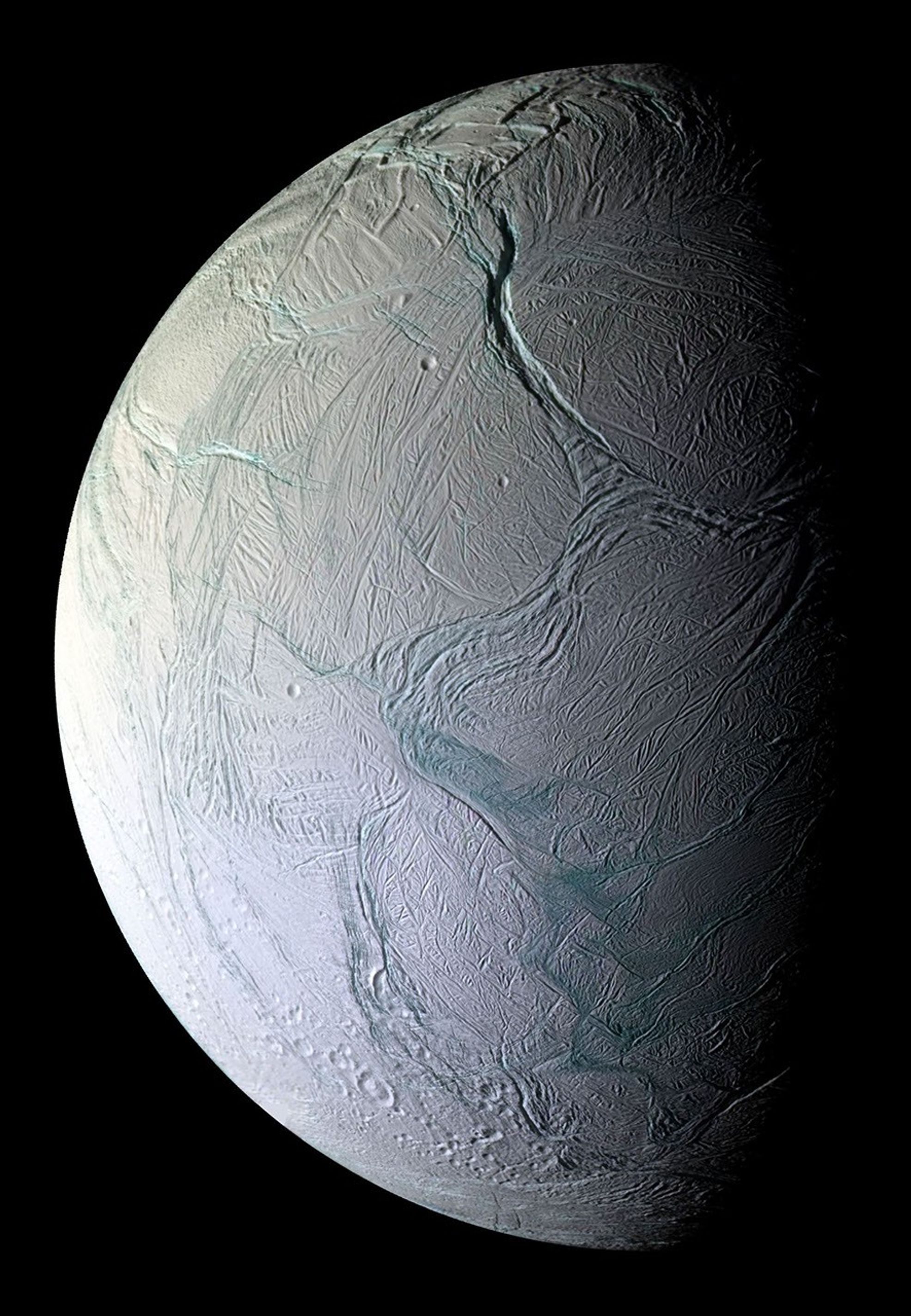
    Enceladus / NASA Science ©

    Saturn already has the highest number of known moons in our solar system, with 250, but it could also become the only planet with a habitable moon. Greedy, right? The 2005-2017 Cassini-Huygens mission to Saturn revealed clefts in the surface of Enceladus (one of Saturn’s moons) that shoot out water vapor ‘plumes’ into space as a ring (dubbed the E-ring) that circles Saturn. These clefts are believed to receive their water from an ocean below Enceladus’ surface. When the Cassini spacecraft flew through the plumes as they sprayed, it collected ice grains. Since the mission, scientists have been researching these grains, and they’ve found that Enceladus’ plumes hold carbon-containing molecules like aliphatic, heterocyclic esters, alkalines, ethers, ethyl, possibly nitrogenic, and possibly oxygenic compounds. They published their most up-to-date findings this October 1. 

    To break all this down, these carbon-containing molecules basically mean that the moon Enceladus might have the potential to house life. But don’t get too excited— it’s also possible that these molecules only become organic due to radiation, where ions in Saturn’s magnetosphere chemically react with the E-ring particles. To find out the truth, the European Space Agency might send an orbiter to Enceladus to sample fresh ice. Their orbiter wouldn’t arrive till 2054, so I suppose we’ll just cross our fingers till then. 

    October 3: From Type A to Type O

    We all know and love universal blood type O, but what about those who actually have it? For kidney transplants, type-A positive, -B positive, and -AB positive patients can receive their own respective type and type-O; however, type-O patients can only receive type-O kidneys. Thus, when these other patients receive type-O kidneys, people with type-O lack donors, end up waiting two to four years longer for their kidneys, and often die during the wait. Oh, and let’s not forget that type-O patients comprise over half of the kidney waiting lists!

    Scientists from the University of British Columbia have been tirelessly studying this catastrophe for over a decade, and they published their first successful transplant this October 3. They managed to place two reactive enzymes in a type-A kidney so that the kidney changed to universal type-O. Sugars that coat organs’ blood vessels determine blood type, so they created an enzyme reaction to strip away the defining sugars. While past conversions have needed live donors and changed antibodies within patients, compromising their immune systems, this new method changes the kidney itself and uses deceased donors.
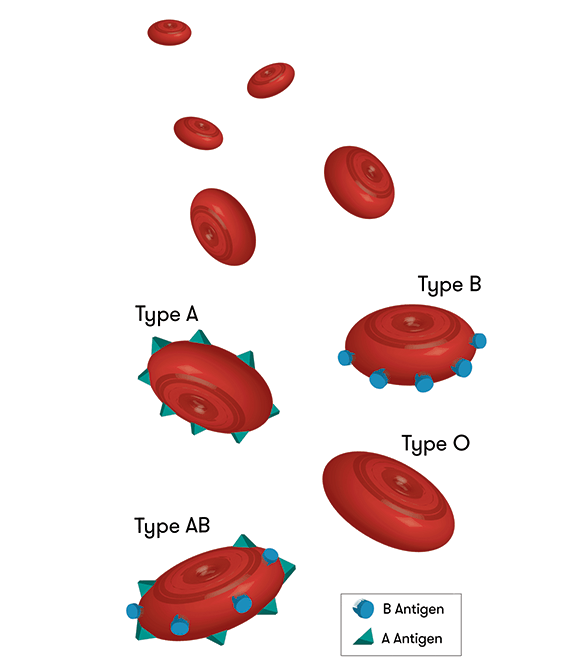
    Blood Types / Australian Academy of Science ©

    So, here’s what happened in their transplant test:

    1. Scientists converted a type-A kidney using the enzymes
    2. Placed the kidney in a deceased recipient (with the family’s permission)
    3. Days 1-2: the body showed no signs of rejecting the kidney
    4. Day 3: a few of the type-A attributes reappeared, which is a slight reaction, but nothing as severe as in previous conversions
    5. The body showed signs of tolerating the kidney anyway
    6. Success!

    October 6: 2025 Nobel Prize in Physiology or Medicine

    This year, the 2025 Nobel Prize in Physiology or Medicine has been awarded to three people! Mary E. Brunkow, Fred Ramsdell, and Shimon Sakaguchi earned it for their advancements on ‘peripheral immune tolerance’, the mechanism that ensures the immune system doesn’t hurt the body. Essentially, peripheral immune tolerance prevents humans from having all kinds of autoimmune diseases. However, prior to these three, scientists had no real understanding of why or how this system worked. Brunkow, Ramsdell, and Sakaguchi built on each other’s findings to discover ‘regulatory T cells’, the agents behind peripheral immune tolerance.
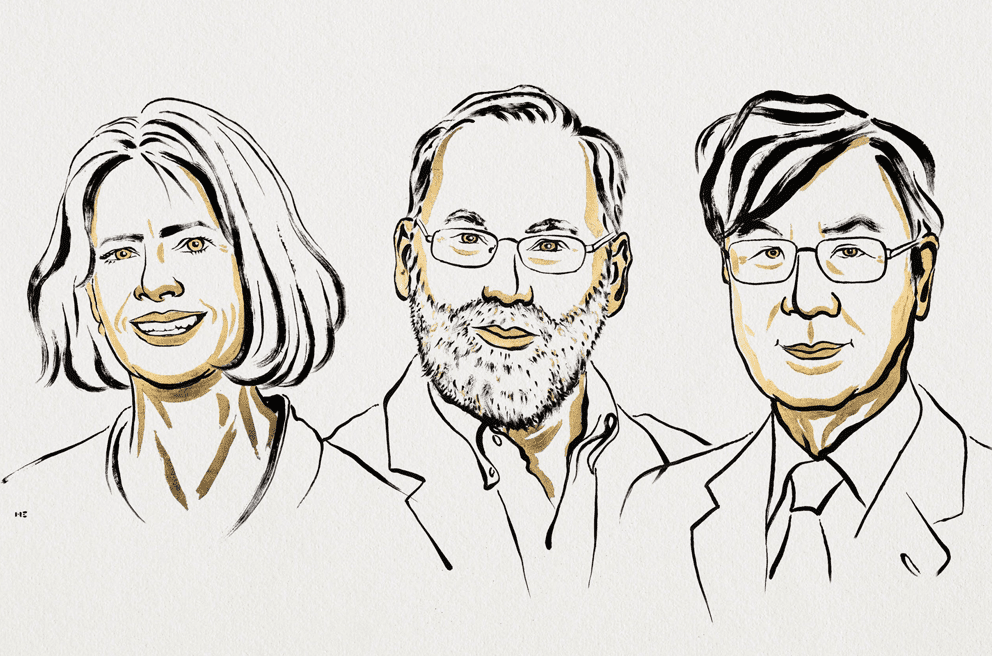
    Nobel Prize in Medicine / Lindau Nobel Laureates ©

    Here’s how they did it:

    1. 1995: Sakaguchi debunked the popular theory of ‘central tolerance’ by discovering a new group of immune cells. 
    2. 2001: Brunkow and Ramsdell explained why a certain type of mice was particularly defenseless against autoimmune diseases. They found that strain to have a mutation in what they dubbed their ‘Foxp3’ gene, and they showed that humans have a similar gene, which also causes an autoimmune disease when mutated. 
    3. 2003: Sakaguchi showed that the Foxp3 gene dictates the growth of the cells he previously found. These cells became known as ‘regulatory T cells’, and they supervise cells in the immune system as well as the immune system’s tolerance of the human body.

    All this is awesome, but let’s see how their discovery actually impacted modern medicine. Scientists have found that regulatory T cells can actually protect tumours from the immune system, so, in this case, they are looking for a way to dismantle the cells. However, to combat autoimmune diseases, scientists can implant more regulatory T cells into the body to help prevent the immune system from attacking the body. So, just as Ann Fernholm proclaimed, “they have thus conferred the greatest benefit to humankind.”

    October 7: 2025 Nobel Prize in Physics

    Get this: another trio received the 2025 Nobel Prize in Physics! The Royal Swedish Academy of Sciences bestowed the honor onto John Clarke, Michel H. Devoret, and John M. Martinis for their experiments demonstrating quantum physics within a larger system. Quantum physics, or quantum mechanics, allows tunneling, which is when particles pass through barriers. Normally, the effects of quantum mechanics become negligible once they start working with large particles, but Clarke, Devoret, and Martinis showed that tunneling can still happen in a larger system.
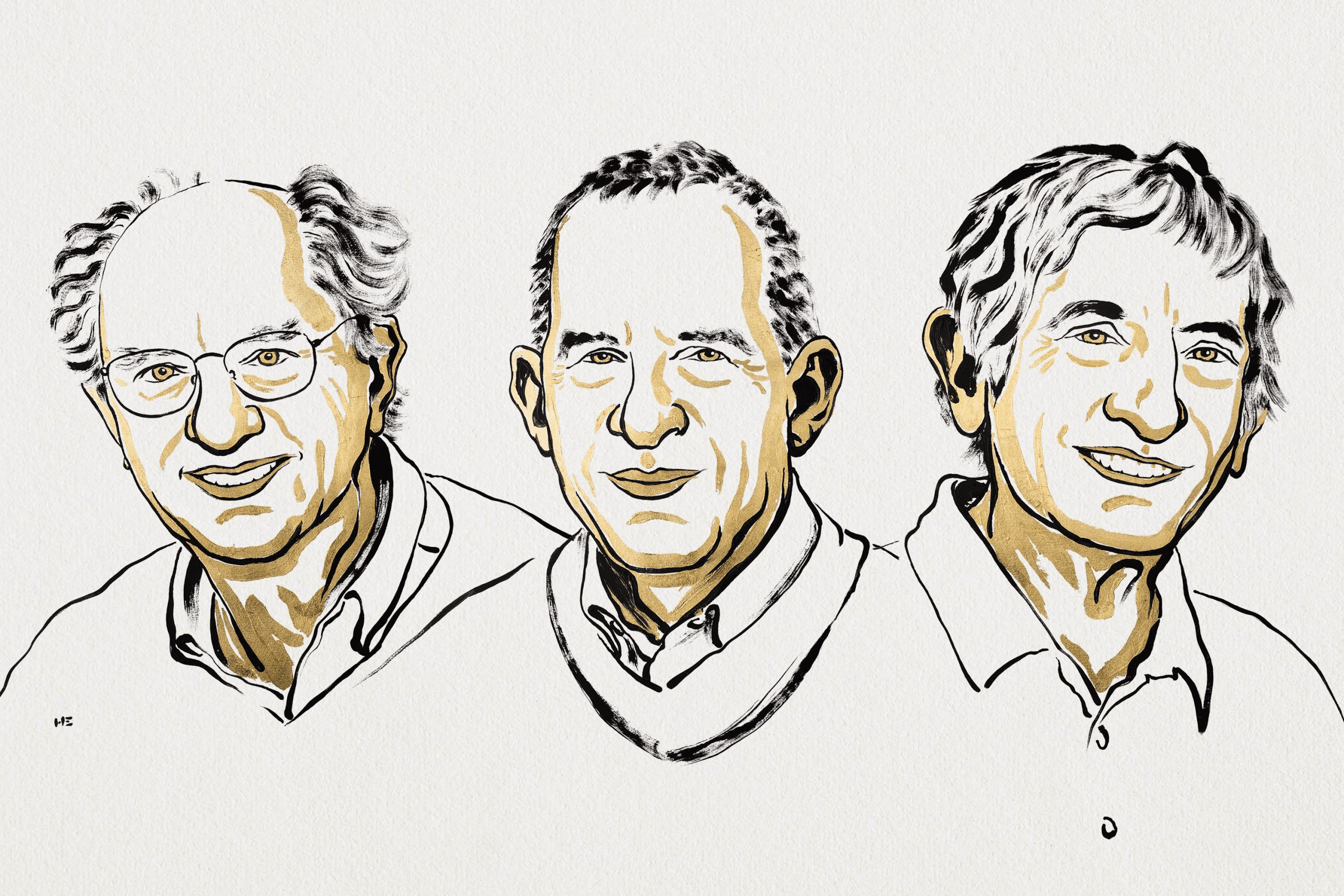
    Nobel Prize in Physics / Lindau Nobel Laureates ©

    Just like with our last trio, here’s how they did it: 

    1. 1984-1985: They experimented with passing a current of charged particles through a controlled circuit containing superconductors. They found that the multiple particles acted like one large particle when going through the superconductor. The quantum part of this was that the system used tunneling to go from zero-voltage to a voltage. So, they concluded that quantum mechanics can still cause tunneling in a macroscopic system.

    And why do we care? Well, Olle Eriksson, the Chair of the Nobel Committee for Physics, said, “It is wonderful to be able to celebrate the way that century-old quantum mechanics continually offers new surprises. It is also enormously useful, as quantum mechanics is the foundation of all digital technology.” I don’t know about you, but I think I’ll take his word for it.

    October 8: 2025 Nobel Prize in Chemistry

    Our LAST Nobel Prize trio of October comes in Chemistry! Susumu Kitagawa, Richard Robson, and Omar M. Yaghi received the 2025 Nobel Prize in Chemistry from the Royal Swedish Academy of Sciences for their ‘metal-organic frameworks (MOFs)’. These frameworks are from their new molecular construction, where carbon-based molecules link together metal ions so that the two form MOFs, which are essentially porous crystals. Scientists can then manipulate these MOFs to take in and guard particular substances. MOFs can also create chemical reactions and direct electricity. So, with these MOFs, scientists can design materials with particular functions of their choosing.
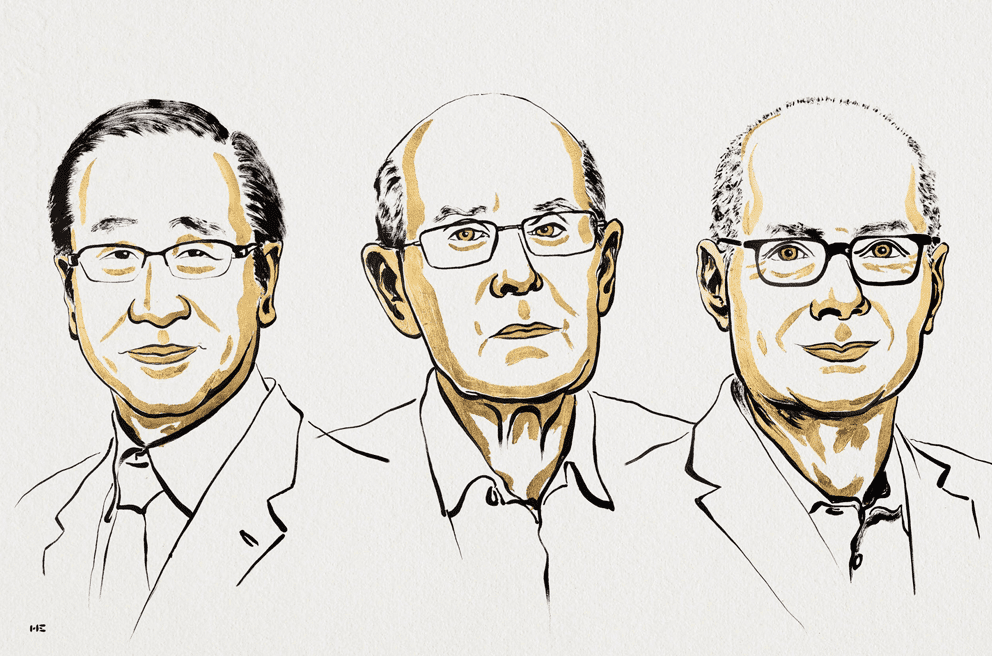
    Nobel Prize in Chemistry / Lindau Nobel Laureates ©

    You know the drill– here’s how they did it:

    1. 1989: Robson began testing the properties of atoms by combining copper molecules with four-pronged molecules, and this created porous crystals similar to MOFs. However, these MOF impersonators were unstable and needed someone to fix them.
    2. 1992-2003: Enter- Kitagawa and Yaghi. From his experiments, Kitagawa concluded that MOFs could be changed and modified as gases could run through them. Then, Yaghi made a stable MOF and showed that they could be manipulated to have new properties.

    Since their discoveries, scientists have made tons of their own unique MOFs, each equipped to solve a different problem. We can thank MOFs for giving us a safer Earth. I mean, any kind of chemical substance that can make clean water, grab carbon dioxide from the air, or produce water from desert air sounds like a good one to me. 

    October 11: The Surprising Link Between COVID-19 and Anxiety

    Covid. The word that teleports Gen-Z right back to online school in pajamas, Roblox, and Charli D’Amelio. We all know and hate it, but did we realize that it might be affecting future generations who weren’t even alive in 2020? 

    A study published on October 11 revealed that male mice who contracted COVID-19 birthed children with more anxiety-like behaviors than those of uninfected mice’s children. Basically, COVID-19 changes RNA molecules in the male’s sperm, which then dictates his children’s brain development. In female offspring specifically, their brain’s hippocampus region, which deals with behaviors including anxiety and depression, was altered. The authors of the study believe that these changes may cause increased anxiety levels.

    Okay, okay. Remember: this study was done on mice, not humans. More research is needed to see if humans will experience similar effects, but for now, we’re safe.

    October 12: Light Years Away

    “A long time ago in a galaxy far, far away…” Wait, what? A long time ago? Evidence suggesting that the closest alien civilization may be 33,000 light-years away did come out this October 12, but for the estimate to be feasible, the civilization would need to have already existed for at least 280,000 years. Yeah, that feels like a long time ago. And don’t worry about the far, far away part– I’d call 33,000 light-years pretty far. 

    At a recent meeting in Helsinki, research was shown indicating such a possibility. Here’s the criteria for a planet to have extraterrestrial life and actually sustain itself:

    1. Carbon dioxide in the atmosphere (so photosynthesis can work and support life)
    2. An atmosphere of at least 18% oxygen (complex animals need more oxygen, and there must be enough oxygen for fire because blacksmithing must happen to technologically advance)
    3. Average lifetime of about 10 million years (so they can exist at the same time as us)
    4. Already existed for at least 280,000 years (so civilization can develop and they can exist at the same time as us)

    Keeping these in mind, scientists have concluded that if there is an alien civilization existing at the same time as us in the same galaxy, it would have to be at least 33,000 light-years away. To put that into perspective, our Sun is about 27,000 light-years away from us. Yeah. Pretty far.

    October 20: Enteral Ventilation

    Sometimes, CPR isn’t enough to save respiratory failure. Then, patients turn to mechanical ventilation. But sometimes mechanical ventilation is too much, and the lungs end up even further damaged. Enteral ventilation, however, may just be the sweet spot. Enteral ventilation is a practice where perfluorodecalin, an exceptionally oxygen-soluble liquid, is administered through the intestine to deliver oxygen to the body while the lungs heal. Published on October 20, the first in-human study of enteral ventilation succeeded and was demonstrated to be safe. The only side effects were bloating and stomach pain, but those quickly resolved, and perfluorodecalin concentrations nearly disappeared from the bloodstream (a good thing!). 

    After this safe and tolerated success, more studies on enteral ventilation will soon develop, and lungs everywhere may be saved.

    October 20: CI Chondrite on the Moon

    Before we get into any of this moon stuff, you may be wondering what in the world (or should I say galaxy) CI Chondrite is. I’m here to help! CI Chondrite, a porous and the most water-dense meteorite, generally breaks before it can reach Earth because its properties make it so crumbly. CI Chondrite actually makes up less than one percent of all meteorites on Earth. That means it also barely ever reaches the moon. However, during their Chang’e-6 mission published on October 21, the China National Space Administration found traces of CI Chondrite dust on the moon.

    A Chondrite Meteorite

    Here’s how they did it:

    1. They looked at thousands of fragments from the Apollo Basin, a sub-basin in the South Pole-Aikten Basin that acts as a hotspot for debris since it covers one-fourth of the moon.
    2. They looked for pieces with olivine, a mineral normally in meteorites. 
    3. Then, they analyzed the olivine pieces and found seven with properties identical to CI Chondrite
    4. When analyzing, they found that the pieces did not have the chemical ratios expected for lunar debris.
    5. However, they realized that the seven fragments’ ratios did align with those of a CI Chondrite asteroid that crashed, melted, and solidified on the moon early in the solar system’s history.

    With these discoveries, the team found the first solid evidence that CI Chondrite once hit the moon and that CI Chondrite can be preserved after such a crash. Actually, they found that CI Chondrite could comprise up to 30 percent of the Moon’s meteorite debris. Additionally, their study provided evidence to help back up the theory that CI Chondrite once created water and volatiles on the Earth and Moon. More research is needed to see if it’s really true, but those missions will now be much easier with the China National Space Administration’s new process to find CI Chondrite.

    October 27: Back to the Basics

    Nope, not like the song. On October 27, in the Astrophysical Journal Letters, scientists described their findings of what they believed to be Population III stars, one of the first groups of stars in the galaxy. With the James Webb Space Telescope, they pinpointed them in LAP1-B, a cluster of stars 12 billion light-years away from Earth. Scientists believe Population III stars are some of the first stars made after the Big Bang, and they have a unique property of being a billion times brighter than and a million times the mass of our Sun. 

    Here’s why they believe their discovered stars to be Population III:

    1. Emission lines on the stars’ spectra indicated high-energy photons, which are consistent with Population III stars.
    2. Their spectra showed them to be extremely large.
    3. Their masses aligned with astronomers’ guesses for those of Population III stars.
    4. They were in LAP1-B, whose properties agree with the criteria for Population III.
      1. It’s a low hydrogen and helium environment.
      2. Its temperature can support star formation.
      3. It’s a low-mass cluster, and it had few large stars before those of Population III.
      4. It meets mathematical criteria for forming stars and keeping them alive.

    Seems pretty feasible, right? Anyways, these scientists were the first to find a group of stars that meets all criteria for being Population III, and these ancient stars can actually explain the galaxy’s construction and development. That’s all for STEM this October, but don’t worry, because this November’s looking like a great one.
    References

    Cooper, K. (2025, October 2). Saturn’s moon Enceladus is shooting out organic molecules that could help create life. Space.com. https://www.space.com/astronomy/saturn/saturns-moon-enceladus-is-shooting-out-organic-molecules-that-could-help-create-life 
    Europlanet. (2025, October 12). Closest alien civilization could be 33,000 light years away. Science Daily. https://www.sciencedaily.com/releases/2025/10/251011105533.htm 
    Fernholm, A. (2025, October 6). Popular science background: They understood how the immune system is kept in check. Nobel Prize. https://www.nobelprize.org/uploads/2025/10/popular-medicineprize2025-2.pdf 
    The Florey. (2025, October 11). COVID-19 causes changes in sperm that lead to increased anxiety in offspring. The Florey. https://florey.edu.au/news/2025/10/covid-19-causes-changes-in-sperm-that-lead-to-increased-anxiety-in-offspring/ 
    Howell, E. (2017, September 15). Cassini-Huygens: Exploring Saturn’s system. Space.com. https://www.space.com/17754-cassini-huygens.html 
    Howell, E. (2025, October 27). James Webb telescope may have found the first stars in the universe, new study claims. Live Science. https://www.livescience.com/space/cosmology/james-webb-telescope-may-have-found-the-universes-first-generation-of-stars 
    Kungl. Vetenskaps-Akademien. (2025, October 7). Press release (Nobel Prize in Physics 2025). Nobel Prize. https://www.nobelprize.org/prizes/physics/2025/press-release/ 
    Kungl. Vetenskaps-Akademien. (2025, October 8). Press release (Nobel Prize in Chemistry 2025). Nobel Prize. https://www.nobelprize.org/prizes/chemistry/2025/press-release/ 
    Med. (2025, October 20). Safety and tolerability of intrarectal perfluorodecalin for enteral ventilation in a first-in-human trial. Cell. https://www.cell.com/med/abstract/S2666-6340(25)00314-9 
    Nobelförsamlingen. (2025, October 6). Press release (Nobel Prize in Physiology or Medicine 2025). Nobel Prize. https://www.nobelprize.org/prizes/medicine/2025/press-release/ 
    Starr, M. (2025, October 21). China brought something unexpected back from the far side of the Moon. Science Alert. https://www.sciencealert.com/china-brought-something-unexpected-back-from-the-far-side-of-the-moon 
    University of British Columbia. (2025, October 3). UBC enzyme technology clears first human test toward universal donor organs for transplantation. Eurek Alert. https://www.eurekalert.org/news-releases/1100223 

  • the entire history of spacetime, i guess (part 3)

    the entire history of spacetime, i guess (part 3)

    By Aashritha Shankar

    ~ 11 minutes


    While the concepts of space and time were fundamental to the Newtonian world, centuries of digging deeper into the mechanics of our universe have uncovered that it isn’t all as simple as it seems. From Einstein’s Special Relativity to theories of multi-dimensional time, the science behind space and time has evolved into a complex field.

    Why Extra Temporal Dimensions?

    The search for extra spatial dimensions raises questions of the potential for extra temporal dimensions. If space can have more dimensions, why can’t time? The motivations to explore the potential for extra temporal dimensions arise from a desire to better understand the nature of time and the symmetries between them.

    Another reason to study these extra-temporal dimensions is the desire to unify seemingly disconnected parts of time. Many frameworks for extra temporal dimensions have revealed previously unnoticed symmetries and relationships between different temporal systems that would not be discovered while only working in one dimension.

    The concept of “complex time” is used to fix some of the problems of quantum mechanics. This idea suggests that time should be represented as a complex value rather than a real number. It would allow more ways to represent wave-particle duality, entanglement, and other fundamental concepts of quantum physics.

    2T-Physics

    Proposed by physicist Itzhak Bars, 2T-Physics suggests that the one dimension of time we experience is really just a “shadow” of the real two dimensions of time. The core motivation of 2T-Physics is to reveal the deeper temporal connections that we don’t see in our one-dimensional perspective. In 2T-Physics, two seemingly disconnected temporal systems are actually connected and represent different views or ‘shadows’ of the same two-dimensional time. 

    2T-Physics unifies a wide range of physical systems using “gauge symmetry,” which is the property of a system where a set of transformations, called gauge transformations, can be used on a system without changing any of the physical properties of that system. Bars also illustrated that the Standard Model could be explained by 2T-Physics with four spatial dimensions. Not only can this model predict most of the Standard Model, but it also provides a solution to some quantum issues.

    An interesting difference between the Standard Model and the predictions of 2T-Physics is the gravitational constant. While it is currently established that the coefficient in gravitational equations is a constant 6.67⋅10-11, the mathematics of 2T-Physics means that the gravitational constant has different values for different periods of our universe (inflation, grand unification, etc). This allows new possibilities for early expansion of our universe that General Relativity and the Standard Model do not. Through its new perspectives, 2T-Physics allows a more complete framework of gravity, especially at higher dimensions.

    While 2T-Physics is well-established, it remains highly theoretical and has little to no practical impact. While there is no evidence directly supporting the theory, 2T-Physics predicts certain connections between different physical systems that could potentially be verified through complex experiments, though none have been conducted so far. Above all, 2T-Physics provides a new perspective on time and the nature of the laws of physics that has opened the eyes of many scientists and will likely inspire future discoveries.

    3D Time

    One of the most recent papers in the field, Kletetschka, proposes a mathematical framework of spacetime that includes temporal dimensions. Kletetschka provides a new perspective on combining gravity and quantum mechanics. Instead of having two hidden dimensions of time, Kletetschka theorizes that each of these dimensions is used to represent time at different scales: the quantum scale, the interaction scale, and the cosmological scale. He explains that the other two dimensions are not visible in our daily life because they occur at very small (quantum) levels or very large (cosmological) levels.

    Figure 3, Three-Dimensional Time: A Mathematical Framework for Fundamental Physics, World Scientific Connect ©

    A massive difference between this theory and conventional physics is that while conventional physics considers space to be something vastly different from time, Kletetschka proposes that space is a byproduct of time in each of these dimensions, rather than an entirely separate entity. What we experience as mass or energy actually arises from the curvature of time in these three dimensions. As Kletetschka explored more into this, he discovered surprising consistency in the mathematics, leading to a deeper exploration into the concept.

    The key to not creating causality issues and instability in the theory was the usage of regular geometry and spatial dimensions instead of exotic situations that are hard to prove or test. This theory aimed to address many of the long-standing issues in quantum mechanics, and its success thus far makes it a prominent theory in the field.

    The theory is able to add extra temporal dimensions without causing causality issues, something very few theories of its type have been able to grapple with. This is due to its structure. The theory is designed so that the three axes share an ordered flow, preventing an event from happening before its cause. Furthermore, these three axes operate at very different scales, leaving very little overlap between them. The mathematics of the framework does not allow for the alteration of events in the past, something that many other theories allow.

    The theory is able to offer physical significance and a connection to our world alongside mathematical consistency. Things such as finite quantum corrections, which other theories were not able to predict, were mechanized by this model without creating extra complexity.

    This mathematical framework is able to predict several properties and new phenomena that can be experimentally tested, allowing pathways to prove or disprove it soon. Meanwhile, many scientists have spoken in support of the theory, considering it a promising candidate for a near “Theory of Everything” just a few months after its publication.

    Conclusion

    While the theoretical motivation for extra dimensions is compelling, the reality of their existence remains unconfirmed. Meanwhile, the scientific community works to experimentally prove or disprove their existence through observational evidence.

    The Large Hadron Collider (LHC) at CERN is one of the major players on the experimental side. They engage in many experiments, a few of which I have highlighted below.

    1. Tests for Microscopic Black Holes: Many of the theories that propose extra dimensions lead to increased gravitational power within short distances. This manifests physically as microscopic black holes that would dissipate near instantaneously due to Hawking Radiation. However, the byproduct of this dissipation would be particles detected through the LHC.
    2. The Graviton Disappearance: Another common feature of extra-dimensional theories is the manifestation of gravity as a particle called a graviton. That particle would disappear into these extra dimensions, taking energy with it. This would result in an imbalance in the total energy of the system.

    While experiments have managed to provide more limitations for potential values that would work in certain theories, they have yet to prove or disprove them.

    Meanwhile, it is important to consider what extra dimensions would mean for us and the way we live. The concept of extra dimensions provides multiple philosophical considerations for us as humans. This concept completely changes our worldview and affects our perception of the universe. Dr. Michio Kaku explains this through the analogy of a fish in a pond, unaware of the world outside its simple reality. Our perception of reality is limited, not only by our understanding of physics, but also by the biology of our brains.

    The work towards a “Theory of Everything” is not only a physical goal but a philosophical one as well. We strive to understand our universe and everything within it in the simplest way possible. It embodies human desire for ultimate knowledge and drives centuries of physical progress.

    Overall, the concept of extra dimensions represents one of the most arduous and ambitious goals in human history. While they lack proof, these theories motivate people to search more into the nature of our universe and question the very fabric of our reality. The exploration into further discoveries about our universe truly shows who we are as humans and will continue to motivate centuries of physicists to question the very nature of everything.


    References

    6.2: Relation Between Events- Timelike, Spacelike, or Lightlike. (2022, January 20). Physics LibreTexts. https://phys.libretexts.org/Bookshelves/Relativity/Spacetime_Physics_(Taylor_and_Wheeler)/06%3A_Regions_of_Spacetime/6.02%3A_Relation_Between_Events-Timelike_Spacelike_or_Lightlike
    A quote from Physics of the Impossible. (2025). Goodreads.com. https://www.goodreads.com/quotes/8392801-but-historically-the-fourth-dimension-has-been-considered-a-mere
    Albert Einstein Quote: “When forced to summarize the general theory of relativity in one sentence: Time and space and gravitation have no separa…” (n.d.). Quotefancy.com. https://quotefancy.com/quote/763238/Albert-Einstein-When-forced-to-summarize-the-general-theory-of-relativity-in-one-sentence
    Bars, I. (2006). The Standard Model as a 2T-physics Theory. 903(1). https://doi.org/10.1063/1.2735245
    Bars, I., & Costas Kounnas. (1997). Theories with two times. Physics Letters B, 402(1-2), 25–32. https://doi.org/10.1016/s0370-2693(97)00452-8
    Bars, I., & Kuo, Y.-C. (2007). Field Theory in Two-Time Physics withN=1Supersymmetry. Physical Review Letters, 99(4). https://doi.org/10.1103/physrevlett.99.041801
    Bars, I., & Terning, J. (2010). Extra Dimensions in Space and Time (F. Nekoogar, Ed.). Springer New York. https://doi.org/10.1007/978-0-387-77638-5
    Bell, J. (n.d.). Time and Causation in Gödel’s Universe. https://publish.uwo.ca/~jbell/Time.pdf
    Beuke, F. (2025). beuke.org. Beuke.org. https://beuke.org/calabi-yau-manifold/
    Centre for Theoretical Cosmology: The Origins of the Universe: M-theory. (n.d.). http://Www.ctc.cam.ac.uk. https://www.ctc.cam.ac.uk/outreach/origins/quantum_cosmology_four.phpcern. (2000, March 7). Discovering new dimensions at LHC – CERN Courier. CERN Courier.
    Church, B. (2022). Kaluza-Klein Theory. https://web.stanford.edu/~bvchurch/assets/files/talks/Kaluza-Klein.pdf
    Continuing the search for extra dimensions. (2025, July 8). ATLAS. https://atlas-public.web.cern.ch/updates/briefing/continuing-search-extra-dimensions
    DUFF, M. J. (1996). M THEORY (THE THEORY FORMERLY KNOWN AS STRINGS). International Journal of Modern Physics A, 11(32), 5623–5641. https://doi.org/10.1142/s0217751x96002583
    Dunn, T. (2017, January 10). Classic Time Travel Paradoxes (And How To Avoid Them). Quirk Books. https://www.quirkbooks.com/classic-time-travel-paradoxes-and-how-to-avoid-them/
    Extra Dimensions. (n.d.). Retrieved August 10, 2025, from https://pdg.lbl.gov/2025/listings/rpp2025-list-extra-dimensions.pdf
    Extra dimensions – (Principles of Physics III) – Vocab, Definition, Explanations | Fiveable. (2025). Fiveable.me. http://library.fiveable.me/key-terms/principles-physics-iii-thermal-physics-waves/extra-dimensions
    Extra dimensions – and how to hide them «Einstein-Online. (2025). Einstein-Online.info. https://www.einstein-online.info/en/spotlight/hiding_extra_dimensions/
    Fazekas, L. (2025, July 13). How Einstein’s Special Relativity Theory Redefined Space and Time. Medium. https://thebojda.medium.com/how-einsteins-special-relativity-theory-redefined-space-and-time-45b79573443d
    Filimowicz, M. (2025, April). Hidden Geometries: The Search for Extra Dimensions and Their Technological Implications. Medium: Quantum Psychology, Biology, and Engineering. https://medium.com/quantum-psychology-and-engineering/hidden-geometries-the-search-for-extra-dimensions-and-their-technological-implications-b999133086c9
    Foster, J. G., & Müller, B. (2025). Physics With Two Time Dimensions. ArXiv.org. https://arxiv.org/abs/1001.2485
    Gunther Kletetschka. (2025). Three-Dimensional Time: A Mathematical Framework for Fundamental Physics. Reports in Advances of Physical Sciences, 09. https://doi.org/10.1142/s2424942425500045
    Hawking, S. W. (1992). Chronology protection conjecture. Physical Review D, 46(2), 603–611. https://doi.org/10.1103/physrevd.46.603
    Hoang, L. N. (2013, June 2). Spacetime of General Relativity. Science4All. http://www.science4all.org/article/spacetime-of-general-relativity/
    Horoto, L., & G, S. F. (2024). A New Perspective on Kaluza-Klein Theories. ArXiv.org. https://arxiv.org/abs/2404.05302https://www.facebook.com/thoughtcodotcom. (2009). The Physics of Moving Backward in Time. ThoughtCo. https://www.thoughtco.com/closed-timelike-curve-2699127
    Hyperspace – A Scientific Odyssey: Official Website of Dr. Michio Kaku. (n.d.). https://mkaku.org/home/articles/hyperspace-a-scientific-odyssey/
    Kalligas, D., S, W. P., & Everitt,. (1995). The classical tests in Kaluza-Klein gravity. The Astrophysical Journal, Part 1, 439(2). https://ntrs.nasa.gov/citations/19950044695
    Kaluza, Klein and their story of a fifth dimension. (2012, October 10). Plus.maths.org. https://plus.maths.org/content/kaluza-klein-and-their-story-fifth-dimension
    Kaluza-Klein theories. (n.d.). Retrieved August 10, 2025, from https://indico.cern.ch/event/575526/contributions/2368967/attachments/1430033/2196226/Mondragon_BeyondSM_L3.pdf
    Lee, S. (2025a). Calabi-Yau Manifolds: A Deep Dive. Numberanalytics.com. https://www.numberanalytics.com/blog/calabi-yau-manifolds-deep-dive-differential-topology#google_vignette
    Lee, S. (2025b). The M-Theory Revolution. Numberanalytics.com. https://www.numberanalytics.com/blog/m-theory-revolution
    Lloyd, S., Maccone, L., Garcia-Patron, R., Giovannetti, V., Shikano, Y., Pirandola, S., Rozema, L. A., Darabi, A., Soudagar, Y., Shalm, L. K., & Steinberg, A. M. (2011). Closed Timelike Curves via Postselection: Theory and Experimental Test of Consistency. Physical Review Letters, 106(4). https://doi.org/10.1103/physrevlett.106.040403
    M. S., M. E., & B. A., P. (n.d.). M-Theory: Maybe Even More Dimensions Can Fix String Theory. ThoughtCo. https://www.thoughtco.com/m-theory-2699256
    Mei, Z.-H. (2024). Time Has Two Dimensions-Exploring Coordinate Connotation of Five-Dimensional Space. 24(7), 21–25. https://www.researchgate.net/publication/381282542_Time_Has_Two_Dimensions-Exploring_Coordinate_Connotation_of_Five-Dimensional_Space
    Michael B. Schulz: Research Interests – String Theory Compactifications. (2024). Bryn Mawr College. https://www.brynmawr.edu/inside/academic-information/departments-programs/physics/faculty-staff/michael-b-schulz/michael-b-schulz-research-interests-string-theory-compactifications
    Muntean, I. L. (2017). Unification and explanation in early Kaluza-Klein theories. Escholarship.org. https://escholarship.org/uc/item/5ws3s18g
    Research Interests – Itzhak Bars. (2024, July 15). Itzhak Bars. https://dornsife.usc.edu/bars/research/
    Richmond, A. (2018). Time Travelers. Inference, 3(4). https://inference-review.com/article/time-travelers
    Rynasiewicz, R. (2011). Newton’s Views on Space, Time, and Motion (Stanford Encyclopedia of Philosophy). Stanford.edu. https://plato.stanford.edu/entries/newton-stm/
    Stein, V., & Dobrijevic, D. (2025, May 12). Einstein’s Theory of Special Relativity. Space.com. https://www.space.com/36273-theory-special-relativity.html
    String Theory. (2025, May 8). Institute for Advanced Study. https://www.ias.edu/default/tags/string-theory
    Tegmark, M. (1997). On the dimensionality of spacetime. Classical and Quantum Gravity, 14(4), L69–L75. https://doi.org/10.1088/0264-9381/14/4/002
    The Many Dimensions of Oskar Klein. (2021, February 11). Galileo Unbound; Galileo Unbound. https://galileo-unbound.blog/2021/02/10/the-many-dimensions-of-oskar-klein/
    There are 2 dimensions of time, theoretical physicist states. (2017, May 9). Big Think. https://bigthink.com/surprising-science/there-are-in-fact-2-dimensions-of-time-one-theoretical-physicist-states/
    Tillman, N. T., Bartels, M., & Dutfield, S. (2024, October 29). Einstein’s Theory of General Relativity. Space.com. https://www.space.com/17661-theory-general-relativity.html
    Visser, M. (2025). The quantum physics of chronology protection. ArXiv.org. https://arxiv.org/abs/gr-qc/0204022
    Weinstein, S. (2025). Multiple Time Dimensions. ArXiv.org. https://arxiv.org/abs/0812.3869
    Wolchover, N. (2017). Why Is M-Theory the Leading Candidate for Theory of Everything? | Quanta Magazine. Quanta Magazine. https://www.quantamagazine.org/why-is-m-theory-the-leading-candidate-for-theory-of-everything-20171218/

  • the entire history of spacetime, i guess (part 2)

    the entire history of spacetime, i guess (part 2)

    By Aashritha Shankar

    ~ 8 minutes


    While the concepts of space and time were fundamental to the Newtonian world, centuries of digging deeper into the mechanics of our universe have uncovered that it isn’t all as simple as it seems. From Einstein’s Special Relativity to theories of multi-dimensional time, the science behind space and time has evolved into a complex field.

    What are Extra Spatial Dimensions?

    As scientists explored further into spacetime, theories of more dimensions of space, beyond the three we know, were suggested as a way to explain many of the phenomena that we cannot explain with only three dimensions. These ideas gained most of their traction from the pursuit to combine quantum mechanics with General Relativity, especially issues such as quantum gravity. These theories also attempt to address the rapid growth of the universe after the Big Bang.

    What were the motivations to search for Extra Dimensions?

    The idea of more dimensions began as a way to unify the fundamental forces of our universe. Modern theories regarding these ideas come from a drive to resolve some of the unaddressed issues of the Standard Model of physics. While the Standard Model is able to describe fundamental particles and the strong, weak, and electromagnetic forces, it is unable to describe gravity. In addition, the Standard Model cannot address dark matter and dark energy, which make up the majority of our universe.

    One of the most significant problems in physics is the Hierarchy problem. It refers to the massive gap in strength between gravity and the other three fundamental forces. This extreme difference comes from the small scale of the strength of gravity in comparison to the other forces. Extra-Dimensions have attempted to resolve this by suggesting that while gravity may be just as strong as the other forces, its strength is leaked into the other dimensions, thus weakening it.

    This search to discover extra dimensions is not only about solving these specific technical issues; it’s about the centuries-long quest to find a Theory of Everything. Physicists constantly strive to find simpler solutions to describe our universe rather than leaning on hyperspecific coefficients/constants.

    While there are many theories involving extra-spatial dimensions, part 2 will focus on a few of the biggest and most influential theories so far.

    Kaluza-Klein Theory

    In 1919, Theodor Kaluza proposed his theory of four-dimensional space as an attempt to combine gravity and electromagnetism. This theory was later built upon by Oscar Klein in 1926.

    In Kaluza’s attempt to combine these fundamental forces, he suggested a fourth, unseen spatial dimension. To create this system, he used Einstein’s equations and extended them into a fifth dimension. He found that the five-dimensional version of Einstein’s equations naturally created the four-dimensional version in one part. The equation had fifteen components, ten of which described our four-dimensional General Relativity. Four of the remaining five described the electromagnetic force through Maxwell’s equations, while the last dimension was the scalar field, which had no known use. 

    A key concept of Kaluza-Klein theory is that, rather than seeing electric charge as simply an event or calculation, it is represented as the motion of the fifth dimension. The attempt to create the simplest mathematical structure that could represent the five dimensions led to the assumption that no part of the five-dimensional Einstein equations relied explicitly on this fifth dimension. Instead, its presence was there to alleviate other issues in the Standard Model without disrupting the basic functions of Einstein’s equations. In order to do this, Kaluza created the cylinder condition, where he described all coordinate values in the fifth dimension to be zero, effectively hiding it at a macroscopic level, preserving the four dimensions that we experience.

    Oscar Klein produced a physical explanation for the cylinder condition in 1926. He suggested that the fifth dimension was compactified and curled up into an unobservable circle with an incredibly small radius, explaining that this is why we are unable to witness the fifth dimension.

    An interesting way to understand this is to think of a hose. From a distance, the hose looks like a single-dimensional line. However, the hose actually has two dimensions, both a dimension of length as well as a circular dimension.

    This theory revolutionized how physicists thought about spacetime. In a letter to Kaluza that same year, Einstein wrote,

    “The idea of achieving unification by means of a five-dimensional cylinder world never dawned on me […]. At first glance, I like your idea enormously. The formal unity of your theory is startling.” (Einstein, 1919)

    Over time, Kaluza-Klein theory has been disproven due to its several fundamental flaws. Scientists have tested for Kaluza-Klein resonances, particles that would have to exist if the theory were to be true, and have found none. In addition, Kaluza-Klein theory only addresses gravity and electromagnetism but excludes the strong and weak forces. When incorporated with quantum mechanics, Kaluza-Klein theory predicts many incorrect values for otherwise known constants, showing massive discrepancies. Despite these issues, Kaluza-Klein theory has long been considered the first step into the exploration of extra-dimensions, becoming the precursor to many theories in the decades after. Its core idea- that hidden dimensions cause forces in our four dimensions-has been crucial to further exploration into the concept of spacetime.

    String Theory and M-Theory

    String Theory / Kids Press Magazine ©

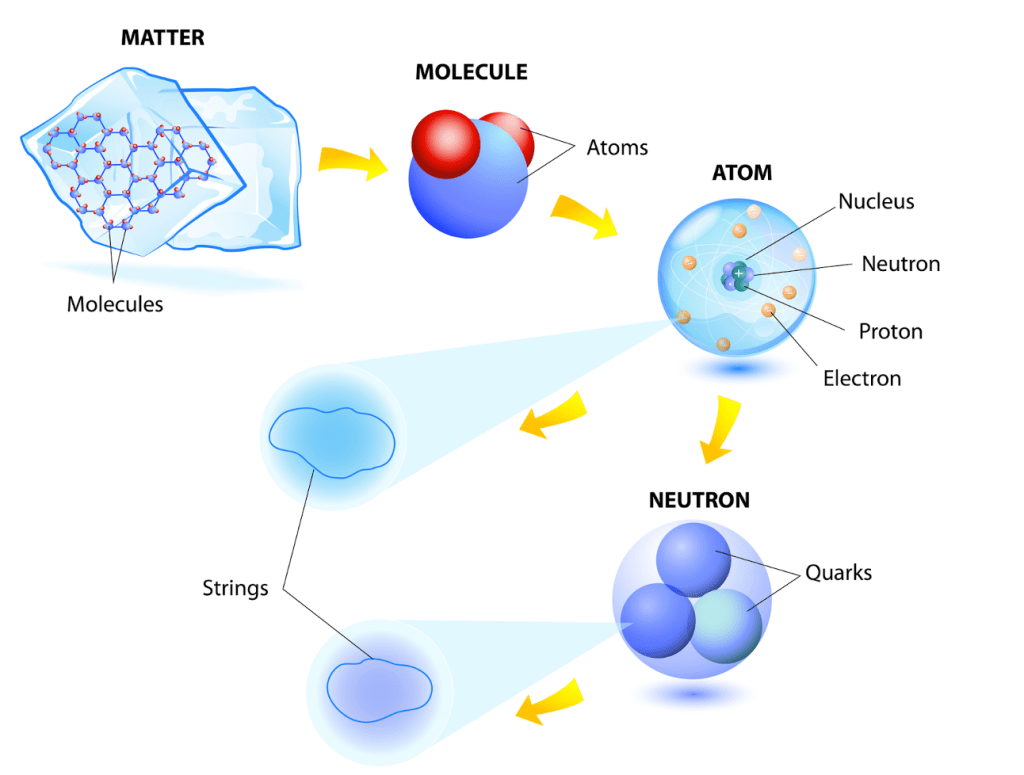
    String Theory is a very common term, but few people actually know what it means. String theory proposed that instead of the universe being made up of zero-dimensional points, it is made up of strings that vibrate. The specific vibration of these strings would determine what they would be (photon, quark, etc.). The theory aimed to unify all of these different particles and properties into one thing: the string.

    When physicists first began to work on String Theory, they found many mathematical issues, such as negative probabilities. In four dimensions, these strings don’t have enough space to produce the wide range of vibrations needed to create all the particles in the standard model.  Thus, Superstring Theory suggests that these strings are ten-dimensional objects (nine dimensions of space and one of time). A major reason why physicists were happy with string theory at the time was that it naturally predicted a particle called a ‘graviton’. This particle would have the same effect as the force of gravity. Theoretical physicist Edward Witten has commented on this by saying,

    “Not only does [string theory] make it possible for gravity and quantum mechanics to work together, but it […] forces them upon you.” (Edward Witten, NOVA, PBS)

    M-Theory is an extension of String Theory that adds one more spatial dimension. Prior to its creation, different groups of physicists had created five versions of String Theory.

    However, a true “Theory of Everything” should be one theory, not five possibilities.

    M-Theory was created as an attempt to unify these five types of string theory. The key to the development of M-Theory was the discovery of mathematical transformations that took you from one version of String Theory to another, showing that these were not truly separate theories. M-theory theorized that these different versions were just different approximations of the same theory that could be unified by adding another dimension. M-Theory’s eleven-dimensional framework allowed for the unification of these five theories alongside the theory of supergravity.

    M-Theory, similarly to Kaluza-Klein Theory, also proposes that the extra dimensions are curled up and compacted. M-Theory uses a specific geometric shape, known as a Calabi-Yau manifold, to create the physical effects we observe in our four dimensions from the other hidden seven. Calabi-Yau manifolds are a highly compact and complex type of manifold that are the foundation of M-Theory because they allow complex folding without affecting the overall curvature of our universe through a property called “Ricci-flatness”.  The Calabi-Yau manifolds also have “holes” within their shapes that are thought to connect to the number of families of particles we experience in the Standard Model. This introduces the key concept that, instead of the fundamental laws of physics just being rules, they are actually geometric properties of our universe.

    The biggest challenge that M-Theory is facing is its lack of experimental evidence. Predictions made by this model are not testable by currently available or foreseeable technology due to the high-dimensional microscopic levels required. Without making testable predictions, the theory remains just a theory for the time being.

    Despite this lack of proof, many physicists still see M-Theory as a prominent candidate in our search for a “Theory of Everything”. Its mathematical consistency and its ability to unify both gravitational and quantum effects lead to it being considered highly promising.

    However, while the math behind M-Theory is highly developed, it is not yet complete. The theory is still a work in progress as research is being conducted to better understand its structure and significance.

    Meanwhile, critics believe that M-Theory is fundamentally flawed. Many of them believe that the “Landscape” problem is a significant reason that M-Theory is untrue. The “Landscape” problem is described as the fact that the theory predicts many different universes, each with its own set of physical laws. Critics believe that this prediction proves the unreliability of M-Theory and that a true “Theory of Everything” would be applicable only to our universe.

    Overall, M-Theory has neither been proven nor disproven and remains a crucial area for future exploration.


    All references listed on Part 3.


  • the entire history of spacetime, i guess (part 1)

    the entire history of spacetime, i guess (part 1)

    By: Aashritha Shankar

    ~ 8 minutes


    While the concepts of space and time were fundamental to the Newtonian world, centuries of digging deeper into the mechanics of our universe have uncovered that it isn’t all as simple as it seems. From Einstein’s Special Relativity to theories of multi-dimensional time, the science behind space and time has evolved into a complex field.

    Newtonian Absolutism

    At the dawn of classical mechanics, Newton created the foundation upon which all of modern spacetime theory is built. Space and time were considered to be entirely unrelated and absolute concepts. There was no question in his mind that time moves forward and space exists around us. Space was considered a static body within which we exist, while time was described as flowing in only one direction at a steady rate. Imagine space as a box, where events are contained within, and time as a river whose current pulls us along.

    Newton coined the terms ‘absolute space’ and ‘absolute time’ to describe the absolutes from the relativity we measure. For centuries, this theory remained unquestioned, so physicists didn’t consider time and space to be real entities, but rather our human way of interpreting the world around us.

    Einstein’s Revolution:

    Special Relativity

    The first true challenge to the Newtonian perspective of space and time came in the form of Einstein’s Special Relativity. He introduced one key revolutionary concept: everything, including space and time, is relative, depending only upon the observer’s frame of reference.

    The motivations for Einstein’s work arose from the desire to eliminate the contradiction between Maxwell’s equations and Newtonian Mechanics. A simple way to visualize this contradiction is by imagining the following scenario:

    Two rockets in space are flying towards each other at a speed of 500 miles per hour. This would result in a relative speed of 1000 miles per hour. Now, if you were to throw a rock from one ship to another at a speed of 10 miles per hour, it would reach the other ship with a relative speed of 510 miles per hour. However, the substitution of light into this situation instead of a rock changes this because the speed of light is constant. No matter how fast you travel towards light, it will always come towards you at the same constant speed: 3·108m/s, or the speed of light.

    Many tests were done to prove that the wave-particle duality of light was the reason for this phenomenon. Rather than trying to disprove or explain away the theory, Einstein decided to take the constant speed of light as a fundamental property. He didn’t explain the speed of light, but used it to explain other things. Einstein was willing to give up the time-honored fundamentals of Newton’s laws in favor of the constant speed of light. 

    He began with the basic definition of speed as the distance divided by the time. If the speed of light remains constant as this rocket reduces the distance to be travelled, then the time must also decrease to preserve this equality. When mathematically calculating this, Einstein discovered the concept of time dilation, where objects in motion experience time more slowly than objects at rest. Continuing with similar methods for other properties, such as conservation, he discovered that mass would increase with speed and length would decrease. The true genius in Einstein was his willingness to question his own assumptions and give up some of the most basic qualities of the universe, in favor of the speed of light.

    General Relativity

    Special Relativity, however, did not incorporate gravity. Before Einstein, physicists believed that gravity was an invisible force that dragged objects towards one another. However, Einstein’s general relativity suggested that the ‘dragging’ was not gravity, but rather an effect of gravity. He theorized that objects in space bent the space around them, inadvertently bringing objects closer to one another.

    General Relativity defines spacetime as a 4D entity that has to obey a series of equations known as Einstein’s equations. He used these equations to suggest that gravity isn’t a force but instead a name we use to describe the effects of curved spacetime on the distance between objects. Einstein proved a correlation between the mass and energy of an object and the curvature of the spacetime around it.

    His work allowed him to prove that:

    “When forced to summarize the general theory of relativity in one sentence: Time and space and gravitation have no separate existence from matter.” -Einstein.

    Einstein’s General Relativity predicted many things that were only observationally noticed years later. A famous example of this is gravitational lensing, which is when the path of light curves as it passes a massive object. This effect was noticed by Sir Arthur Eddington in 1919 during a solar eclipse, yet Einstein managed to predict it with no physical proof in 1912.

    Closed-Timelike-Curves (CTCs)

    Another major prediction made by Einstein’s General Relativity is Closed-Timelike-Curves (CTCs), which arise from mathematical solutions to Einstein’s equations. Some specific solutions to these equations, such as massive, spinning objects, create situations in which time could loop.

    In physics, objects are considered to have a specific trajectory through spacetime that will indicate the object’s position in space and time at all times. When these positions in spacetime are connected, they form a story of an object’s past, present, and future. An object that is sitting still will have a worldline that goes straight in the time direction. Meanwhile, an object in motion will also have an element of spatial position. Diagrams of a worldline are drawn as two light cones, one into the future and one into the past, with a spatial dimension on the other axis, as seen in figure 1.

    Figure 1 / Takeshimg ©

    CTCs are created when the worldline of an object is a loop, meaning that the object will go backwards in time at some point to reconnect to its starting point. Closed-Timelike-Curves are, in essence, exactly what they sound like: closed curving loops that travel in a timelike way. Traveling in a timelike way, meaning that their change in time is greater than their change in space, suggests that these objects would have to be static or nearly static. As seen in Figure 2, the worldline of a CTC would be a loop, as there is some point in space and time that connects the end and the beginning.

    Figure 2 / Classical and Quantum Gravity / ResearchGate ©

    Two major examples of famous CTC solutions are the Gödel Universe and the Tipler Cylinder:

    • Gödel Universe: Suggested by mathematician Kurt Gödel in 1949, the Gödel Universe is a rotating universe filled with swirling dust. The rotation must be powerful enough that it can pull the spacetime around it as it spins. The curvature would become the CTC. This was the first solution found that suggested the potential for time-travel to be a legitimate possibility, not just a hypothetical scenario. 
    • Tipler Cylinder: In the 1970s, physicist Frank Tipler suggested an infinitely long, massive cylinder spinning along the vertical axis at an extremely high speed. This spinning would twist the fabric of spacetime around the cylinder, creating a CTC.

    Closed timelike curves bring many paradoxes with them, the most famous of which is the grandfather paradox. It states that if a man has a granddaughter who goes back in time to kill her grandfather before her parents are born, then she wouldn’t exist. However, if she doesn’t exist, then there is no one to kill her grandfather, thus meaning that she must exist. Yet if she exists, then her grandfather doesn’t.

    Most importantly, CTCs drove further exploration and directed significant attention to the spacetime field for decades. Scientists who didn’t fully believe Einstein’s General Relativity pointed to CTCs as proof of why it couldn’t be true, leaving those who supported Einstein to search extensively for a way to explain them. This further exploration into the field has laid the foundation for many theories throughout the years.

    The belief amongst scientists is that CTCs simply don’t exist because, while they are hypothetically possible, the energy requirements to create them are not yet feasible. Many of these setups require objects with negative energy density and other types of  ‘exotic matter’ that have not been proven to even exist yet. Furthermore, even if CTCs were to be formed, the specific region of spacetime where they form would be highly unstable, meaning that these CTCs would not sustain themselves. The situations in which CTCs would be feasible require types of fields of energy that would approach infinity and the Cauchy Horizon (the limit at which causality no longer exists, therefore making these situations physically unviable).


    All references listed on Part 3.