Scientists have recently declared chemical pollution an environmental threat as severe as climate change. Specifically, chemical pollution is the contamination of air, land, or water with high levels of unnatural substances, or pollutants. As these chemical pollutants continue to quickly spread throughout the globe, the multitude of risks they pose is only growing.
The Severity of Chemical Pollution
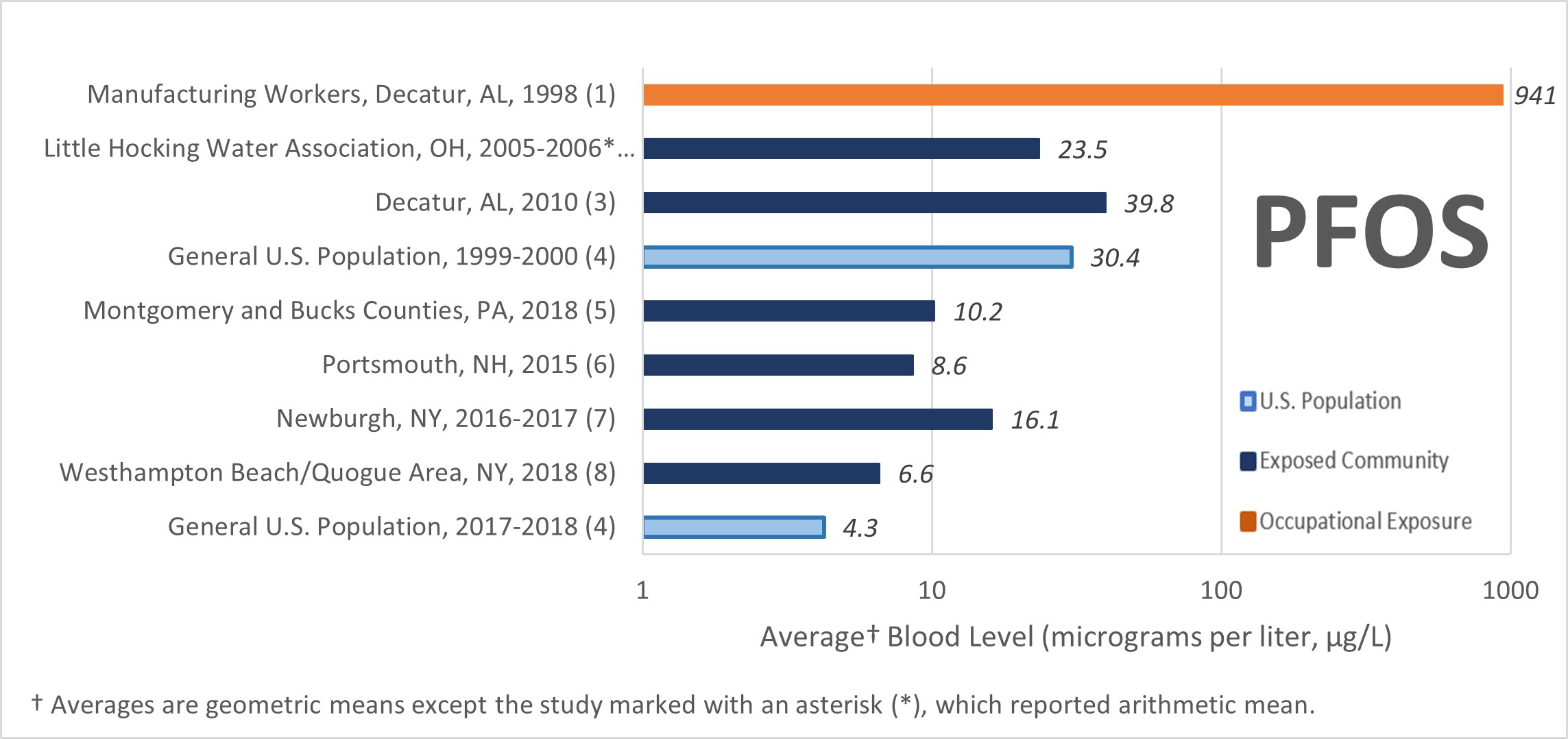
The severity of chemical pollution is emphasized by the wide range of substances it encompasses and their persistence in the biosphere. Examples of chemical pollutants include volatile organic compounds (VOCs), heavy metals, air contaminants, persistent organic pollutants (POPs), pesticides, and PFAS (per- and polyfluoroalkyl substances), to name a few. Most of these chemicals do not break down over time; instead, they accumulate year after year, causing lasting damage to the Earth. They are found in everything from rivers to livestock, and according to the CDC, PFAS have been detected in the bloodstreams of about 97% of Americans. This is a global problem, too; a 2025 study conducted in Bihar, India, revealed that nearly 90% of children and 80% of pregnant women tested in the state had unsafe amounts of lead in their blood. Furthermore, the poor regulation of industrial waste and aging infrastructure in many regions of Africa and Southeast Asia allows toxic metals such as lead and mercury to contaminate drinking water and agricultural soil.
Scientists have warned that chemical pollution has already crossed the limit for what is safe. The volume of synthetic chemicals currently in circulation has far exceeded the Earth’s capacity to manage them safely, and the sheer variety of synthetic compounds, over 350,000 globally, makes regulation nearly impossible without extensive global action.
Effects on Health & Ecosystems
For humans, exposure to chemical pollutants can cause cancer, sterility, developmental diseases, immune system damage, and disruption of brain and hormone function. Columbia University’s School of Public Health covered several significant ways chemical pollutants harm the body: DNA damage, genomic alterations and mutations, disrupted development in children, mitochondrial dysfunction, interference with regular bodily functions, endocrine disruption, increased susceptibility to allergies and infections, hindered neurotransmission, and impaired nervous system function.
As for the environment, PFAS have been detected in livestock, fish, and crops, affecting food safety and biodiversity. Chemical spills pollute rivers and seas, killing aquatic life and disrupting ecosystems. Soil contaminated with pollutants becomes infertile, reducing agricultural efficiency.
What’s Being Done
Though serious, attempts to rectify the situation have been slow-going. The United States’ Environmental Protection Agency has recently introduced stricter drinking water standards for PFAS, with limits in the parts-per-trillion range. Several states have launched lawsuits against chemical manufacturers in order to force them to fund cleanup efforts. Meanwhile, in Europe, policymakers are moving to ban classes of harmful chemicals instead of regulating them one by one, a necessary approach given the scope of the crisis, according to scientists. The UN has begun negotiations for a plastics and associated chemicals treaty, which would be the first major international agreement to limit harmful substances since the Montreal Protocol on ozone-depleting chemicals in 1987. Moreover, researchers are in the process of developing technology aiming to destroy PFAS molecules previously thought to be indestructible.
Even so, progress can be unsteady and quite slow. Many poorer nations lack the infrastructure to monitor chemical pollution as well as the political power to hold corporations accountable for any potential damage they cause.
Since these chemicals can be found everywhere, phasing them out requires a great deal of effort, starting with change on a systematic scale.
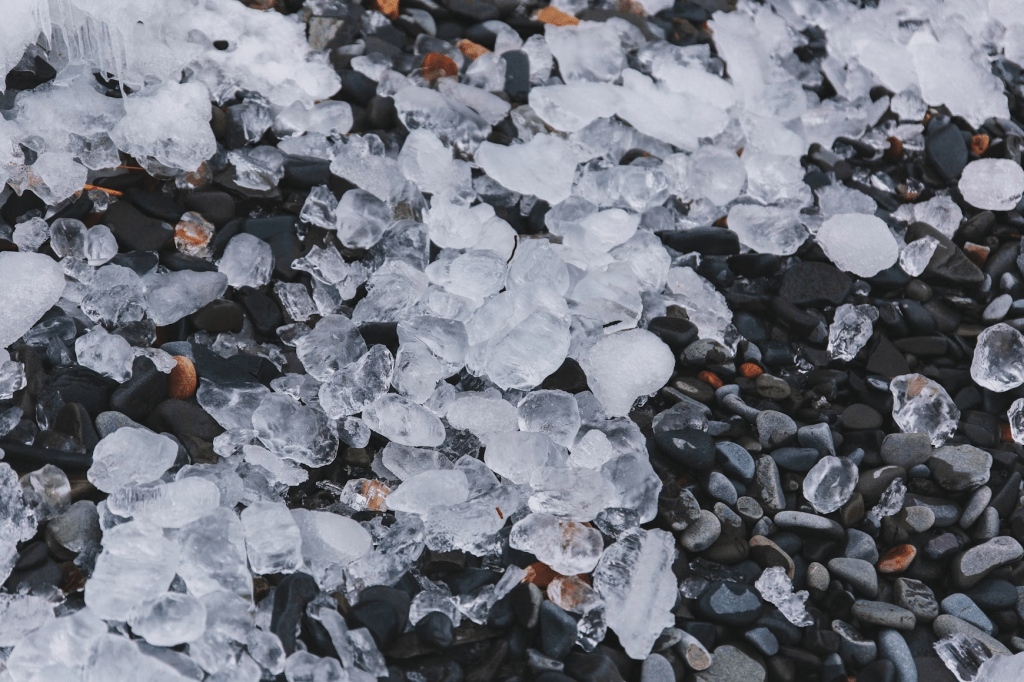
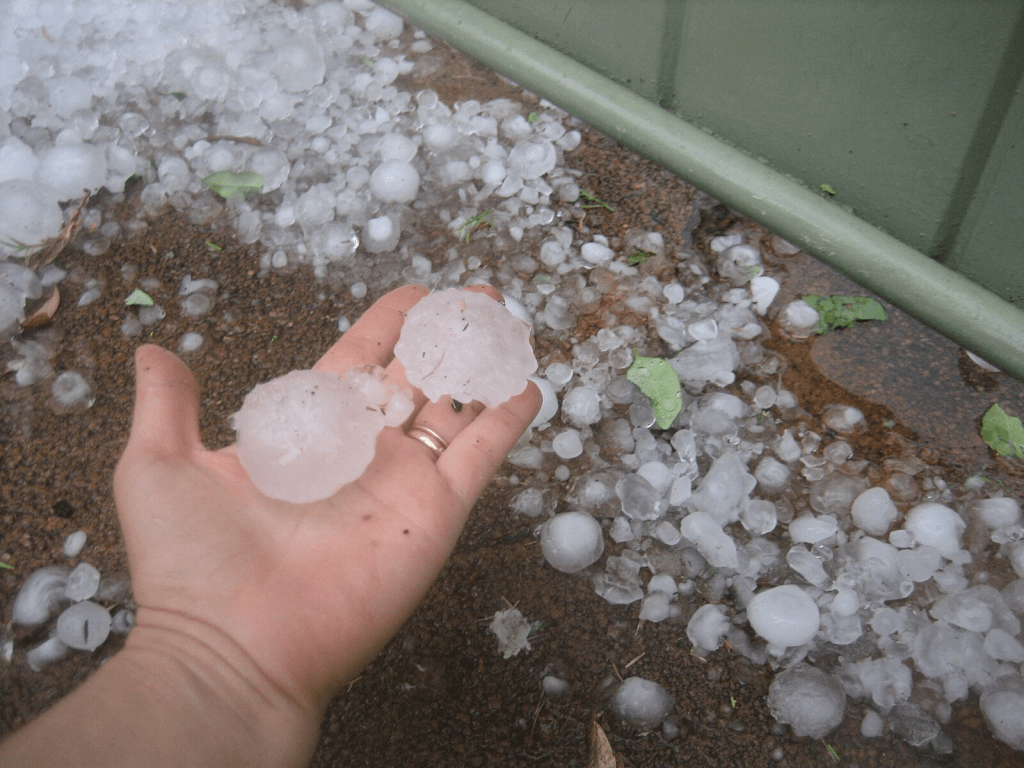
Recently, communities across the globe have seen unusually intense and violent hailstorms. Many have noticed huge ‘monster hail,’ which can be the same size as a small Labubu and cause significant damage to people and their property. This growth in hail size can be traced back to stronger updrafts and warmer temperatures, which I will expand on in this article. Communities will have to learn to deal with these powerful storms as hail sizes continue to rise.
How is Hail Formed?
Hail is made when raindrops are lifted by updrafts, or warm rising air, into the upper atmosphere. There, the temperatures are cooler, and the raindrops freeze into small particles of ice. As the ice particles are carried around by the updrafts, they bump into supercooled water droplets. Supercooled water droplets are raindrops that are still in liquid form despite being at below-freezing temperatures. When these droplets collide with the ice particles, they immediately freeze onto the particles, making them bigger. As this cycle continues, more and more droplets attach to the hailstone, causing it to grow larger and larger. Once the hailstone gets too heavy for the updrafts to support it, the hailstone will fall to the ground.
According to atmospheric scientist Brian Tang, there are two main hypotheses that potentially explain hail’s increasing size: One explanation involves Earth’s rising temperatures. In recent years, there have been warmer overall air temperatures due to heat being trapped in the atmosphere by greenhouse gases. As that air gets warmer, it also becomes more moist, as warmer air can hold more water vapor. Because there’s more moisture, more supercooled water droplets will be found in the upper parts of storms, where temperatures are below freezing. With greater access to these droplets, hailstones can grow even larger.
Another factor articulated by Brian Tang is an increase in unstable air masses coming from western North America. As these air masses move east, they form thunderstorms over flatter areas. These air masses are formed because of many reasons. One of these is the accelerated melting of mountain snowpacks, which is caused by rising temperatures. As snowpacks melt more rapidly, the ground beneath them gets heated. This heating, in turn, also warms the air near the ground while the air higher up remains cool. This contrast in temperature creates even more atmospheric instability, which leads to the development of unstable air masses, and thus, thunderstorms.
But these hail sizes could only be the beginning. According to a study conducted by the Weather, Climate and Society Research Group at Northern Illinois University, “Although fewer hail days are expected over most areas in the future, an increase in the mean hail size is projected, with fewer small hail events and a shift toward a more frequent occurrence of larger hail.” The study goes on to report that smaller hailstones (<4 cm in diameter) are expected to become less frequent, while larger stones are expected to increase by 15-75% in size. In other words, it was concluded that hailstorms may become less common overall; however, the small, relatively harmless hail that makes up the bulk of hailstorms today may be replaced by larger, more destructive hail.
We’re already seeing early signs of this shift. The Iowa Environmental Mesonet recorded 1307 instances of 2+ inch hail in 2024, compared to just 714 in the year prior. Likewise, Colorado set its state record for hail size in 2023 with a 5.45 inch hailstone- that’s about two tennis balls (0.00126 football fields) wide!
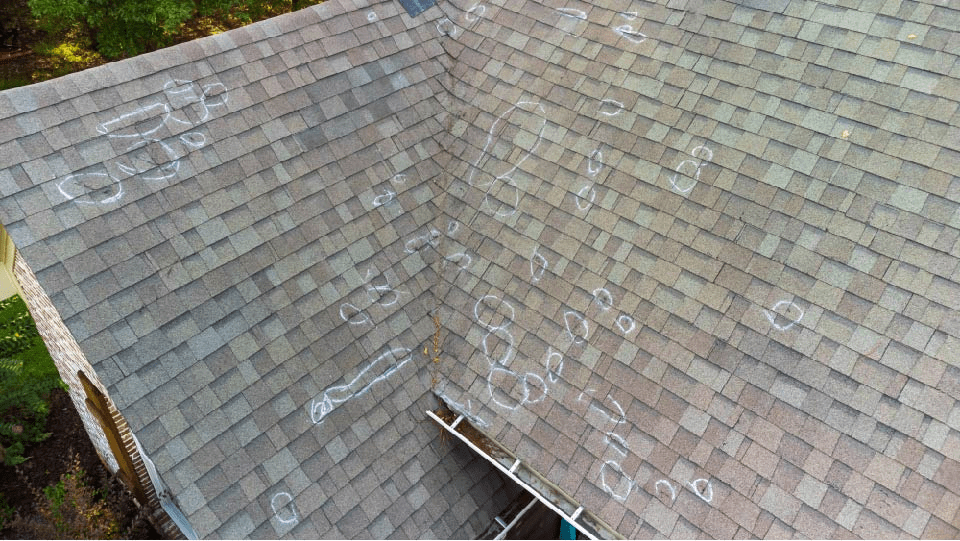
The effect of these intense hailstorms is clear: according to Versik, roof repair value in 2024 reached almost 31 billion dollars, a 30% increase from just two years prior. Wind and hail were the primary drivers, making up almost half of all roof-related insurance claims.
Some helpful ways to prevent property damage include:
Parking cars in garages or under shelters
Trimming trees to prevent falling branches
Clearing gutters to stop them from overflowing
Replacing windows and roofing
If your area is expected to experience a hailstorm, stay up to date with weather forecasts and pay attention to warning systems. Make sure to have an enclosed room in your house with no windows and stay there until weather services confirm that the storm has passed.
Conclusion
In recent years, we have seen hail grow larger and larger, and this trend shows no signs of stopping. As hailstorms continue to evolve and become more unpredictable, it is extremely important to stay informed as we adapt to the continuing changes in our climate. It is important to realize that the trends we are seeing are indicative of a larger shift in our climate. Outside of hailstorms, numerous other gradual shifts in our weather are taking place. We are seeing extended droughts, rising sea levels, and longer wildfire seasons as well. While it is still debatable whether these shifts are man-made or part of a natural cycle, it is clear that hail is just one symptom of a larger change that will have lasting effects on human life for years to come.
Gensini, V. A., Ashley, W. S., Michaelis, A. C., Haberlie, A. M., Goodin, J., & Wallace, B. C. (2024, August 21). Hailstone size dichotomy in a warming climate. Nature News. https://www.nature.com/articles/s41612-024-00728-9
As someone born and raised in New York City (NYC), I can attest to the urgent need to upgrade the city’s climate control infrastructure. Current systems are outdated and hinder the city’s ability to meet emissions goals and address global warming; the encapsulation of this problem is the boiler. A staggering 72.9% of heating in NYC comes from fossil-fuel-burning steam boilers, one of the most carbon-intensive options available. Tenants of apartments pay for the maintenance of centralized boilers without control over the temperature, leading many to open their windows in winter to release excessive warmth. This heat and the fossil fuels used to produce it are wasted, highlighting the inefficiency and impracticality of NYC’s existing infrastructure.
Even when this heat remains indoors, steam boilers are only about 80-85% efficient at burning fossil fuels. Up to a fifth of a boiler’s fuel does not generate usable heat, but burning it still releases vast quantities of pollutants like CO2, exacerbating climate change. Furthermore, boilers continue to lose efficiency during their lifetimes and require frequent maintenance and replacement. While steam boiler systems were revolutionary in the 19th century, they may now become obsolete as NYC implements a technology that could change how the world thinks about climate control.
The innovation behind heat pumps comes from the mantra of use what is given; instead of generating heat through combustion, they simply move existing warmth between two places. Most of these fully-electric pumps remain functional well below 0℃, even though it may seem like there is no warmth to be moved. This operative capacity allows them to have heating efficiencies of 300-500%! Because of this, International Energy Agency partner Yannick Monschauer estimates that “Heat pumps could bring down global CO2 emissions by half a gigaton by the end of this decade.”
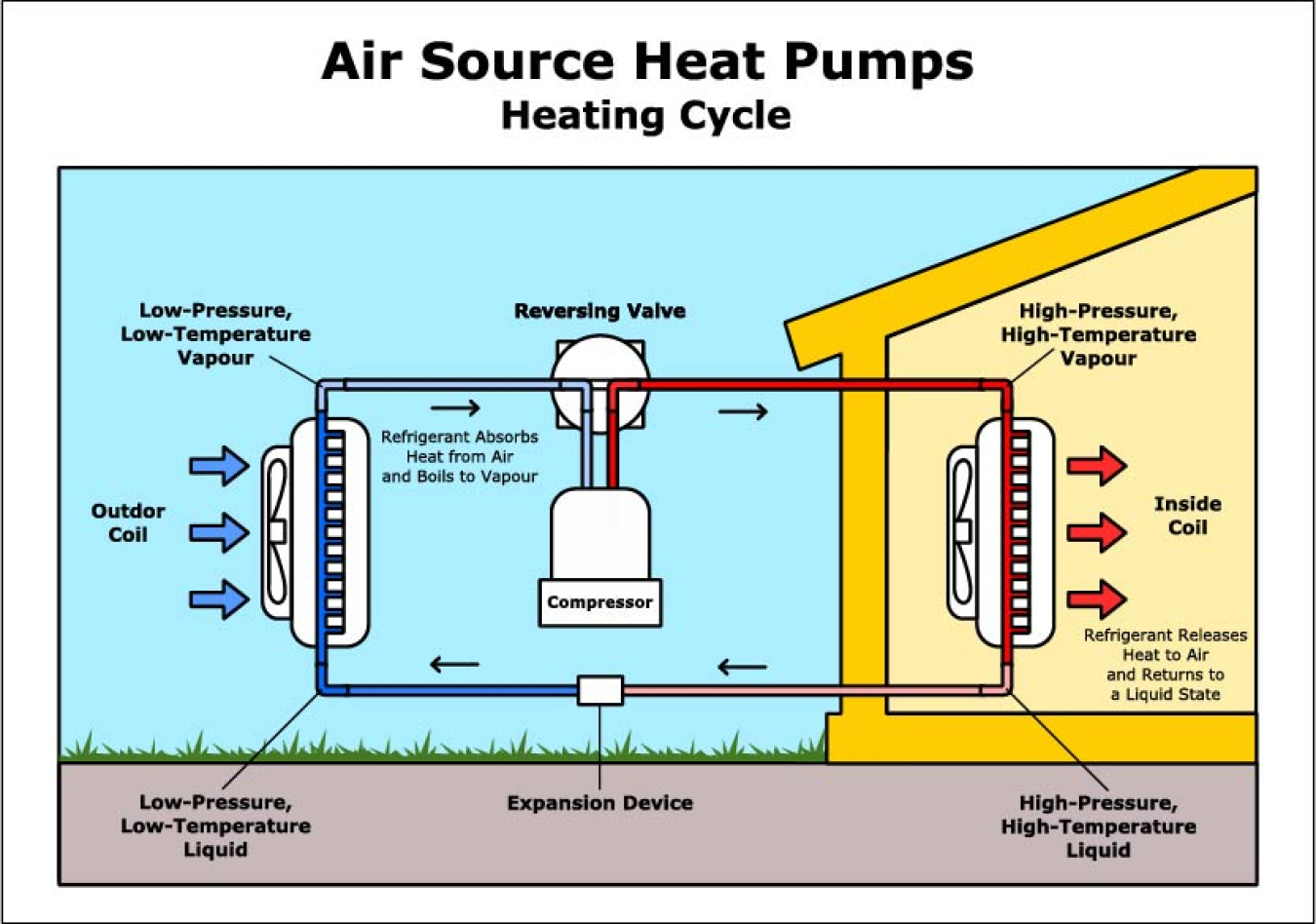
Heat pumps work by operating on the Second Law of Thermodynamics (SLOT), which states that heat will move from a hotter object to a colder one. In the wintertime, the pumps pull in outdoor air and blow it over fluids (called refrigerants) held in a closed-loop system. The air transfers warmth to the cold refrigerants through SLOT, and the heated fluids turn into gas. Heat pumps can work in freezing temperatures because these refrigerants have such unusually low boiling points, allowing them to vaporize easily; one of them, Refrigerant 12, has a boiling point of just -21.64°F!
The hot, gaseous refrigerants move into a compressor that compacts their molecules, making them even warmer. They then flow through a coil that exposes them to indoor air, and the refrigerants release their warmth inside through SLOT. As the refrigerants cool, they condense back into liquid and pass through an expansion valve, decreasing their temperature further. They move to an outdoor coil and are ready to restart the process, continuing to warm cold homes during the winter.
Even more significantly, heat pumps have reversing valves that switch the flow of their refrigerants. These valves allow the pumps to cool homes by pushing out warm, indoor air in the summertime. Thus, heat pumps make air conditioners, boilers, radiators, and related piping unnecessary, freeing space and alleviating material and labour costs that typically get passed on to homeowners.
Heat pumps in NYC
In 2024, NYC pledged to have heat pumps provide 65% of residential heating, air conditioning, and water-heating needs by 2030. This shift would drastically reduce the city’s carbon emissions from the climate control sector, which contributed to 10% of global energy-related CO2 emissions in 2021.
This pledge is logical both environmentally and practically: having one heat pump replace two systems saves valuable space, lowers costly installation and maintenance fees, and reduces energy demands. The NYC government realized this potential and signed a $70,000,000 contract to install 30,000 window heat pumps in NYCHA buildings, better known as public housing. Two heating companies, Midea and Gradient, will provide these units.
In late 2023, Gradient installed 36 preliminary test units in NYCHA buildings. Most NYC steam boilers, including those in NYCHA’s current system, are powered by gas with oil reserves in case of an emergency. Gradient found that their pump can lower tenants’ heating bills by 29-62% on moderate winter days compared to gas-powered boilers. Savings are as high as 59-78% compared to oil-burning boilers. In testimonials that Gradient collected, NYCHA tenants noted the heat pumps’ impressive air filtration, heating, and operational capabilities. Midea conducted similar tests and soon plans to release its heat pump for public purchase.
The Cold Drawbacks of Heat Pumps
Although technological faults remain, NYC is continuing its plans to install and promote heat pumps to replace its intensive, outdated systems. For one, Midea’s upcoming pump will cost ~$3,000 per unit, greatly exceeding the combined price of ~$460 for their bestselling, single-room heating and cooling systems. This is a misleading comparison, however, because heat pumps also act as heating systems. The technology can lower electricity and fuel bills over an extended period, but the current price point makes heat pumps an unaffordable investment for many households – despite government subsidies and incentives. Even the NYC government’s bulk order of Midea and Gradient pumps averages over $2,300 per unit.
Furthering the inaccessibility of these systems, the most advanced, aesthetically pleasing, and apartment-friendly heat pumps can only heat and cool individual rooms. This means that multiple units must be purchased, installed, and powered to service a home, and each must be replaced about every 20 years. Still, NYC’s firm stance on heat pumps indicates the climate control systems’ proven efficacy, practicality, and sustainability.
Heat Pumps Globally, and Plans for the Future
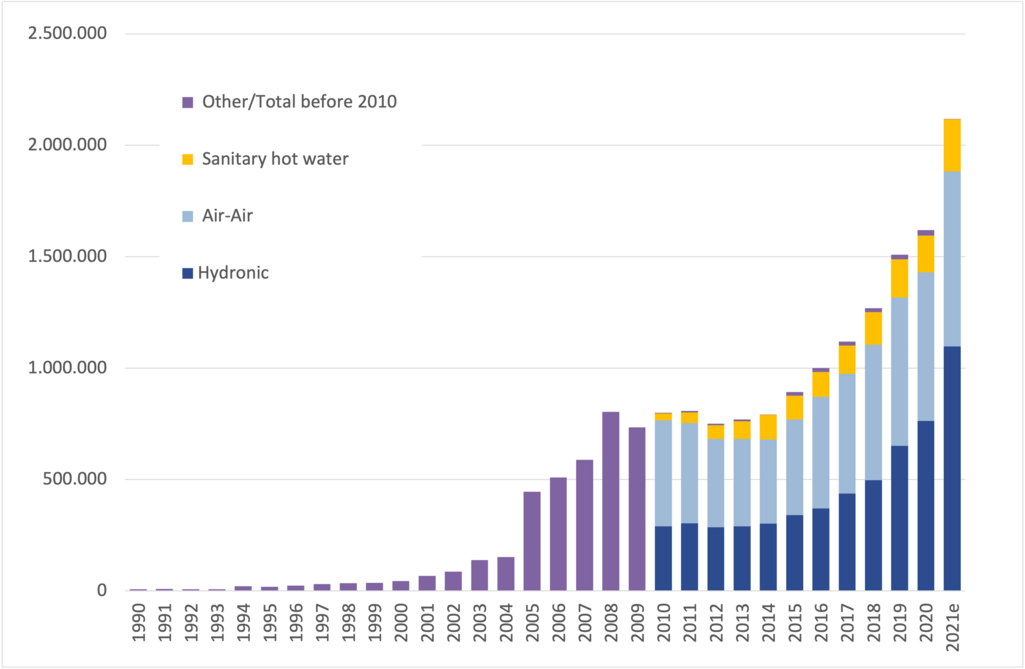
While technological challenges remain, NYC is continuing to deliver on its pledges. This decision on heat pumps is being made throughout the United States (US). In 2022, heat pump sales in the US significantly outpaced those of gas furnaces (a type of central heating system particularly popular in North America). This lead has continued into 2025 as more people realize that the pumps can lower fossil fuel emissions and energy bills.
This switch is not just happening in the US; countries worldwide are beginning – or continuing – to invest in these pumps. Sales in European countries have soared in the 21st-century, an accomplishment partly attributed to friendly government policy. The country with the most pumps relative to its population, Norway, has 632 heat pumps installed for every 1,000 households (the majority of these pumps service entire houses, unlike the Midea and Gradient systems discussed above). Despite this high ownership rate, 48 pumps were purchased in Norway for every 1,000 households in 2024.
In spite of these promising statistics, heat pump sales in most economies have either slowed or slumped in recent years – particularly in Europe. Analysts suspect this is due to high interest rates, rising electricity prices, low consumer confidence, and low gas prices. While this is discouraging, pump sales and ownership rates remain higher than they were several years ago. In 2023, New York Governor Kathy Hochul pledged to help the U.S. Climate Alliance (USCA) install 20,000,000 pumps across the U.S. The USCA is a coalition of 24 governors representing 54% of the United States population and 57% of its economy. The bipartisan group has successfully delivered on their promises of emissions reduction, climate resilience, economic growth, energy savings, and zero-carbon electricity standards that heat pumps are engineered to meet.
This coalition has proved that environmental action is popular, necessary, and possible. At a time when climate policy is under question, sustainable and feasible technologies – like heat pumps – need the investment of citizens, industries, and governments alike; no matter how small the scale.
So, how can you help? Since 2022, the US government has given a federal tax credit to citizens who install efficient heat pumps. The Energy Efficient Home Improvement Credit provides eligible homeowners up to $2,000 annually. Combined with other energy-efficient credits, US citizens can regain up to $3,200 every year. These monetary incentives offer another reason to consider switching to heat pumps, and similar policies are being enacted worldwide.
I am proud to live in a city that rewards and encourages the sustainability of citizens, corporations, and public works. As the severity and irreversibility of global warming loom, heat pumps offer us a breezy solution to polluting climate control systems. Eventually, NYC’s infamous boiler rooms and clanging pipes may become relics of the past.
Though seemingly unrelated, cow farts, climate change, and coffee have unexpected connections. For starters, cow farts produce methane – and lots of it. In fact, a single cow can produce a massive amount of methane – usually 250-500 liters per day. Now, think of how many cows we have here on Earth (I’ll give you a hint: it’s 1.5 billion). And while CO2 gets all the attention when it comes to climate change, methane has twice the effect on a per-unit basis. But we can’t just blame climate change on the cows: other livestock also contribute to the greenhouse gases that warm our planet. Well, it’s a good thing that climate change is a widely known issue around the world, right? We know that these gases will cause the heating of the Earth, resulting in ice melting and oceans rising. However, while these problems may take years to manifest, other negative effects won’t be nearly as delayed. One impending problem is the devastation that this heat will bring to both weather patterns and crops. Warmer temperatures cause more evaporation, meaning more water in the atmosphere and more storms. Many plants, coffee included, can’t grow in these changing and unstable climates. And while scientists are doing all that they can to fix these problems, individual citizens are unlikely to act unless they understand the full extent of what is going on.
What Is Climate Change?
Climate change is a universal issue backed by scientific evidence and recognized by most of the public. The Earth is warming, and rapidly at that. According to NASA, the average global temperature on Earth has increased by at least 1.1° Celsius (1.9° Fahrenheit) since 1880, and the majority of the warming has occurred since 1975, at a rate of roughly 0.15 to 0.20°C per decade. It may not seem like much, but the environment is not accustomed to adapting quickly, and if this goes on, the results could be devastating.
Greenhouse Gases
Greenhouse gases – let’s call them GHGs for short – are essential for our survival, but could very well be the key to our doom. The most common GHGs include water vapor, carbon dioxide, methane, and nitrous oxide. They absorb heat from the Sun and trap the warmth, preventing it from escaping into space. It’s the reason why life on Earth is possible: just like their name, these gases basically function as the glass in a greenhouse, raising the temperature so that we can thrive.
But greenhouses can also get too hot. The more gases in the atmosphere, the more effective the heat-trapping process is. This excess heat-trapping is precisely what has been occurring over the past few decades, especially since the Industrial Revolution
So, what is causing the surplus of GHGs warming our Earth?
One cause is transportation, which accounts for 14% of GHGs. Cars, buses, trains, airplanes – most of them use gasoline, diesel, or jet fuel to function. Burning these materials releases many harmful gases, the most relevant of them carbon dioxide, methane, or nitrous oxide. In some countries, like the US, transportation may be the leading cause of GHG emissions. However, there are many ways to combat these effects. You’ve most likely heard that walking and public transportation will reduce emissions, and they can! Even electric vehicles will help if you’re using clean electricity. Additionally, biofuels and hydrogen can replace fossil fuels in aviation and shipping.
Another significant cause is electricity and heat production, which accounts for a fourth of total GHGs alone. These processes still rely heavily on burning fossil fuels, such as coal, oil, and natural gas. Now that more and more homes and buildings are being constructed, there is a higher electricity demand than before. As a result, more fuel is burned – unless we switch to cleaner sources such as wind, solar, or hydro power. Transmission losses (electricity lost as it travels over power lines) require extra generation, further increasing emissions. Therefore, improving efficiency in buildings and the power grid could reduce the demand and associated GHGs.
Buildings can cause around 6-7% of GHG emissions. The production of materials like cement, steel, and aluminum all release gases such as carbon dioxide, and use the process of burning fossil fuels. According to the BBC, cement production contributes 8% of global GHGs. Not to mention, transporting those materials and the use of heavy machinery and equipment while building them also adds to emissions.
These are all large and well-known reasons that contribute to GHG emissions, so let’s take a look at something lesser known. Agriculture.
What About Cows?
Let’s be honest: your answer to the question about major sources of GHGs was probably not cows. But, in truth, these adorable creatures that we raise account for around 14.5 percent of greenhouse gases that warm our planet. Of course, it’s not cows alone: other livestock, including chickens, horses, pigs, and more, are all included in that percentage. We’re looking at cows specifically because a breakthrough with them could lead to resulting solutions with the other animals, and cows are large and easy to work with.
Cows make methane in two ways: through their digestive process and their waste. They are part of a group of animals called ruminants, with four distinct stomach chambers. The first is called the rumen, a home for microorganisms that break down the starch and sugar from plants. The next chamber is called the reticulum, where hard-to-digest plant materials are stored. The next chamber is called the omasum, which mechanically breaks the food down further. Finally, the last chamber is called the abomasum, which absorbs the nutrients from the food.
In the rumen, a process called enteric fermentation takes place. This is where the previously stated microorganisms and bacteria break down complex carbohydrates and turn them into sugars. The resulting products include volatile fatty acids (used as a major energy source for the cows), as well as GHGs such as carbon dioxide and methane. The gases are released from the cows either as burps or farts.
Scientists are attempting to find the most effective solution to this large problem. There have been many different approaches to this issue, some of which are below.
One method that has been used is seaweed in the cow feed. A 2018 study focused on mixing a seaweed species called Asparagopsis armata with hay and small amounts of molasses. Animal science professor Ermias Kebreab says they’re hoping that the seaweed can inhibit an enzyme that’s involved in producing methane in a cow’s gut, a chemical reaction discovered by researchers in Australia. After a day of eating this feed, the cow’s methane emission dropped by a drastic 50%. However, they also discovered a small dent in the amount of food consumed, as well as milk produced, due to the seaweed’s ocean smell. The next steps of this experiment are to find ways so the cows don’t notice the seaweed, and plan an experiment to use beef cattle instead of dairy cattle. Though there is still a long way before this can be implemented on a large scale, even the smallest start can lead to a bigger solution.
Another study from 2019 discovered that selective breeding can lead to a “cleaner cow.” Project’s leaders and co-author Professor John Williams says: “What we showed is that the level and type of methane-producing microbes in the cow is to a large extent controlled by the cow’s genetic makeup.” By selecting cattle that produce less methane than their counterparts, it may be possible to create a livestock industry that generates fewer GHGs. However, the breeding will also depend on other desired characteristics, such as meat quality, milk, and disease resistance.
Finally, Argentina’s National Institute of Agricultural Technology (INTA) created the cow-fart-backpack (the picture shown above). This device captures the methane from these cows through a tube in their skin, which scientists claim is painless. The gas is then condensed and ready to provide power for the farm. By utilizing this gas for power, farms would consume less purchased gas and thereby reduce the total emissions.
Where Does Coffee Come In?
Even with all these solutions, climate change is still one of the biggest issues out there. One common outcome that you may have heard of is the rising ocean levels. Because of the rapid heating, the northern and southern reaches of the planet are warming faster than any area on Earth, with the temperatures there rising twice as much as elsewhere. This damages the fragile ecosystems there, leaving less space for animals such as polar bears, seals, and penguins to venture. Not only that, but the sheer amount of ice that is melting each year has increased ocean levels drastically. According to NASA, the ocean levels have risen 10.1 centimeters since 1992.
But there’s another effect that’s less heard of. Agriculture will also be greatly impacted by climate change, as some plants need very specific temperatures and weather conditions to grow.
Let’s take a closer look at coffee.
Some plants need very specific temperatures and weather conditions to grow, and now that it’s all changing, the locations where the plants grow would need to change with it. For example, the coffee plant grows in temperatures of around 15-24 C, or 60-70 F. Areas such as Hawaii, Africa, and Brazil are all large coffee exporters, but if the temperatures keep rising, coffee would cease to grow in those places. Coffee plants are highly sensitive to temperature and moisture changes, and stress leads to lower yields and flavor quality. But, it’s okay, right? We can just plant coffee in different areas that are now suitable for coffee growth!
Not quite. Coffee takes 3-4 years to grow, and needs to be processed after. Processing plants will take even longer to build, not to mention the cost and GHG emissions. So, in that time, global coffee supply shortages would lead to higher coffee prices, affecting consumers and businesses. Millions of jobs in farming, processing, transport, and retail depend on coffee, leading to unemployment in producing regions. Countries that rely on coffee exports would suffer major losses in GDP and stability.
Now think of this on a large scale. Not just coffee, but other plants as well. The world would be in chaos: jobs lost, prices increased drastically, and businesses shut down. These are the results of climate change.
Conclusion
Ultimately, climate change is affecting our world fast. With the temperatures rising each year and GHG emissions growing, the world is in dire need of a solution. Though there isn’t a single “correct” fix to this problem, everything that we do to prevent it counts. The effects of climate change can be disastrous – environments are being destroyed, oceans are rising, and plants are dying. But…if everyone helps, if everyone contributes, and understands just how dangerous and volatile climate change can be…perhaps we can prevent the problem that we are causing in the first place.
References
Center for Climate and Energy Solutions. 2019. “Main Greenhouse Gases | Center for Climate and Energy Solutions.” Center for Climate and Energy Solutions. June 6, 2019. https://www.c2es.org/content/main-greenhouse-gases/.
Aviation facilitates long-distance travel, quick package delivery, and is essential to military operations. However, aviation plays a big part in daily life that often goes unappreciated. This can be both good and bad. Aviation enables quick medical transportation for operations like cross-state lung transplants, supports search and rescue operations, and creates jobs. However, it is also a significant factor in climate change, noise pollution, and airports can disproportionately affect the health and home values of residents nearby.
What is Aviation?
Aviation deals with the activities related to the flight, operation, and design of aircraft. Most commonly, the aviation industry is thought of as the commercial airline industry that is travel-based and includes brands like American Airlines, United Airlines, and Emirates.
Flying is the main source of transportation for international tourists, with 58% of travelers opting to fly. This connects people to their families, enables faster trips, offers a wider range of locations, and provides remote communities access to necessities like healthcare and education.
Additionally, flight connects businesses to people across the globe, allowing them to ship their goods and reach new customers. The air freight industry is a large with approximately $ 6.8 trillion worth of goods relying on air cargo to reach their destinations. It also creates package delivery services like UPS, Amazon, and FedEx.
Essential Services–
Aviation facilitates emergency operations like disaster relief, search and rescue, and medical operations. In disaster relief, aviation allows for the delivery of supplies, outside personnel, and medical aid. 35,000 tons of food and 4,800 tons of health-related vital relief cargo were delivered using aircraft in 2023. Aircraft can also better aid in search and rescue because they are not obstructed by obstacles like difficult terrain or broken infrastructure. The equipment on search and rescue helicopters, like infrared cameras, saves lives by accelerating the process of locating survivors where time is of the utmost importance. This is why the Civil Air Patrol operates in about 90% of search and rescue missions in the US.
Additionally, it is not always possible to transport the injured to medical care via a traditional ambulance. Air ambulances can reduce response time, access restricted areas, and provide life-saving care. They can also facilitate cross-state transplants where an organ may be available in one state and the receiving patient is in another. This can increase the pool and possibility for a person to receive the transplant that they need.
Social and Cultural-
Air travel connects people faster than any other transportation system. This allows for culture and traditions to spread across the globe, leading to international relations and a better appreciation for other countries. Ideas, books, and knowledge also pass through the aviation industry because every person who travels somewhere else has their unique ideas and important knowledge that they spread.
The aviation industry creates about 86.5 million jobs internationally. Secure jobs drive international growth because they provide people with a stable source of income that can be invested back into their country’s economy and children’s education. This is especially growing in Africa and Latin America, where the number of jobs in the aviation industry is projected to double in Africa and increase by 20 million in Latin America by 2043. In North America alone, the industry has brought about 1.4 trillion dollars. 49.2 billion dollars were also invested in the building and renovation of airports, which created more construction.
Fashion-
Aviation Fashion is often supplemented by movies like Top Gun, The Aviator, and Catch Me If You Can, and social media. It combines practicality with fashion and has produced some of the most iconic pieces, like the Ray Ban aviator glasses. Some other notable pieces and brands are bomber jackets, pilot hats, and Aviator Nation.
Climate change impacts / National Oceanic and Atmospheric Administration
Climate Change-
Because there has been an increase in flights, emissions from aviation have grown more than any other type of transportation. Airplanes release CO2 when burning fossil fuels, but they also leave vapor trails, soot, water, and gases like Nitrogen Oxides, and Sulfur dioxide. These combined create contrail cirrus or artificial clouds, which can increase greenhouse gases. While climate change is usually connected to CO2 levels, these non-CO2 effects from aircraft have contributed twice as much to global warming as aircraft CO2 emissions.
Uneven medical disparities-
Aircrafts release CO2, NOx, and SOx, which can negatively affect the people living there, as shown through the higher respiratory disease, morbidity, and mortality rates among people who live near airports. The noise pollution from the airplanes not only lowers the value of homes nearby but also has detrimental effects on residents. It can lead to stress, negative results in children’s cognitive development, and increased rates of hypertension, cardiovascular disease, and hyperactivity.
Innovations:
So many advances have been made since the first airplanes. The average flight today already produces 54% less CO2 than a flight in 1990. Innovations continue to be made to decrease CO2 emissions.
SAFs (sustainable aviation fuels)-
A lower-carbon alternative to jet fuel, first commercially used by United Airlines. SAF, or sustainable aviation fuel, has 85% lower GHG emissions. They are produced by converting renewable or waste materials—such as agricultural residues and used cooking oil—into fuel, sometimes using renewable energy in the process. This approach helps reduce both emissions and waste.
Reducing fuel burn and greenhouse gas emissions are critical to minimizing the effects of climate change. This is accomplished through more efficient aircraft designs. One way of making the aircraft more efficient is with truss-based wings, as seen in the picture above. These wings produce as much lift as traditional wings, but much less drag, resulting in less fuel consumption. Another way of making the aircraft more efficient is by using recycled materials to build the plane. When made this way, aircraft are lighter, less expensive, stronger, and easier to repair.
Airports are also doing their part in using recycled materials. The Galapagos Ecological Airport’s terminal is made of 80% recycled materials. It also runs entirely off of renewable energy and has its own desalination plants that allow the airport to use local seawater. This airport is the first ecologically friendly airport and has inspired other airports to be environmentally friendly, like the Bohol-Panglao Airport in the Philippines.
Water usage-
Water usage is an aspect often not associated with aviation, but aircraft need to be cleaned for hygiene, safety, and efficiency (since dirt and grime on the plane can make it heavier and increase fuel consumption). The traditional cleaning process can use up to 13,000 tons of water. However, innovations such as dry washing aircraft have lowered that amount by 95%.
Dry washing, which Emirates Airlines introduced in 2016, uses little to no water. It is a liquid cleaning product that is manually applied and wiped off with a microfiber cloth. It also leaves a film on the airplane that allows planes to stay cleaner for longer and for Emirates to save 11 million liters of water a year.