About

Tag: books

  • The Antichrist (Peter Thiel) is Frankenstein

    The Antichrist (Peter Thiel) is Frankenstein

    By Aravli Paliwal

    ~12 minutes


    When asked if he would “prefer the human race to endure” by podcaster Ross Douthat, billionaire Peter Thiel stumbles and hesitates, viscerally conflicted on a straightforward question. “Uh- well I- I don’t know, I would- I would, um” it takes Thiel around 19 seconds just to spit out a yes, and he quickly shifts the topic of discussion thereafter. So, is this another egotistical billionaire who believes he is superior to the plebian human race? While seemingly affirmative on the surface, a deeper examination of Thiel’s esoteric ideologies—when paired with his immense wealth—reveals their capacity to influence millions.

    Who is Peter Thiel?

    Co-founder of PayPal and Palantir, partner of Founders Fund, a venture capital firm with a notable portfolio including SpaceX, OpenAI, and hundreds of other companies, and the primary source of funding for Vice President JD Vance’s campaign, Peter Thiel’s power oscillates across many sectors. While the wealth he has amassed from these investments has given him a platform that guarantees an audience for his views, it’s often those very views that generate even more attention.

    Over the last year, Thiel has orchestrated a series of private lectures in San Francisco where he discusses the antichrist and inevitability of Armageddon. In short, he believes that an antichrist figure (modeled after philosophers who believe in policing and restricting technology) will enact extreme regulations on AI, as well as fearmonger the public with threats of nuclear war, climate change, and the possibility of World War III to consolidate supreme power. He goes on to note that an antichrist figure, under the façade of peace and safety, will actually act as a totalitarian, one-world state. Thiel believes this antichrist is “focused single-mindedly on saving us from progress, at any cost.”

    However, his views are inherently contradictory. Thiel is actively using Palantir to build defense and surveillance infrastructure for the government, funding the very tools that facilitate the possibility of a one-world regime that his own ideology warns about. Once a government relies on a single tech stack like Palantir for its security apparatus, that stack gains massive structural power. So, by steadily deepening its role within government technology, Palantir expands what any government could do if they ever chose to centralize power.

    Furthermore, the original vision for Thiel’s PayPal was to wholly replace government-controlled currency like the US dollar, with the ultimate goal of making it the main, independent source of money for all citizens. In a Stanford center for professional development lecture in 2014, Thiel stated,

    “If you’re a startup [like PayPal], you want to get to monopoly. You’re starting a new company, you want to get to monopoly.”

    Because this monopoly directly contradicts the competition that drives free-market principles, it becomes increasingly clear that if the future were to be a totalitarian one world state with a central, supreme leader in charge of all sectors, Peter Thiel would be the antichrist.

    And yet, this contradiction is indeed very strategic because theology with talks of an antichrist and Thiel’s background as a “small-o orthodox Christian” provides a moral cover. It reframes opposing viewpoints as evil and sacrilegious. With this antichrist narrative, Thiel characterizes those who believe in policing and restricting technology as enemies of God, utilizing religious justification to suppress them.

    But then, this would not be the first time that religion was manipulated for justification. Recently in my English class, we have been studying Mary Shelley’s Frankenstein, and that got me thinking about the parallels between Peter Thiel and Victor Frankenstein.

    Widely regarded as a literary classic, Mary Shelley’s Frankenstein provides one of the earliest and most enduring frameworks for understanding technocratic ambition and esoteric ideologies. Written in the early 19th century amid scientific experimentation rooted in Enlightenment principles, the novel reflects progress and its consequences. Victor Frankenstein’s pursuit of forbidden knowledge mirrors emerging technocratic impulses that prefer innovation over ethical restraint. As such, Frankenstein functions not merely as a Gothic cautionary tale, but as a foundational text for examining how power and technological aspiration intertwine to produce unintended, and often destructive, outcomes.

    Peter Thiel and Frankenstein on Transhumanism

    Thiel: “A critique of the trans people in a sexual context, or a transvestite, is someone who changes their clothes and cross-dresses […] but we want more transformation than that. The critique is not that it’s weird and unnatural, it’s so pathetically little. We want more than cross-dressing or changing our sex organs, we want you to be able to change your heart, and change your mind, and change your whole body.”

    Where Peter Thiel wants humankind to customize their preexisting bodies, Victor Frankenstein’s creature was the very product of this customization, and we saw the negative effects that this had on the creature, the creator, and the world around them. Victor hand-picked “limbs in proportion, and […] had selected [the creature’s] features as beautiful” (vol I, ch. IV, pg. 38). Frankenstein taught us that customization pulled us away from the characteristics that made us human, and by eradicating flaws with technological advancement, we lost the wabi-sabi that defined humanism in the first place. So, while Thiel’s bold statement of “changing your whole body” could just be futile technocrat jargon, or all bark and no bite, we saw the results of the unrestricted technology that Thiel advocates for in Frankenstein, and transhumanists like Thiel most certainly have the wealth, power, and connections to turn this fictional story into a utopian reality.

    Peter Thiel and Frankenstein on Defying Nature

    A couple minutes later in the same interview, Douthat facilitates a discussion tying religion, nature, and technology together, asking Peter Thiel how each piece of the puzzle fits.

    Ross Douthat: “The promise of Christianity in the end is the perfected body and the perfected soul through god’s grace. And the person who tries to do it on their own with a bunch of machines is likely to end up as a dystopian character.”

    Thiel: “I think the word ‘nature’ does not occur once in the Old Testament, and the way I understand the Judeo-Christian inspiration, is [that] it is about transcending nature.”

    While he is correct that the word ‘nature’ does not appear in the Old Testament, allusions to the physical world and all real things go hand in hand with God’s creation, and therefore intrinsically link nature to the Old Testament.

    But then, let us look at transcending nature from a more universal perspective, one that is not hinged on religion where messages are entirely different based on where you are in the world and what family you are born into.

    In Frankenstein, nature famously retaliates when Victor pushes the boundaries, with Mary Shelley incorporating the sublime setting to suggest that the scientist is consistently outmatched by natural power. Gloomy weather and hostile landscapes mirror Victor’s loss of control, and as he approaches the creation’s completion, the world outside his laboratory is anything but bright. Instead, this ‘achievement’ takes place “on a dreary night of November” where “the rain patter[s] dismally against the panes” (vol I, ch. IV, pg. 37-38). This miserable setting foreshadows Victor’s lifelong misfortune, where the creation triggers his manic, depressive spiral that lasts until the end of the novel. It also signals a larger theme where any attempt to violate nature sets off consequences that no human mind can contain. The novel’s final setting in the brutal Arctic cold further underscores nature’s ultimate authority. Victor, still convinced he can overpower the natural world, instead collapses under the weight of his ego and dies in the ice. His fate teaches us that attempts to defy nature’s boundaries inevitably collapse under forces far greater than human will.

    It is worth noting that Shelley uses mother nature, something traditionally referred to in a feminine context due to its life-giving and nurturing qualities, to highlight male arrogance. Victor himself characterizes the Alps as female, a clear reflection of omnipotent fertility, and on his wedding day, Victor admires “the beautiful Mont Blanc, and the assemblage of snowy mountains that in vain endeavor to emulate her” (vol. III, ch. V, pg. 145).

    Peter Thiel and Frankenstein on Gender Roles

    However, when it comes to Frankenstein and Peter Thiel, opinions on gender roles fly a little under the radar because neither party truly hates women at all. In fact, in a 2016 Bloomberg interview Thiel acknowledges gender disparities in tech, where “only 2 out of 150 [Silicon Valley startups] had woman cofounders, and if you’re 148 to 2, that’s a crazy lack of balance”. While many journalists paint Thiel as a pure misogynist, what they fail to understand is that women don’t follow his libertarian agenda, and Peter Thiel, a man who desperately works to control every single sector, takes issue with this. In Peter Thiel’s essay, The Education of a Libertarian, he states, “since 1920, the vast increase in welfare beneficiaries and the extension of the [voting] franchise to women — [are] two constituencies that are notoriously tough for libertarians.” So, this push for gender inequality stems from a lack of control.

    As I mentioned earlier, because Frankenstein cannot control mother nature, something with nurturing, feminine qualities, he instead feels the need to rape her and “penetrate into the recesses of nature and show how she works in her hiding-places” (vol. I, ch. II, pg. 31). Victor’s irrational fear of building a female creation also stems from a lack of control. According to him, this woman could become “ten thousand times more malignant than her mate” or “turn with disgust from [the male creature] to the superior beauty of man; [leaving him] deserted by one of his own species” (vol. III, ch. III, pg. 124-125). This female creature would have independent free will, along with autonomous opinions and beliefs that could not be controlled by him nor his male creature.

    “Terrified of female sexuality and the power of human reproduction it enables, both he and the patriarchal society he represents use the technologies of science and the laws of the polis to manipulate, control, and repress women.” -Anne K. Mellor, Professor of English Literature and Women’s Studies at UCLA

    And the even crazier part? Both Victor Frankenstein and Peter Thiel prefer other men as romantic and sexual partners. This preference reinforces a desire for relationships they can idealize and control, in contrast to the autonomy they both fear in women. Both Thiel and Frankenstein desire absolute authority, whether in the natural world or the social one. In this framework, women emerge as forces that resist their power, refusing to align with their overarching agenda.

    Peter Thiel and Frankenstein on Technological Stagnation

    Thiel: “It wasn’t zero, but 1750 to 1970 — 200-plus years — were periods of accelerating change. We were relentlessly moving faster: The ships were faster, the railroads were faster, the cars were faster, the planes were faster. It culminates in the Concorde and the Apollo missions. But then, in all sorts of dimensions, things had slowed. […] So, yes, I think broadly we’re in this world that’s still pretty stuck, but it’s not absolutely stuck.” Hans Jochen Scholl, Professor at University of Washington carefully dissects Thiel’s stance:

    “At the core of Thiel’s narrative lies a romantic expectation that innovation should appear as discrete, dramatic breakthroughs—visible, monumental, and physical. Yet history and philosophy suggest otherwise.”

    History does, in fact, suggest otherwise. Victor Frankenstein often felt “discontented and unsatisfied” with modern philosophy of the time, and much preferred the ancient, occult philosophical texts of Agrippa and Paracelsus that focused on magical systems and other imaginative ideas relatively ahead of their time (vol. I ch. I. pg. 25). In fact, Paracelsus effectively served as the blueprint for contemporary transhumanists like Frankenstein and Thiel, and “looked beyond the limits of the human condition, even going so far as to give detailed instructions about how to create a homunculus” (Bjork, 24). To Victor, scientific innovation of the 1800s looked stationary and “promise[d] very little,” clearly diverging from Paracelsus’ dramatic breakthroughs with the potential for monumental impact (vol. I, ch. II, pg. 31). This stagnant characterization aligns with Thiel’s, who also believes that technological advancement is exclusive to big, inspiring events like the Concorde and Apollo missions he mentions in the interview.

    What I find particularly ironic is how the comparison between Peter Thiel and Victor Frankenstein fundamentally debunks each man’s argument. Where Thiel highlights peak innovation from 1750 to 1970, Frankenstein believed that innovation during this exact timeframe felt boring, stagnant, and uninspiring. With this logic, a future technocrat in another couple hundred years might find their modern technological progress particularly stagnant and look to the glory days of the 21st century. Because stagnation is a concept built on perspective, and relative to the eye of its beholder, it becomes a manufactured narrative that these men use to justify their ideologies, rather than a factual trend worth analyzing.
    References

    Bjork, R. E. (n.d.). Beasts, humans, and transhumans (Vol. 45). Arizona Studies in the Middle Ages and the Renaissance.
    Bloomberg. (2016, April 12). Peter Thiel on women in tech [Video]. Bloomberg.
    https://www.bloomberg.com/news/videos/2016-04-12/peter-thiel-on-women-in-tech
    Cato Unbound. (2009, April 13). Education and libertarianism.
    https://www.cato-unbound.org/2009/04/13/peter-thiel/education-libertarian/
    Clay, E. (n.d.). [Article on transhumanism]. Northwestern University.
    https://rprt.northwestern.edu/documents/clay-article-3.pdf
    Complex. (n.d.). Peter Thiel hesitates the human race may survive.
    https://www.complex.com/life/a/cmplxtara-mahadevan/peter-thiel-hesitates-human-race-survive
    Douthat, R. (2025, June 26). Peter Thiel and the Antichrist. The New York Times.
    https://www.nytimes.com/2025/06/26/opinion/peter-thiel-antichrist-ross-douthat.html
    Founders Fund. (2023, August). The diversity myth, 30 years later.
    https://foundersfund.com/2023/08/diversity-myth-30-years-later/
    Guardian Staff. (2025, October 10). Peter Thiel lectures on the Antichrist. The Guardian.
    https://www.theguardian.com/us-news/2025/oct/10/peter-thiel-lectures-antichrist
    Mahadevan, T. (n.d.). Peter Thiel hesitates the human race may survive. Complex.
    https://www.complex.com/life/a/cmplxtara-mahadevan/peter-thiel-hesitates-human-race-survive
    Mellor, A. K. (n.d.). Frankenstein: A feminist critique. University of Pennsylvania.
    https://knarf.english.upenn.edu/Articles/mellor6.html
    Reich, R. B. (n.d.). Women got the right to vote 104 years ago today… [Facebook post]. Facebook.
    https://www.facebook.com/RBReich/posts/women-got-the-right-to-vote-104-years-ago-today-billionaire-peter-thiel-says-tha/1040161870810593/
    Scholl, J. (2025, July 26). Flying cars, AI, and Peter Thiel’s myth of stagnation. University of Washington.
    https://faculty.washington.edu/jscholl/2025/07/26/flying-cars-ai-and-peter-thiels-myth-of-stagnation/
    Shelley, M. (2012). Frankenstein (3rd ed., Norton Critical Edition). W. W. Norton & Company.
    The sublime. (n.d.). Mary Shelley’s Frankenstein.
    https://maryshelleysfrankenstein.omeka.net/exhibits/show/mary-shelley-s-frankenstein/the-sublime
    Transhumanism, Frankenstein, and extinction. (n.d.). Academia.edu.
    https://www.academia.edu/43706522/TRANSHUMANISM_FRANKENSTEIN_AND_EXTINCTION
    Washington Post. (n.d.). Inside billionaire Peter Thiel’s private Antichrist lectures [Podcast].
    https://www.washingtonpost.com/podcasts/post-reports/inside-billionaire-peter-thiels-private-antichrist-lectures/
    Wired. (n.d.). The real stakes—and real story—behind Peter Thiel’s Antichrist obsession.
    https://www.wired.com/story/the-real-stakes-real-story-peter-thiels-antichrist-obsession/
    Wikipedia contributors. (n.d.). Peter Thiel. Wikipedia.
    https://en.wikipedia.org/wiki/Peter_Thiel


  • October Monthly Recap: How’s It Falling?

    October Monthly Recap: How’s It Falling?

    By Bela Koganti

    ~ 14 minutes


    This October, STEM has reached new heights in astronomy, medicine, and awards. So, here’s an outline of what you need to know to stay informed.

    October 1: Enceladus

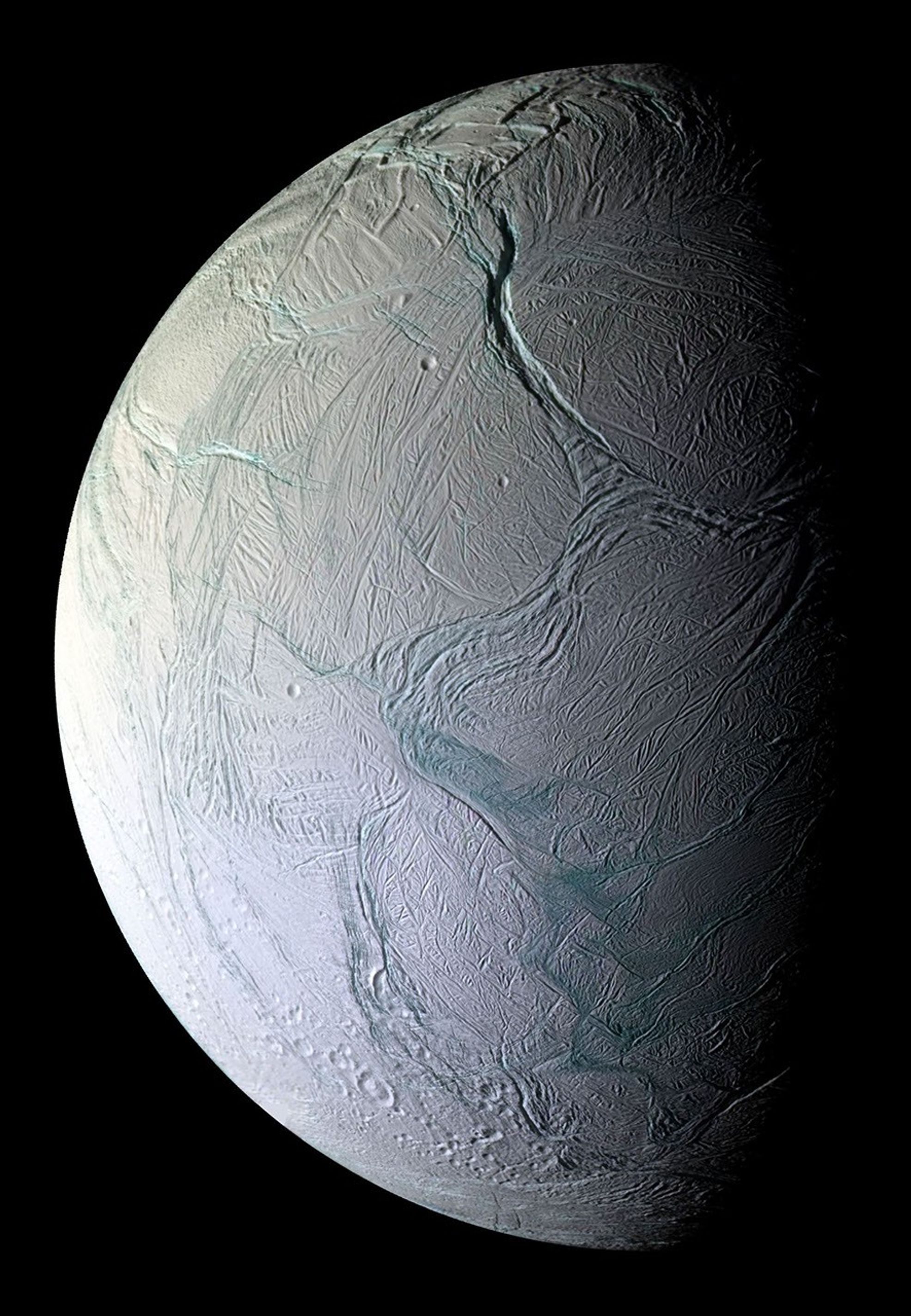
    Enceladus / NASA Science ©

    Saturn already has the highest number of known moons in our solar system, with 250, but it could also become the only planet with a habitable moon. Greedy, right? The 2005-2017 Cassini-Huygens mission to Saturn revealed clefts in the surface of Enceladus (one of Saturn’s moons) that shoot out water vapor ‘plumes’ into space as a ring (dubbed the E-ring) that circles Saturn. These clefts are believed to receive their water from an ocean below Enceladus’ surface. When the Cassini spacecraft flew through the plumes as they sprayed, it collected ice grains. Since the mission, scientists have been researching these grains, and they’ve found that Enceladus’ plumes hold carbon-containing molecules like aliphatic, heterocyclic esters, alkalines, ethers, ethyl, possibly nitrogenic, and possibly oxygenic compounds. They published their most up-to-date findings this October 1. 

    To break all this down, these carbon-containing molecules basically mean that the moon Enceladus might have the potential to house life. But don’t get too excited— it’s also possible that these molecules only become organic due to radiation, where ions in Saturn’s magnetosphere chemically react with the E-ring particles. To find out the truth, the European Space Agency might send an orbiter to Enceladus to sample fresh ice. Their orbiter wouldn’t arrive till 2054, so I suppose we’ll just cross our fingers till then. 

    October 3: From Type A to Type O

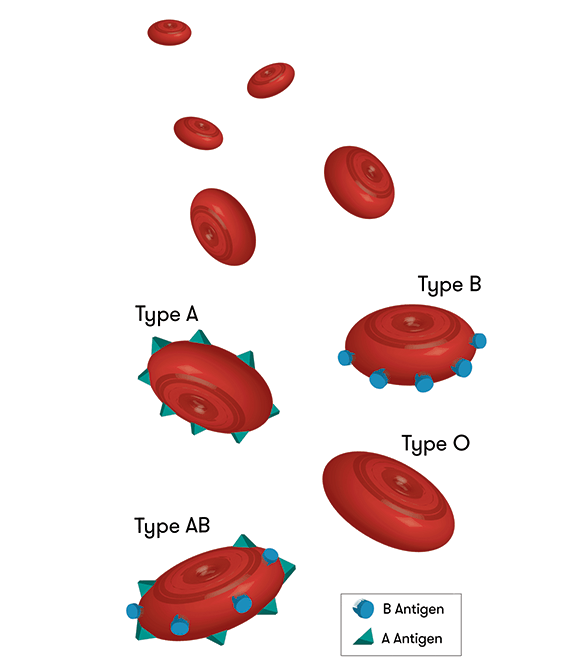
    We all know and love universal blood type O, but what about those who actually have it? For kidney transplants, type-A positive, -B positive, and -AB positive patients can receive their own respective type and type-O; however, type-O patients can only receive type-O kidneys. Thus, when these other patients receive type-O kidneys, people with type-O lack donors, end up waiting two to four years longer for their kidneys, and often die during the wait. Oh, and let’s not forget that type-O patients comprise over half of the kidney waiting lists!

    Scientists from the University of British Columbia have been tirelessly studying this catastrophe for over a decade, and they published their first successful transplant this October 3. They managed to place two reactive enzymes in a type-A kidney so that the kidney changed to universal type-O. Sugars that coat organs’ blood vessels determine blood type, so they created an enzyme reaction to strip away the defining sugars. While past conversions have needed live donors and changed antibodies within patients, compromising their immune systems, this new method changes the kidney itself and uses deceased donors.

    Blood Types / Australian Academy of Science ©

    So, here’s what happened in their transplant test:

    1. Scientists converted a type-A kidney using the enzymes
    2. Placed the kidney in a deceased recipient (with the family’s permission)
    3. Days 1-2: the body showed no signs of rejecting the kidney
    4. Day 3: a few of the type-A attributes reappeared, which is a slight reaction, but nothing as severe as in previous conversions
    5. The body showed signs of tolerating the kidney anyway
    6. Success!

    October 6: 2025 Nobel Prize in Physiology or Medicine

    This year, the 2025 Nobel Prize in Physiology or Medicine has been awarded to three people! Mary E. Brunkow, Fred Ramsdell, and Shimon Sakaguchi earned it for their advancements on ‘peripheral immune tolerance’, the mechanism that ensures the immune system doesn’t hurt the body. Essentially, peripheral immune tolerance prevents humans from having all kinds of autoimmune diseases. However, prior to these three, scientists had no real understanding of why or how this system worked. Brunkow, Ramsdell, and Sakaguchi built on each other’s findings to discover ‘regulatory T cells’, the agents behind peripheral immune tolerance.

    Nobel Prize in Medicine / Lindau Nobel Laureates ©

    Here’s how they did it:

    1. 1995: Sakaguchi debunked the popular theory of ‘central tolerance’ by discovering a new group of immune cells. 
    2. 2001: Brunkow and Ramsdell explained why a certain type of mice was particularly defenseless against autoimmune diseases. They found that strain to have a mutation in what they dubbed their ‘Foxp3’ gene, and they showed that humans have a similar gene, which also causes an autoimmune disease when mutated. 
    3. 2003: Sakaguchi showed that the Foxp3 gene dictates the growth of the cells he previously found. These cells became known as ‘regulatory T cells’, and they supervise cells in the immune system as well as the immune system’s tolerance of the human body.

    All this is awesome, but let’s see how their discovery actually impacted modern medicine. Scientists have found that regulatory T cells can actually protect tumours from the immune system, so, in this case, they are looking for a way to dismantle the cells. However, to combat autoimmune diseases, scientists can implant more regulatory T cells into the body to help prevent the immune system from attacking the body. So, just as Ann Fernholm proclaimed, “they have thus conferred the greatest benefit to humankind.”

    October 7: 2025 Nobel Prize in Physics

    Get this: another trio received the 2025 Nobel Prize in Physics! The Royal Swedish Academy of Sciences bestowed the honor onto John Clarke, Michel H. Devoret, and John M. Martinis for their experiments demonstrating quantum physics within a larger system. Quantum physics, or quantum mechanics, allows tunneling, which is when particles pass through barriers. Normally, the effects of quantum mechanics become negligible once they start working with large particles, but Clarke, Devoret, and Martinis showed that tunneling can still happen in a larger system.

    Nobel Prize in Physics / Lindau Nobel Laureates ©

    Just like with our last trio, here’s how they did it: 

    1. 1984-1985: They experimented with passing a current of charged particles through a controlled circuit containing superconductors. They found that the multiple particles acted like one large particle when going through the superconductor. The quantum part of this was that the system used tunneling to go from zero-voltage to a voltage. So, they concluded that quantum mechanics can still cause tunneling in a macroscopic system.

    And why do we care? Well, Olle Eriksson, the Chair of the Nobel Committee for Physics, said, “It is wonderful to be able to celebrate the way that century-old quantum mechanics continually offers new surprises. It is also enormously useful, as quantum mechanics is the foundation of all digital technology.” I don’t know about you, but I think I’ll take his word for it.

    October 8: 2025 Nobel Prize in Chemistry

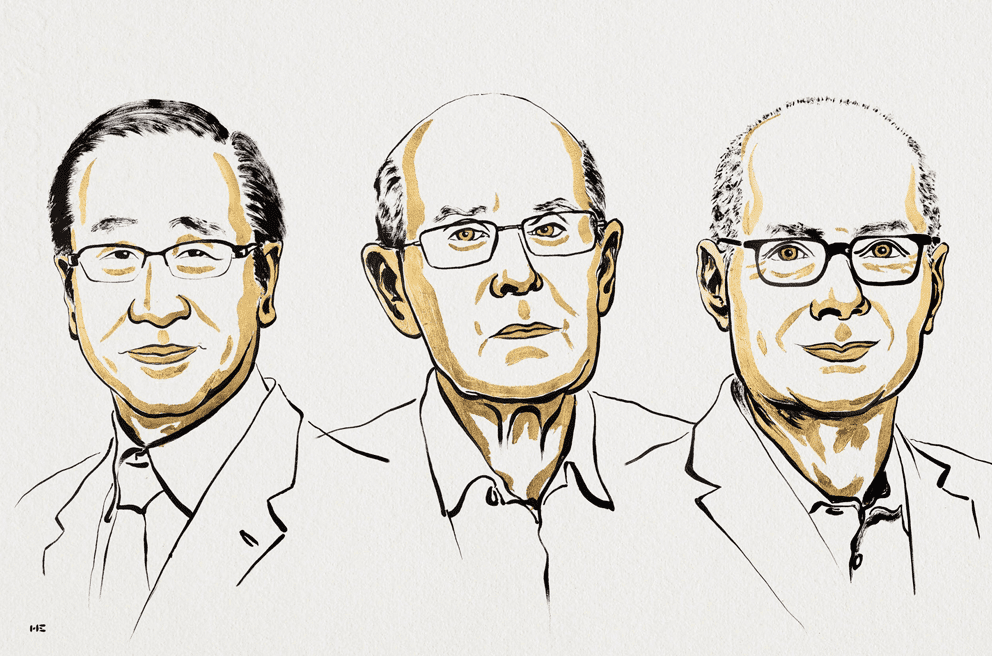
    Our LAST Nobel Prize trio of October comes in Chemistry! Susumu Kitagawa, Richard Robson, and Omar M. Yaghi received the 2025 Nobel Prize in Chemistry from the Royal Swedish Academy of Sciences for their ‘metal-organic frameworks (MOFs)’. These frameworks are from their new molecular construction, where carbon-based molecules link together metal ions so that the two form MOFs, which are essentially porous crystals. Scientists can then manipulate these MOFs to take in and guard particular substances. MOFs can also create chemical reactions and direct electricity. So, with these MOFs, scientists can design materials with particular functions of their choosing.

    Nobel Prize in Chemistry / Lindau Nobel Laureates ©

    You know the drill– here’s how they did it:

    1. 1989: Robson began testing the properties of atoms by combining copper molecules with four-pronged molecules, and this created porous crystals similar to MOFs. However, these MOF impersonators were unstable and needed someone to fix them.
    2. 1992-2003: Enter- Kitagawa and Yaghi. From his experiments, Kitagawa concluded that MOFs could be changed and modified as gases could run through them. Then, Yaghi made a stable MOF and showed that they could be manipulated to have new properties.

    Since their discoveries, scientists have made tons of their own unique MOFs, each equipped to solve a different problem. We can thank MOFs for giving us a safer Earth. I mean, any kind of chemical substance that can make clean water, grab carbon dioxide from the air, or produce water from desert air sounds like a good one to me. 

    October 11: The Surprising Link Between COVID-19 and Anxiety

    Covid. The word that teleports Gen-Z right back to online school in pajamas, Roblox, and Charli D’Amelio. We all know and hate it, but did we realize that it might be affecting future generations who weren’t even alive in 2020? 

    A study published on October 11 revealed that male mice who contracted COVID-19 birthed children with more anxiety-like behaviors than those of uninfected mice’s children. Basically, COVID-19 changes RNA molecules in the male’s sperm, which then dictates his children’s brain development. In female offspring specifically, their brain’s hippocampus region, which deals with behaviors including anxiety and depression, was altered. The authors of the study believe that these changes may cause increased anxiety levels.

    Okay, okay. Remember: this study was done on mice, not humans. More research is needed to see if humans will experience similar effects, but for now, we’re safe.

    October 12: Light Years Away

    “A long time ago in a galaxy far, far away…” Wait, what? A long time ago? Evidence suggesting that the closest alien civilization may be 33,000 light-years away did come out this October 12, but for the estimate to be feasible, the civilization would need to have already existed for at least 280,000 years. Yeah, that feels like a long time ago. And don’t worry about the far, far away part– I’d call 33,000 light-years pretty far. 

    At a recent meeting in Helsinki, research was shown indicating such a possibility. Here’s the criteria for a planet to have extraterrestrial life and actually sustain itself:

    1. Carbon dioxide in the atmosphere (so photosynthesis can work and support life)
    2. An atmosphere of at least 18% oxygen (complex animals need more oxygen, and there must be enough oxygen for fire because blacksmithing must happen to technologically advance)
    3. Average lifetime of about 10 million years (so they can exist at the same time as us)
    4. Already existed for at least 280,000 years (so civilization can develop and they can exist at the same time as us)

    Keeping these in mind, scientists have concluded that if there is an alien civilization existing at the same time as us in the same galaxy, it would have to be at least 33,000 light-years away. To put that into perspective, our Sun is about 27,000 light-years away from us. Yeah. Pretty far.

    October 20: Enteral Ventilation

    Sometimes, CPR isn’t enough to save respiratory failure. Then, patients turn to mechanical ventilation. But sometimes mechanical ventilation is too much, and the lungs end up even further damaged. Enteral ventilation, however, may just be the sweet spot. Enteral ventilation is a practice where perfluorodecalin, an exceptionally oxygen-soluble liquid, is administered through the intestine to deliver oxygen to the body while the lungs heal. Published on October 20, the first in-human study of enteral ventilation succeeded and was demonstrated to be safe. The only side effects were bloating and stomach pain, but those quickly resolved, and perfluorodecalin concentrations nearly disappeared from the bloodstream (a good thing!). 

    After this safe and tolerated success, more studies on enteral ventilation will soon develop, and lungs everywhere may be saved.

    October 20: CI Chondrite on the Moon

    Before we get into any of this moon stuff, you may be wondering what in the world (or should I say galaxy) CI Chondrite is. I’m here to help! CI Chondrite, a porous and the most water-dense meteorite, generally breaks before it can reach Earth because its properties make it so crumbly. CI Chondrite actually makes up less than one percent of all meteorites on Earth. That means it also barely ever reaches the moon. However, during their Chang’e-6 mission published on October 21, the China National Space Administration found traces of CI Chondrite dust on the moon.

    A Chondrite Meteorite

    Here’s how they did it:

    1. They looked at thousands of fragments from the Apollo Basin, a sub-basin in the South Pole-Aikten Basin that acts as a hotspot for debris since it covers one-fourth of the moon.
    2. They looked for pieces with olivine, a mineral normally in meteorites. 
    3. Then, they analyzed the olivine pieces and found seven with properties identical to CI Chondrite
    4. When analyzing, they found that the pieces did not have the chemical ratios expected for lunar debris.
    5. However, they realized that the seven fragments’ ratios did align with those of a CI Chondrite asteroid that crashed, melted, and solidified on the moon early in the solar system’s history.

    With these discoveries, the team found the first solid evidence that CI Chondrite once hit the moon and that CI Chondrite can be preserved after such a crash. Actually, they found that CI Chondrite could comprise up to 30 percent of the Moon’s meteorite debris. Additionally, their study provided evidence to help back up the theory that CI Chondrite once created water and volatiles on the Earth and Moon. More research is needed to see if it’s really true, but those missions will now be much easier with the China National Space Administration’s new process to find CI Chondrite.

    October 27: Back to the Basics

    Nope, not like the song. On October 27, in the Astrophysical Journal Letters, scientists described their findings of what they believed to be Population III stars, one of the first groups of stars in the galaxy. With the James Webb Space Telescope, they pinpointed them in LAP1-B, a cluster of stars 12 billion light-years away from Earth. Scientists believe Population III stars are some of the first stars made after the Big Bang, and they have a unique property of being a billion times brighter than and a million times the mass of our Sun. 

    Here’s why they believe their discovered stars to be Population III:

    1. Emission lines on the stars’ spectra indicated high-energy photons, which are consistent with Population III stars.
    2. Their spectra showed them to be extremely large.
    3. Their masses aligned with astronomers’ guesses for those of Population III stars.
    4. They were in LAP1-B, whose properties agree with the criteria for Population III.
      1. It’s a low hydrogen and helium environment.
      2. Its temperature can support star formation.
      3. It’s a low-mass cluster, and it had few large stars before those of Population III.
      4. It meets mathematical criteria for forming stars and keeping them alive.

    Seems pretty feasible, right? Anyways, these scientists were the first to find a group of stars that meets all criteria for being Population III, and these ancient stars can actually explain the galaxy’s construction and development. That’s all for STEM this October, but don’t worry, because this November’s looking like a great one.

    References

    Cooper, K. (2025, October 2). Saturn’s moon Enceladus is shooting out organic molecules that could help create life. Space.com. https://www.space.com/astronomy/saturn/saturns-moon-enceladus-is-shooting-out-organic-molecules-that-could-help-create-life 
    Europlanet. (2025, October 12). Closest alien civilization could be 33,000 light years away. Science Daily. https://www.sciencedaily.com/releases/2025/10/251011105533.htm 
    Fernholm, A. (2025, October 6). Popular science background: They understood how the immune system is kept in check. Nobel Prize. https://www.nobelprize.org/uploads/2025/10/popular-medicineprize2025-2.pdf 
    The Florey. (2025, October 11). COVID-19 causes changes in sperm that lead to increased anxiety in offspring. The Florey. https://florey.edu.au/news/2025/10/covid-19-causes-changes-in-sperm-that-lead-to-increased-anxiety-in-offspring/ 
    Howell, E. (2017, September 15). Cassini-Huygens: Exploring Saturn’s system. Space.com. https://www.space.com/17754-cassini-huygens.html 
    Howell, E. (2025, October 27). James Webb telescope may have found the first stars in the universe, new study claims. Live Science. https://www.livescience.com/space/cosmology/james-webb-telescope-may-have-found-the-universes-first-generation-of-stars 
    Kungl. Vetenskaps-Akademien. (2025, October 7). Press release (Nobel Prize in Physics 2025). Nobel Prize. https://www.nobelprize.org/prizes/physics/2025/press-release/ 
    Kungl. Vetenskaps-Akademien. (2025, October 8). Press release (Nobel Prize in Chemistry 2025). Nobel Prize. https://www.nobelprize.org/prizes/chemistry/2025/press-release/ 
    Med. (2025, October 20). Safety and tolerability of intrarectal perfluorodecalin for enteral ventilation in a first-in-human trial. Cell. https://www.cell.com/med/abstract/S2666-6340(25)00314-9 
    Nobelförsamlingen. (2025, October 6). Press release (Nobel Prize in Physiology or Medicine 2025). Nobel Prize. https://www.nobelprize.org/prizes/medicine/2025/press-release/ 
    Starr, M. (2025, October 21). China brought something unexpected back from the far side of the Moon. Science Alert. https://www.sciencealert.com/china-brought-something-unexpected-back-from-the-far-side-of-the-moon 
    University of British Columbia. (2025, October 3). UBC enzyme technology clears first human test toward universal donor organs for transplantation. Eurek Alert. https://www.eurekalert.org/news-releases/1100223