About

Tag: artificial-intelligence

  • A Deep Dive into Computer Aided Design

    A Deep Dive into Computer Aided Design

    By Grace Liu

    ~10 minutes


    Computer Aided Design, or CAD, is essentially a platform for users to design, modify, and analyze a digital model. Its speed and efficiency rival traditional design methods, and the capabilities of CAD are continuously growing as technology advances. It is a space for unlimited creativity and endless possibility, and it is crucial to have an in-depth understanding of CAD to be able to fully harness its potential.

    How does it work?

    At the center of a CAD software program is its graphics kernel, or the processing core. It is a component of the graphical user interface (GUI) which has extensive uses on electronic devices beyond the capabilities of CAD. The GUI takes input from the user and transfers the data to the graphics kernel, which will then generate the geometries and display them on screen. 

    Types of CAD

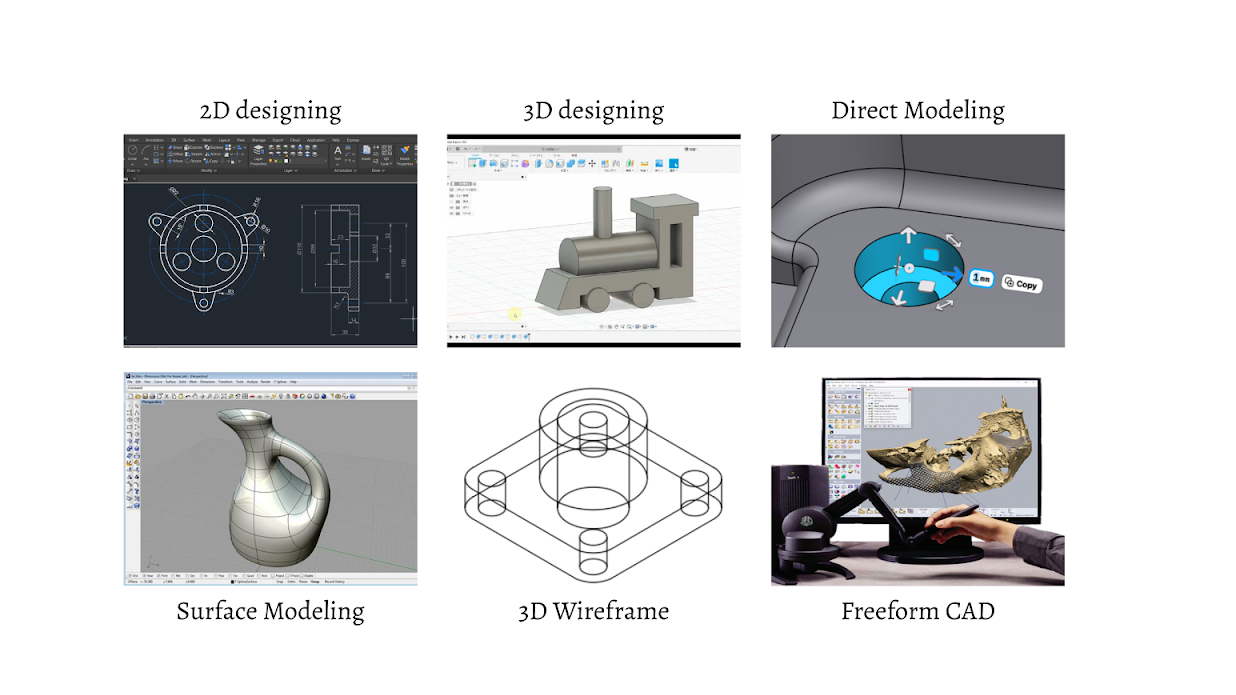
    There are two main categories of CAD: 2D and 3D. 2D designing is more similar to digital art with a different set of tools, often seen with digital drawing and sketching. The key difference is the use of measurement and parameters, a tool that sets a variable to a certain value in a design to be referenced later in other constraints. Parameters are extremely beneficial to create an adjustable, flexible design. 2D designing with Computer Aided Design is commonly used for landscaping, floorplans, and blueprints. On the other hand, 3D modeling offers more complex and realistic designs, and will be the focus of this article. It comes in tons of different forms, including direct modeling, surface modeling, 3D wireframe, and freeform CAD.

    Direct modeling is a type of CAD that doesn’t contain parameters and purely relies on the pushing and pulling of surfaces on unconstrained objects. It allows more freedom than parametric modeling, but becomes much more difficult when needing to adjust a design. For example, say you need to make an object twice as large as it currently is. In parametric modeling you would simply need to enlarge the base parameters for certain lengths that you set, and then all constraints using those parameters would automatically adjust. In direct modeling you would need to manually scale each surface to size up the object.

    Another form of CAD is surface modeling, which focuses on manipulating intricate external surfaces, more like a shell instead of a full 3D object. It uses curves and lines defined by mathematical formulas, calculated by the computer using input from the graphical workspace in the CAD program. Surface modeling helps display texture, material, and overall aesthetics for the design.

    A step down from surface modeling is 3D wireframe, which goes further to remove the surfaces on the object and models 3D structures using only its lines and curves. Without any actual surfaces or bodies, the design appears to be the skeleton of the object(s) or a wire framework, hence the name. It acts as the first 3D visualization of concept or design, providing a foundation that can be built into a full model later on. These designs are often the first pitch to an outside source that offers feedback on the base sketch, an efficient and effective method to communicate a design idea without having to fully create it.

    A unique but often overlooked type of CAD is freeform CAD. It acts more like clay, letting the user be more artistic and creative with their design. It utilizes digital brushes or styluses to sculpt the object, with a different set of tools and abilities in the workspace compared to the more common forms of CAD. Freeform CAD often involves the use of haptic devices instead of a mouse and keyboard. These devices will transmit the digital output from the computer to a physical attachment on the device through touch sensation that allows the user to “feel” their design as they sculpt. The physical attachment typically mimics brushes or scrapers, and can sometimes even be equipped with vibration.

    Different CAD platforms:

    The foundation of every CAD platform is similar, but each one has different unique features. Getting an overview of the platforms can help the user determine which one to choose that best suits their needs. Five of the most common ones include: Autodesk Fusion 360, Onshape, Blender, TinkerCAD, and SolidWorks.

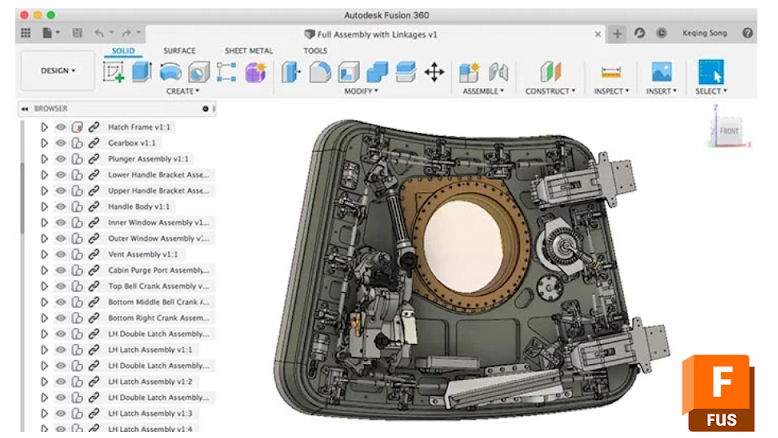
    September 4, 2019 Product Update – What’s New / Keqing Song / Autodesk Fusion ©

    Autodesk contains a multitude of CAD programs, but their most popular and versatile one is Fusion 360. It’s an industry level CAD software and combines different tools and abilities all into one place, allowing for (unlimited) creation. Fusion 360 contains a variety of workspaces including: Design and Generative Design, Rendering, Simulation, Animation, Electronics, and 2D Drawing. Just within the Design workspace Fusion 360 has hundreds of techniques to choose from when building like freeform, surface, parametric, and direct modeling along with sheet metal, mesh, plastic, etc. Its software platform allows for smooth collaboration by storing all files directly in the cloud and easy updates across designs, reducing the amount of time it takes to combine multiple designs. Fusion 360 is flexible, perfect for rapid prototyping, with an extensive tool kit that contains multiple shortcuts to make designing and modifying faster. Autodesk also has a free education license for students and educators, making it accessible to a larger audience.

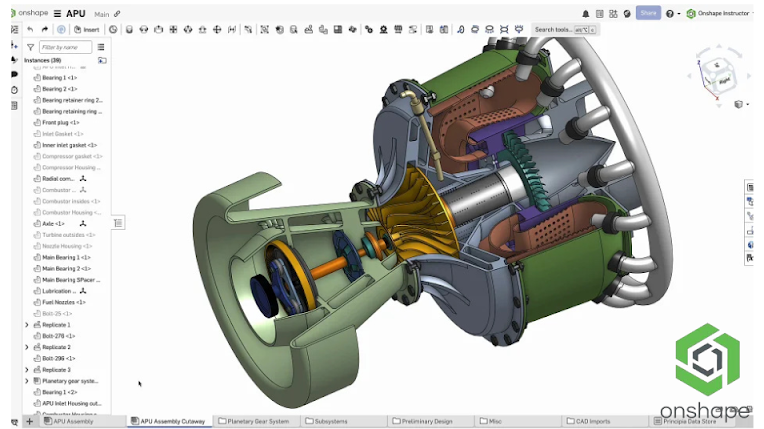
    Onshape, The CAD Of The Future / Nuts and Bolts / Substack ©

    OnShape is another one of the leading CAD platforms in the industry today, a top competitor with Fusion 360. Onshape includes diverse customization tools like FeatureScript, a programming language specific to Onshape that allows users to create custom CAD features or shortcuts usable in their designs. For example, you can code a custom feature that can create a mold on a separate body for any design, reducing the time it takes to manually create a mold each time. FeatureScript lays the groundwork for OnShape’s modeling and standard functions like Extrude, Fillet, and Helix are already written in as FeatureScript functions when you begin to branch out and create your own. Onshape has a built in Product Data Management (PDM) system which allows teams to edit the same design simultaneously, a feature not many CAD platforms can achieve. Alongside increasing efficiency, this also makes it easier to store parts and assemblies by eliminating files. You can long into your account anywhere, and have full access to all your designs in OnShape. Another unique tidbit about OnShape is that it does not require manual updates for the application, all updates run automatically in the background so you don’t have to worry about running the correct version of OnShape when fixing bugs in your design.

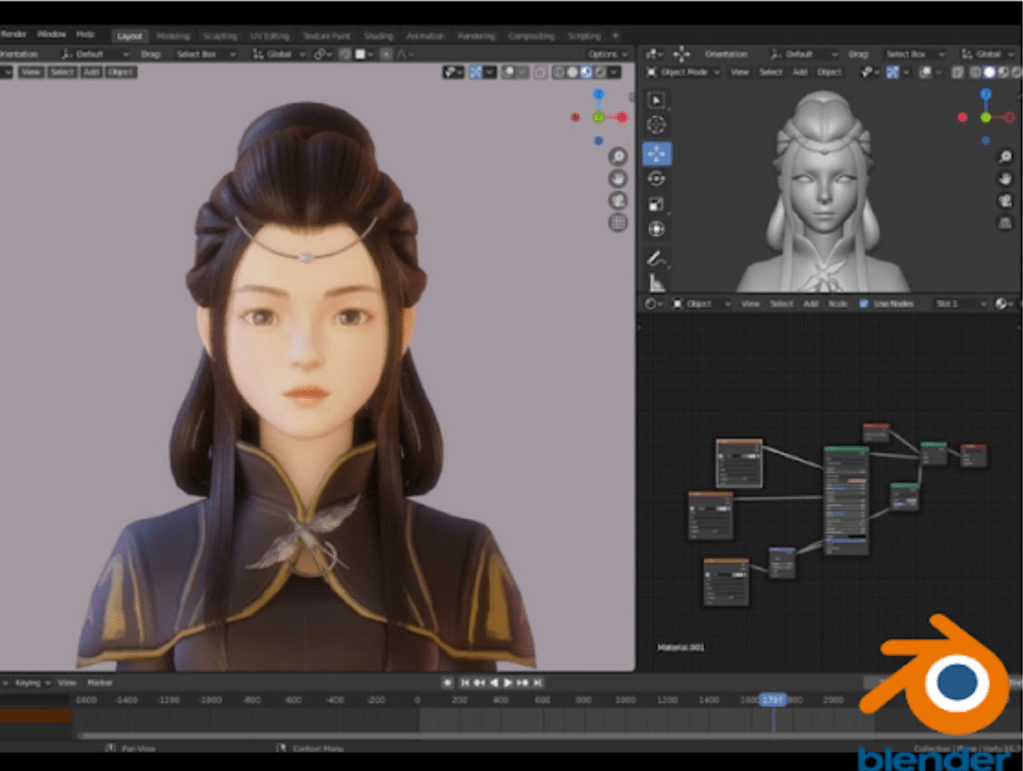
    Beginner’s Guide to 3D Character Creation Using Blender / DEZPAD ©

    Blender is a slightly different CAD platform; it focuses on and perfects the aesthetics of 3D modeling. It’s best for rendering and shading, animation, simulation, visual effects, and game development. Blender consists of 2 main rendering engines: Eevee and Cycles. Eevee is a real-time engine, best for quick rendering for fast iterations. In short, a real-time rendering engine computes the lighting, materials, plus other components of the image continuously at about 30-120 frames per second and provides an interactive output which allows the user to adjust the settings. Cycles is a path-tracing engine with high quality and realistic renders, but takes a much longer time. A “path-tracing” rendering engine means that the program simulates the physical behavior of light rays on the object frame by frame to create a realistic image. Cycles would typically be used for the final render, pristine and life-like, whereas Eevee would be used in-between iterations to help make improvements. The extensive simulation workspace in Blender can mimic unique bodies in nature like fluids, smoke, and fire. Another benefit of Blender is that it’s completely free, perfect for hobbyists or students.

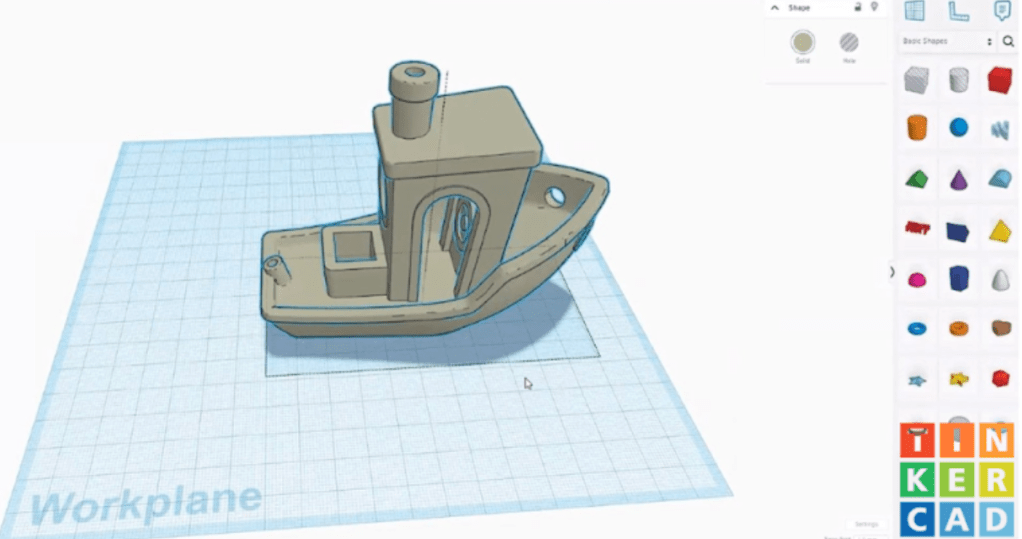
    TinkerCAD Basics: A Hands-On Workshop for Beginners! / San Carlos Life ©

    TinkerCAD is a much simpler CAD platform, but that also makes it best for beginners with its clear, straight-forward layout. It consists of a couple tabs with a set collection of 3D shapes along with other tools. It includes basic electronics simulation and serves as a good introduction to circuits and coding a real mechanism instead of just on a computer program. TinkerCAD is very popular in schools as it has built-in lessons and hands-on projects along with its easy format. Since it was designed to teach beginners, TinkerCAD has limited capabilities. It doesn’t have complex curves and restricts freedom on building custom shapes, as well as lower resolution models. TinkerCAD does not have advanced rendering, simulation, or animation so it might not be the best option for realistic modeling. These intentional restrictions keep TinkerCAD kid-friendly and focus on teaching the basics of 3D modeling before transitioning to something more advanced. It’s also compatible with online models in a specific file format,  so you can learn from and transfer designs on the internet to TinkerCAD. It’s good for simple 3D printing and laser cutting, allowing for a full introduction to the basics of engineering for beginners. 

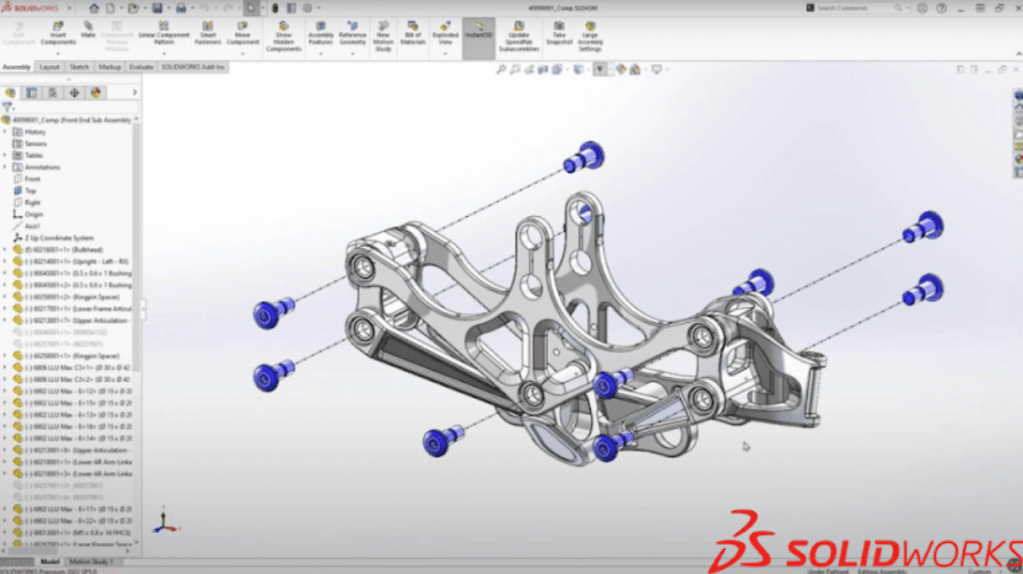
    Solidworks 2025 / DEVELOP3D ©

    SolidWorks is an industry grade CAD platform, and in a lot of aspects similar to Fusion 360. A key difference is that SolidWorks targets large engineering companies like Tesla and Lockheed Martin while Fusion 360 focuses on hobbyists, students, or startups that want a simple, but effective CAD platform to create 3D designs not quite as complex as a plane. SolidWorks makes drawing complicated 2D blueprints with details and labels much easier. It can utilize views, measurements, and calculations from the 3D design, and then transfer them to the 2D drawing. SolidWorks has a powerful simulation workspace for motion, stress, heat, and real-life scenarios that designs like cars, planes, or bridges need to withstand. Comparatively, SolidWorks is one of the more sophisticated 3D designing platforms and requires time to get familiar with, but it also offers lessons, tutorials, and even courses to help shorten the learning curve.

    Real-world applications of CAD

    Building Information Modeling (BIM) Explained / KENNMAR ©

    The most common place you see Computer Aided Design is in engineering, where it has become integrated throughout the design process, from designing and prototyping to manufacturing the product. It’s also present in architecture, so much so that there’s a type of CAD created specifically for 3D models of buildings. Building Information Modeling (BIM) is a CAD platform that creates a 3D model of all the components in a real-world building, and also replicates the entire timeline of the building from construction to long-term maintenance. It’s a digital version of the entire process of the building, and helps to check safety and functionality beforehand. CAD also pops up in unexpected places, like interior and exterior designing, fashion, and game design. Interior and exterior designing involves much of the same processes as industrial design, although with less moving parts in the assembly. Fashion mostly uses 2D CAD to make the drawing and sketching process faster and more efficient. Game design, as mentioned when discussing Blender, uses mostly the design, animation, and rendering workspaces in 3D CAD to make their characters and objects look as realistic as possible. 3D modeling can also be seen in medicine, specifically with imaging and x-rays. Machines in hospitals are being equipped with the ability to reconstruct 3D models of bones and structures within the human body, helping doctors to better treat the patient.


  • November Monthly Recap: Thankful for STEM

    November Monthly Recap: Thankful for STEM

    By Bela Koganti

    ~10 minutes


    November is about the three S’s: scarfing down Thanksgiving dinner, seeing family, and splurging on Black Friday. But we’d like to add a fourth: STEM! This November, we’ve advanced in everything from the environment to Jeff Bezos’ Blue Origin, so here’s what you need to know.

    November 3: Gone Glacier

    Antarctica’s Hektoria glacier recently became the quickest-retreating glacier in modern history, and a CU Boulder study published November 3 revealed how and why. From late 2022 to early 2023, over half of Hektoria disintegrated– that’s eight kilometers of ice, gone in just two months.

    Essentially, the flat bedrock (or ice-plain) under Hektoria set it afloat as it thinned, causing the glacier to shed parts into the sea. Such a shedding process is generally called “calving”, and it’s pretty rare. Here’s why it happened in Hektoria’s case:

    1. In the past, glaciers resting on ice-plains dissolved hundreds of meters each day, so Hektoria probably experienced the same process. 
    2. The ice-plain forced Hektoria to begin calving, and that exposure to the ocean created further cracks in the glacier. As the cracks met, they eventually calved the entire glacier.
    3. To confirm the process, scientists found a set of glacier-earthquakes that occurred in unison with the retreat.
    Between 2022 and 2023, broken fast ice allowed ocean water to reach the Hektoria glacier, shrinking it by half / Adrian Luckman / CNN Climate ©

    With this new discovery of how and why Hektoria retreated, scientists can now predict and expect other glacier retreats. However, prediction does not equal prevention. These models show that continued warming, driven largely by human greenhouse gas emissions, will only accelerate this process. In order to help out, let’s follow this guide from the University Corporation for Atmospheric Research (UCAR) to minimize our CO2 emissions; I mean, we might just save a glacier.

    November 8: Crispr for Cholesterol

    Cholesterol. We know it and sometimes fear it, but what is it? Cholesterol levels are determined by LDL cholesterol, a waxy compound that can clog arteries, and triglycerides, the most prominent type of fat in the body. Triglycerides can also harden arteries and artery walls. So, when we have high cholesterol, our arteries might be blocked and we have increased risk of heart attacks, heart diseases, and strokes.

    Around 25% of adults in the United States have increased levels of LDL and triglycerides. Ouch. But never fear, Crispr is here! Crispr, a Swiss biotechnology company that deals with gene-editing, recently tested a new infusion and presented its results on November 8. 

    Their one-time infusion of CTX310, a therapy delivered by liquid nanoparticles, attempted to turn off ANGPTL3, a gene in the liver. Because some people are born with a mutated ANGPTL3 gene that safely protects them from heart disease, the Crispr scientists tried to replicate that. The highest dose given reduced triglyceride and harmful LDL by about 50% in two weeks, and the results lasted through the end of the trial.

    With this initial success, Crispr plans to begin Phase II studies in 2026, and they hope to achieve an infusion that lasts a lifetime. Once safety of treatments is further explored and confirmed, CTX310 may even become a preventative measure. As senior author and chief academic officer of the Heart, Vascular, and Thoracic Institute at Cleveland Clinic Steven Nissen said,

    “This is a revolution in progress.” -Steven Nissen

    November 10: One of a Kind

    The universe cannot be replicated. We follow no simulation, no set mathematics, and no algorithm. Who knew? Well, physicists, apparently. At the University of British Columbia in Okanagan, physicists proved that the universe cannot be simulated.

    There’s a mathematical layer of quantum gravity dubbed the “Platonic realm” that creates even the concepts of space and time. However, these physicists proved that it cannot recreate reality purely with computation. Known as “Gödelian truths,” some things just cannot be understood with logic as they contradict themselves. Think about this for a minute: how would you prove the idea that “this true statement is not provable”? You can’t, and neither can a computer. Statements like this one exist all throughout our universe; when faced with them, computers’ logical algorithms fail.

    Thus, computers cannot know and compute everything about our universe, so they cannot replicate it. We are one of a kind.

    November 13: Bezos in Space

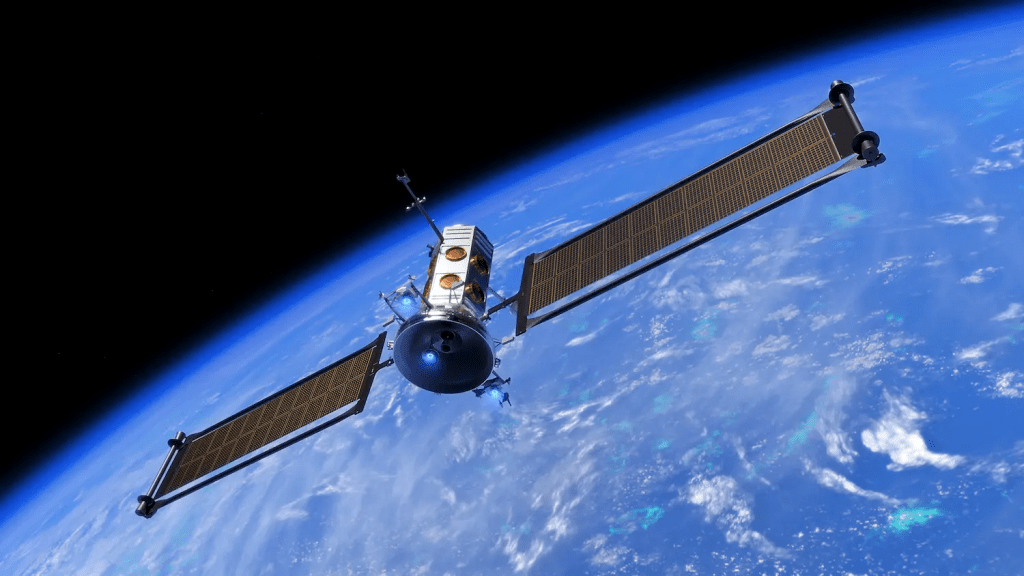
    On November 13, Jeff Bezos launched Blue Origin’s New Glenn rocket out of Florida. New Glenn deployed two of NASA’s Escapade Satellites to measure Mars’ atmosphere and magnetic field, and, for the first time, its reusable booster successfully made it onto a landing pad in the Atlantic Ocean. Blue Origin is now the second company in the world to do so, with Elon Musk in first. Watch the landing here. Okay, check back in 22 months—hm, that’s September of 2027—when the satellites arrive at Mars! 

    New Glenn Launches NASA’s ESCAPADE, Lands Fully Reusable Booster / Blue Origin ©

    November 14: Crispr for Cancer

    And for the second time in one article, Crispr’s here! This time, however, it tackles chemotherapy resistance in lung cancer. A gene called NRF2 can cause resistance to chemotherapy in some cases of cancer, so Crispr scientists looked at disabling it in lung squamous cell carcinoma, an aggressive type of lung cancer that makes up around a quarter of all lung cancer cases.

    They infused R34G, a mutation in NRF2 that can regulate cellular stress reactions; when NRF2’s is overactive, it causes cancer cells to resist chemotherapy, so they used R34G to subdue NRF2’s behavior. Even when they only calmed NRF2 in less than half of tumor cells, it still reduced tumors and improved chemotherapy response.

    “The power of this CRISPR therapy lies in its precision. It’s like an arrow that hits only the bullseye,” Kelly Banas, lead author of the study, said. As Crispr will continue to perform and study trials, R34G might just be the future of cancer treatment.

    November 18: Gemini 3’s Release

    We’ve all seen the AI overviews embedded into Google’s search results. You’re just wondering how long to bake your snickerdoodles for, but the AI’s answer ranges from 8 minutes to 25. What? Then, you look and see twelve recipes referenced. Huh? There’s no way it’s that difficult, you wonder. Yeah, we’ve all been there. 

    However, Google just launched Gemini 3, and they proclaim it their “most intelligent model” yet. Maybe we’ll get a more precise answer on those snickerdoodles now! More confident than ever in Gemini 3, Google embedded it into its search engine on the first day of its release, which they had never done before. Normally, they gradually implant new versions over weeks, or even months. 

    Gemini 3 also brings new features to the table. Or, well, to the phone. “Gemini Agent” can book travel plans, organize your overwhelmed email, and do other multi-step jobs. Additionally, they updated the Gemini app to respond to prompts with answers so thorough they look like websites.

    Well, if you’re looking for a new AI model, Gemini 3 may very well be what you need. And if you’re looking for ridiculously incorrect and vague answers to make fun of, the jury’s still out on whether Gemini 3 is the platform for you or not.

    November 18: A Milky Way Model

    We already discussed computers’ inability to model our universe, but I never said anything about the Milky Way! Researchers from the RIKEN Center for Interdisciplinary Theoretical and Mathematical Sciences (iTHEMS) in Japan, The University of Tokyo, and the Universitat de Barcelona in Spain managed to accurately simulate 100 billion stars over the course of 10 thousand years. 

    Researchers Create First 100-billion-star Milky Way Simulation Using AI / NRAO / Orbital Today ©

    These researchers trained an AI model using high-resolution simulations, and it eventually managed to predict resulting gas expansions. Thus, it created a simulation of the galaxy’s overall dynamics as well as its smaller phenomena. Previous models of the universe would struggle to predict on a small-scale, but this new one can do exactly that. Also, it did so quickly! In just under 3 hours, it created a simulation of the galaxy over 1 million years.

    This new model could become popular for making other simulations that need small- and large-scale accuracy. Like lead researcher Keiya Hirashima said,

    “This achievement also shows that AI-accelerated simulations can move beyond pattern recognition to become a genuine tool for scientific discovery—helping us trace how the elements that formed life itself emerged within our galaxy.” -Keiya Hirashima

    November 18: Antimatter Aplenty

    Have you noticed that this is the third event from November 18? Sounds like a hat trick to me! Anyways, CERN’s Antimatter factory recently undertook a new project called the ALPHA experiment, and they published their findings on November 18. Essentially, they managed to create over 15,000 antihydrogen atoms in under 7 hours.

    Antihydrogen is the most basic form of atomic antimatter, and antimatter is a substance with the same mass and particles as another substance but opposite charges. For example, antihydrogen has the same mass and particles as hydrogen, but hydrogen’s protons have positive charges and its electrons have negative charges while antihydrogen’s protons have negative charges and its electrons have positive charges. When antimatter and matter meet, they destroy each other, creating an immense amount of energy. Antimatter is normally found in particle accelerators, cosmic rays, and medical imaging, but it’s fairly rare as creating it is a lengthy process.

    However, with the ALPHA team’s new method, they’ve managed to make antimatter 8 times faster than normal. Normally, the process involves creating and trapping antiprotons and positrons separately before cooling and merging them together to form antihydrogen, but ALPHA’s unique success came from the way they create their positrons. The general problem with creating antimatter is that trapped positrons refuse to stay still once trapped, and they don’t cool down enough. So, the ALPHA team approached the antihydrogen by adding laser-cooled beryllium ions to the positron trap. The beryllium makes the positrons lose energy through sympathetic cooling, which cools the positrons to around -266 °C and makes them more likely to merge with the antiprotons and form antihydrogen, creating more antimatter.

    Scientists thoroughly study any antimatter they can get, so, with this new abundance, they plan to study gravity’s effect on antimatter in the ALPHA-g experiment. Stay tuned because they may discover new properties and behavior of antimatter, which wouldn’t be possible without ALPHA’s new process.

    Okay, that’s all I have for November. Consider this my holiday gift to you. Enjoy December, and come back for Stemline’s next recap!


    References

    Cai, K. (2025, November 18). Google launches Gemini 3, embeds AI model into search immediately. Reuters. https://www.reuters.com/business/media-telecom/google-launches-gemini-3-embeds-ai-model-into-search-immediately-2025-11-18/
    ChristianaCare Gene Editing Institute. (2025, November 17). CRISPR breakthrough reverses chemotherapy resistance in lung cancer. Eurek Alert! https://www.eurekalert.org/news-releases/1106182
    CRISPR Therapeutics AG. (2025, November 8). CRISPR Therapeutics announces positive phase 1 clinical data for CTX310® demonstrating deep and durable ANGPTL3 editing, triglyceride and lipid lowering. CRISPR Therapeutics. https://crisprtx.com/about-us/press-releases-and-presentations/crispr-therapeutics-announces-positive-phase-1-clinical-data-for-ctx310-demonstrating-deep-and-durable-angptl3-editing-triglyceride-and-lipid-lowering 
    Harris, R. (2025, November 18). Breakthrough in antimatter production. CERN. https://home.cern/news/news/experiments/breakthrough-antimatter-production
    Lohnes, K. (2025, June 13). What is antimatter?. Encyclopedia Britannica. https://www.britannica.com/story/what-is-antimatter 
    Mullin, E. (2025, November 8). A gene-editing therapy cut cholesterol levels by half. Wired. https://www.wired.com/story/a-gene-editing-therapy-cut-cholesterol-levels-by-half/ 
    Riken. (2025, November 18). The simulated Milky Way: 100 billion stars using 7 million CPU cores. Riken. https://www.riken.jp/en/news_pubs/research_news/pr/2025/20251117_2/index.html 
    UCAR. (2020). How do we reduce greenhouse gases? UCAR: Center for Science Education. https://scied.ucar.edu/learning-zone/climate-solutions/reduce-greenhouse-gases 
    University of British Columbia Okanagan campus. (2025, November 10). Physicists prove the Universe isn’t a simulation after all. ScienceDaily. Retrieved December 13, 2025 from http://www.sciencedaily.com/releases/2025/11/251110021052.htm 
    University of Colorado at Boulder. (2025, November 3). Antarctic glacier retreated faster than any other in modern history. Eurek Alert. https://www.eurekalert.org/news-releases/1104274 
    Watch: Blue Origin rocket successfully lands booster for first time [Video]. (2025, November 13). BBC. https://www.bbc.com/news/videos/c5yd0zd6eddo 

  • The Green Price of Intelligence

    The Green Price of Intelligence

    By Summer Chen

    ~ 6 minutes


    Over the past three years, a rush of excitement has emerged globally regarding artificial intelligence. In a student’s everyday life, discussions about artificial intelligence arise frequently- whether about the potential benefits of generative AI, using ChatGPT on homework assignments, or seeing AI’s growing presence on social media platforms like TikTok. 

    Claims that AI holds significant potential in the development of society and technology are impossible to ignore, with AI occupying numerous sectors seen throughout daily life. In fact, when I began writing this article, even clicking enter on a google search titled “Impact of AI on climate change” immediately caused an AI overview to pop up unprompted.  

    AI generated images / The Economic Times India ©

    While the environmental repercussions of AI usage cannot be ignored, to deny the multitude of potential benefits from artificial intelligence would be absurd. Instead, it makes more sense that the use of (mostly generative) AI for recreational purposes is the issue– hundreds of thousands of people contribute to this environmental impact, not realizing that even a short prompt into ChatGPT has been proven by the International Energy Agency to equate to 4-10x the amount of energy that just one Google search consumes.

    There are four key problems attributed to why AI can cause widespread harm to our environment. First, the mining required to extract critical minerals and rare earth elements for the microchips that power AI is incredibly destructive to the environments where these resources are found. Navigating New Horizons confirms this, stating,

    “[The minerals and elements] are often mined unsustainably”.

    The second is that AI servers are held in data centers which produce a shocking amount of electronic waste. They also contain hazardous substances such as mercury and lead, according to the United Nations Environment Program (UNEP). This is harmful because when they are (often) disposed of improperly, the wildlife, soil, air, and water around it are contaminated. 

    Thirdly, these AI data centers use preposterous amounts of electricity and energy, due to advanced technology seen in these models. Therefore, the energy used in most of these data centers comes from fossil fuels which produce greenhouse gases that further contribute to global warming. Research by the University of Nottingham shows that by 2026, AI data centers will likely account for nearly 35% of Ireland’s energy consumption. Added effects to climate change are something that we simply can’t afford currently, with the already increasing rate of rising global temperatures.  

    Pollution due to Elon Musk’s AI data center in Memphis / NAACP ©

    Finally, and most of all, data centers consume a colossal amount of water, not only to construct but also to cool electrical components of AI. Chilled water absorbs heat from computing equipment. This water does not return to the water cycle; most of it is gone forever when used to cool these heated data centers. The centers use mechanical chillers which carry heat away from the servers, releasing it through a condenser, and so the water becomes water vapor where it does not cycle back through treatment systems like in a typical household. Even though some of it returns as rainfall, a majority of vapor in the air cannot be recovered. Not only this, but data centres are often located near locations which are already prone to droughts, which gives the inhabitants of this area even less access to water. This is a huge problem when a quarter of humanity already lacks access to clean water and sanitation. MIT News tells us that for every single kilowatt hour of energy a data center consumes, it would need two entire liters of water for cooling. It is an atrocity to restrict so much life from access to clean water and instead use it on generating ‘a cartoon version of me’ or asking ChatGPT to write a quick email that could be written by the individual in just two minutes instead.  

    The impacts of these contributors on climate change are immense. It also doesn’t help that generative AI models have an extremely short shelf-life as AI companies such as ChatGPT and DeepSeek consistently deliver new models, provoked by rising demand for new AI applications. So, the energy used to train previous models goes to waste every few weeks, and new models use even more energy because they are more advanced than the previous ones. Sure, one person using Perplexity AI doesn’t do much to the environment, but if everyone follows this logic, the large scale of people using AI results in terrible repercussions.

    On the other hand, popular articles repeat that because “500ml of water are used for every 20-50 ChatGPT prompts, not every prompt”, the amount of energy that ChatGPT uses is not that significant. However, like govtech.com states, even if 500ml sounds small, combined with the 122 million people who use ChatGPT daily, this is a lot of water that is wasted for purposeless reasons. AI’s energy use has exploded only because AI has exploded. It is not that each prompt uses a significant amount of energy, but that AI has had an explosive growth being the quickest adopted technology ever, therefore the energy adds up to be significant through the sum of people using AI. 

    As a society, we have to acknowledge that even though AI provides us an abundance of opportunities and ideas for our modern world, we must not forget the consequences to the already declining environment that overuse brings. We should take into consideration that life would most likely not be worse without generative AI for the average person. We should take into consideration that the tradeoff of mindless entertainment and having ChatGPT search for basic facts is worth a better chance at restoring our Earth. And ultimately, we should simply refrain from using AI for recreational reasons unless the purpose is absolutely urgent and necessary.  


    References

    After Ghibli art trend, Barbie Box Challenge breaks the internet: How to create your ai doll avatar?. The Economic Times. (n.d.). https://economictimes.indiatimes.com/magazines/panache/after-ghibli-art-trend-barbie-box-challenge-breaks-the-internet-how-to-create-your-ai-doll-avatar/articleshow/120257077.cms?from=mdr
    Elon Musk’s Xai threatened with lawsuit over air pollution from Memphis Data Center, filed on behalf of NAACP. NAACP. (2025, June 17). https://naacp.org/articles/elon-musks-xai-threatened-lawsuit-over-air-pollution-memphis-data-center-filed-behalf
    GovTech. (n.d.). About Us. GovTech. https://www.govtech.com/about