About

Category: health

  • The Science Behind Flow State

    The Science Behind Flow State

    By: Maggie Wright

    ~ 3 minutes


    Recently, the phrase ‘flow state’ has gone viral on social media, but most people have no clue what’s actually happening in the brain. Creative outlets for your brain start with the flow state, a mental state you can enter during creative activities like art, dance, writing poetry, or even giving a creative speech. When you are fully immersed in what you’re doing, the mind becomes deeply focused and present. This experience is known as the flow state.

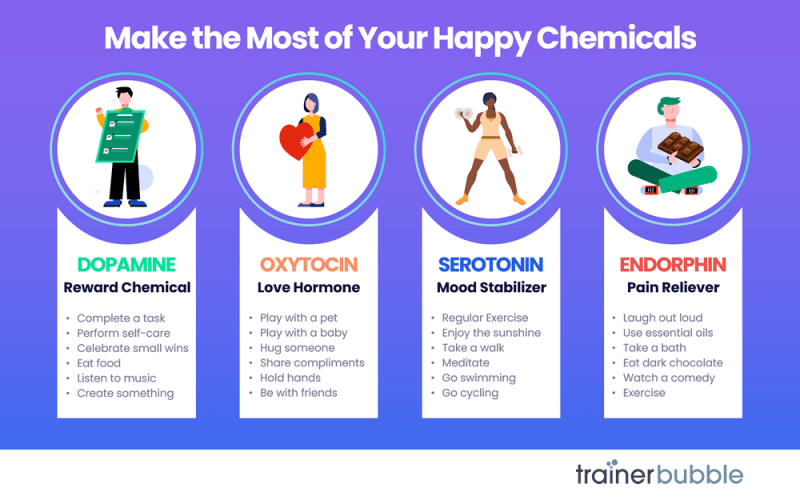
    Being in this state can trigger the release of feel-good chemicals such as dopamine, which is associated with pleasure and reward. These chemicals positively affect your brain chemistry and help bring it into balance. The more often you engage in creative activities that lead you into this flow state, the more positive the effects on your mental and emotional health.

    Make the Most of Your Happy Chemicals – Wellbeing Infographic / Trainer Bubble ©

    Routine also plays an important role in achieving flow state. While the brain may become bored with repetition, the discipline of regularly doing creative work helps maintain the steady release of beneficial brain chemicals. Over time, this habit becomes a powerful tool for supporting emotional stability and improving overall brain function. It can also increase your capacity to learn and help you stay in a more positive mood. Your brain is like a muscle that can grow and change with use. Just as going to the gym strengthens your body, creative outlets help strengthen your brain. Whether you’re solving mental math problems, dancing, writing, or painting, these activities exercise the brain in meaningful ways, and with time, you will begin to notice progress in your thinking, mood, and emotional resilience.

    Creative outlets are not just helpful in the long-term, they also provide temporary support. These outlets allow you to process emotions, deal with stress or trauma, and reflect on your day in a positive way. This results in a clear headspace and a more productive day.

    Engaging in creative activities can calm the amygdala, which is the part of the brain responsible for the fight-or-flight response. When you’re feeling anxious or stressed, the amygdala becomes highly active. Creative work signals to the brain that you’re safe, which helps reduce that activation and gives you a sense of relief and clarity. Incorporating creativity into your life is more than just enjoyable, it’s a powerful way to support your mental health and help your brain thrive.


    References

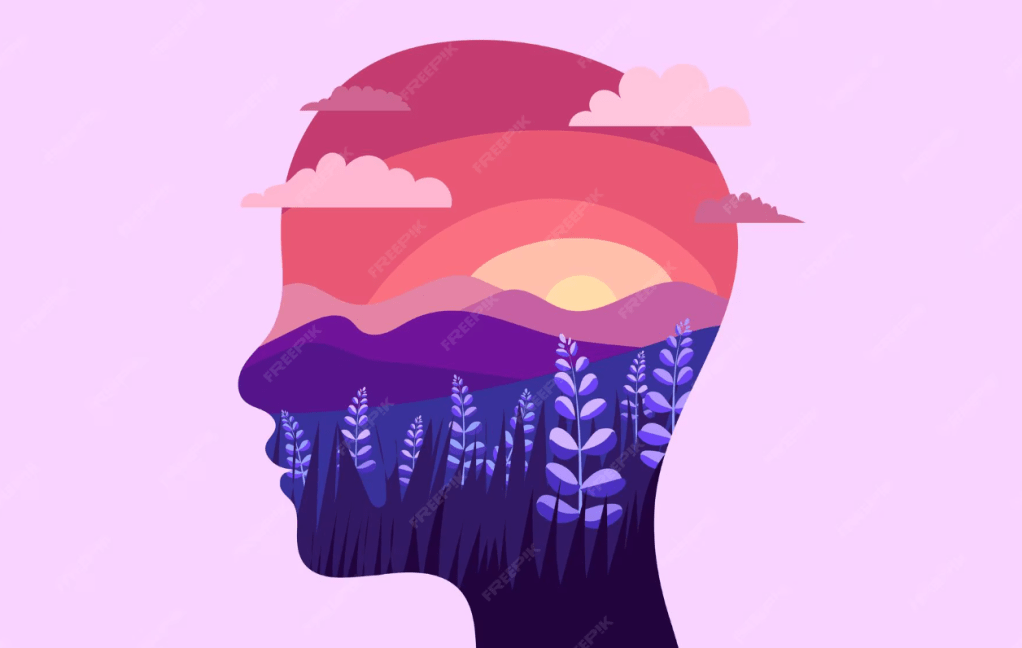
    Freepik. (n.d.). Psychology concept – Sunrise and dreamer woman silhouette [Digital image]. Freepik. https://www.freepik.com/premium-photo/psychology-concept-sunrise-dreamer-woman-silhouette_18124911.htm
    Jean-Berluche, D. (2024). Creative expression and mental health. Journal of Creativity, 34(2), 100083. https://doi.org/10.1016/j.yjoc.2024.100083 ScienceDirect
    Kumar, V. et al. (2024). Creative pursuits for mental health and well-being. PMC
    Suttie, J. (2018, July 11). Where does happiness reside in the brain? Greater Good Science Center. https://greatergood.berkeley.edu/article/item/where_does_happiness_reside_in_the_brain 
    The Role of Handmade Crafts in Mental Health and Self-Care. (2023, January 25). Awesome Pattern Studio. https://awesomepatternstudio.com/blog/blog/the-role-of-handmade-crafts-in-mental-health-and-self-care/ Awesome Pattern Studio
    Trainer Bubble. (n.d.). Make the most of your happy chemicals – Wellbeing infographic [Infographic]. Trainer Bubble. https://www.trainerbubble.com/make-the-most-of-your-happy-chemicals-wellbeing-infographic/ 
    UCLA Health. (2025, May 15). 3 proven health benefits of having a hobby. https://www.uclahealth.org/news/article/3-proven-health-benefits-having-hobby UCLA Health

  • ‘The Second Brain’ The Gut Microbiome’s Effect on Your Mental Health

    ‘The Second Brain’ The Gut Microbiome’s Effect on Your Mental Health

    By Gianna Lee

    ~ 4 minutes


    Every year, in the United States, millions are diagnosed with schizophrenia, autism, and depression . These disabilities severely hinder people’s way of living, therefore, it is crucial for us to find ways to prevent individuals from suffering. In the past few years, research has shown that the gut has a significant connection with your brain.

    The ENS

    The ENS (enteric nervous system) is what some researchers call your “second brain.” It is composed of two layers that have hundreds of millions of nerve cells that dictate your mood shifts. Located in the gut, this system efficiently communicates with the central nervous system, connecting your mind and body.

    The ENS sends signals to your brain via the gut-brain axis. For example, when the gut signals hunger, the brain sends out a stressor leading to your blood sugar dropping, which makes you frustrated or irritated. This shows that the brain and gut are in constant communication, which can be linked to mental illness.  With this logic, we can understand that while microorganisms within the gut can prevent mental illness, others can cause them.

    In cases of Schizophrenia, clinical research has shown similarities within the gut between patients; 8 cases of Schizophrenia found that their gut contained similar gut microbiota such as: Lactobacillus, Enterococcus, and Bifidobacterium. Scientists then prescribed probiotics to these patients which reduced inflammation and contributed to a better state and overall mood.

    The Mind and Gut’s Relationship

    While research is still being developed regarding the link between the two, findings are piling up in order to help us understand the relationship between the gut and mind.

    In order to maintain a healthy gut and mindset, there are a few ways to keep yourself healthy. You are what you eat. Your diet is a major factor for a healthy gut, so nourishing your gut with a diverse and balanced diet can feed bacteria, allowing for an improved mood! Some healthy nutrition options include probiotics such as: kimchi, kefir, and other fermented items, as well as  prebiotics like green vegetables, legumes, whole grains, and nuts.

    Additionally, ways to completely treat mental illness are still being discovered. A process called “Faecal microbiota transplant” has recently been found to be a possible cure. The process allows  donors with healthy guts to donate stool to patients suffering from infected colons. This process is usually used to treat infection, however, studies were done that found out a few cases of clinical depression were cured through this process. 

    To sum it up, the gut microbiome may not seem like much, however it does play a significant role in mental health. The link between the two is still being studied to this day, with new findings revealing that treatments may cure existing mental illness. As of now, the current best way to maintain a healthy mental state is to ensure a healthy diet. Hopefully, one day we will be able to cure mental illness through these ground breaking discoveries, and when that happens, I will be here to report it!


    References

    GBD 2019 Mental Disorders Collaborators. (2022). Global, regional, and national burden of 12 mental disorders in 204 countries and territories, 1990–2019: A systematic analysis for the Global Burden of Disease Study 2019. The Lancet Psychiatry, 9(2), 137–150. https://doi.org/10.1016/s2215-0366(21)00395-3
    Health, N. (2025). The gut-mental health connection: How to improve both for overall well-being. Nuvance Health. https://www.nuvancehealth.org/health-tips-and-news/the-gut-mental-health-connection
    Johns Hopkins Medicine. (2019). The brain-gut Connection. John Hopkins Medicine. https://www.hopkinsmedicine.org/health/wellness-and-prevention/the-brain-gut-connection
    Li, Z., Tao, X., Wang, D., Pu, J., Liu, Y., Gui, S., Zhong, X., Yang, D., Zhou, H., Tao, W., Chen, W., Chen, X., Chen, Y., Chen, X., & Xie, P. (2024). Alterations of the gut microbiota in patients with schizophrenia. Frontiers in Psychiatry, 15, 1366311. https://doi.org/10.3389/fpsyt.2024.1366311
    Morrow, R. (2021, November 17). 9 Soulicious Soup Recipes. Foodmatters.com; Food Matters. https://www.foodmatters.com/recipe/9-soulicious-soup-recipes

  • Your Kitchen; Your Chem Lab!

    Your Kitchen; Your Chem Lab!

    By Kathleen Jiang 

    ~4 minutes


    Cooking is instrumental in everyone’s life. Think about how many times you’ve eaten today! Eggs for breakfast, milk as a drink, pirate booty’s as a snack, mac n cheese for lunch, and pizza for dinner. We all spend minutes, even hours of our lives simply deciding what foods to eat, but have we ever dug deeper into  what chemicals we’re eating? After all, cooking is chemistry and something has to keep that twinkie immortal! In this article, we will take out our detective gloves to examine what we’re really putting in our bodies, then uncover the history of cooking, and finally discover the impact of cooking on American culture.

    Let’s head to the lab! When looking at a typical American kitchen, you’ll notice a trend of processed foods such as deli meat, sauces, and pastas. This happens because processing often alters the food, leading to a sharp increase in sugars, sodium, and calories. While  processing itself is not inherently bad, the abundance of ultra processed foods (a certain kind of extremely unhealthy processed food with abundant fats, calories, and salts) has been linked to higher cancer risk. This is due to the production process which often adds additives or strips nutrients from the food. While most foods undergo some kind of process, this article will refer to ultra processed foods such as packaged snacks, bread, cereal, processed meat, condiments, sweets and alcoholic beverages, and candies and desserts. 

    Ultra Processed Foods / Unhealthy Snacks in a Cart / Public Domain Media / Picryl ©

    Processed foods such as cheese, noodles, and even oil have always existed as a main staple in ancient diets. As food has evolved, new processing techniques such as the invention of hermetling bottling in 1809 has led to widespread canning and tinning, while Louis Pasteur’s discovery of  pasteurization in 1864 inadvertently caused the increasing popularity of processed foods. During World War I, the convenience of processed food continued to remain relevant, as people rapidly advanced machinery creating  microwaves and blenders, and sought food that was nutritionally dense to fight malnutrition and disease. In the modern age, the most recent rise of processed foods is credited to food marketing. Fast food companies spend billions of dollars in marketing each year, and according to wildhealth.com, in 2017, 80% of their ads focused on candy, snacks, and fast food which are all ultra-processed foods (UPFs).

    Bright. Colorful. Iconic. Everyone has fallen for the sugary promises without realizing they are being preyed on by these advertisers.

    Louis Pasteur Experiment / Wikimedia Commons ©

    Label marketing has also had a detrimental effect on the food industry. The FDA sets standards that companies must abide by, however many of these standards are outdated and the 1994 definition of “healthy” to be placed on food products was changed only three years ago which resulted in limits being set for the amount of fat, cholesterol, and sodium in a product.

    We may sacrifice nutrition for convenience, but these unhealthy habits are linked to 30+ health conditions and are proven to increase  risk of complications such as cardiovascular disease, cancers, obesity, and type 2 diabetes. As Dr. Devies puts it “Ultraprocessed foods are better at preserving shelf life than human life.” Data shows that 57% of adult diets and 67% of children’s diets consist of ultra-processed foods. The laboratory may create a product that has an excellent appeal, and a long shelf life, but do not be fooled. It is devoid of the important nutrients that our bodies actually crave.

    Curbing Intake of Processed Foods / Think IAS Think Drishti ©

    Can you name 5 ingredients in a cheetos bag? Processed foods have become a major component in many American diets contributing to the obesity and overweight crises which sever our connection to the natural foods that our ancestors ate. While eating junk may be more convenient, the physical effects will catch you in the long run.


    References

    Berg, S. (2024, November 8). What doctors wish patients knew about Ultraprocessed Foods. American Medical Association. https://www.ama-assn.org/public-health/prevention-wellness/what-doctors-wish-patients-knew-about-ultraprocessed-foods
    Drishti IAS. (2024, April 24). Curbing intake of Processed Foods. https://www.drishtiias.com/daily-updates/daily-news-editorials/curbing-intake-of-processed-foods
    The rise of processed foods in the United States. RSS. (n.d.). https://www.wildhealth.com/blog/everything-to-know-about-the-rise-of-processed-foods-in-the-united-states 
    Thomme, G. V. (n.d.). 7 examples of processed food. MD Anderson Cancer Center. https://www.mdanderson.org/cancerwise/7-examples-of-processed-food.h00-159621801.html


  • Chemical Pollution: A Threat to Global Health and Ecosystems

    Chemical Pollution: A Threat to Global Health and Ecosystems

    By Amy Yan

    ~4 minutes


    Scientists have recently declared chemical pollution an environmental threat as severe as climate change. Specifically, chemical pollution is the contamination of air, land, or water with high levels of unnatural substances, or pollutants. As these chemical pollutants continue to quickly spread throughout the globe, the multitude of risks they pose is only growing.

    The Severity of Chemical Pollution

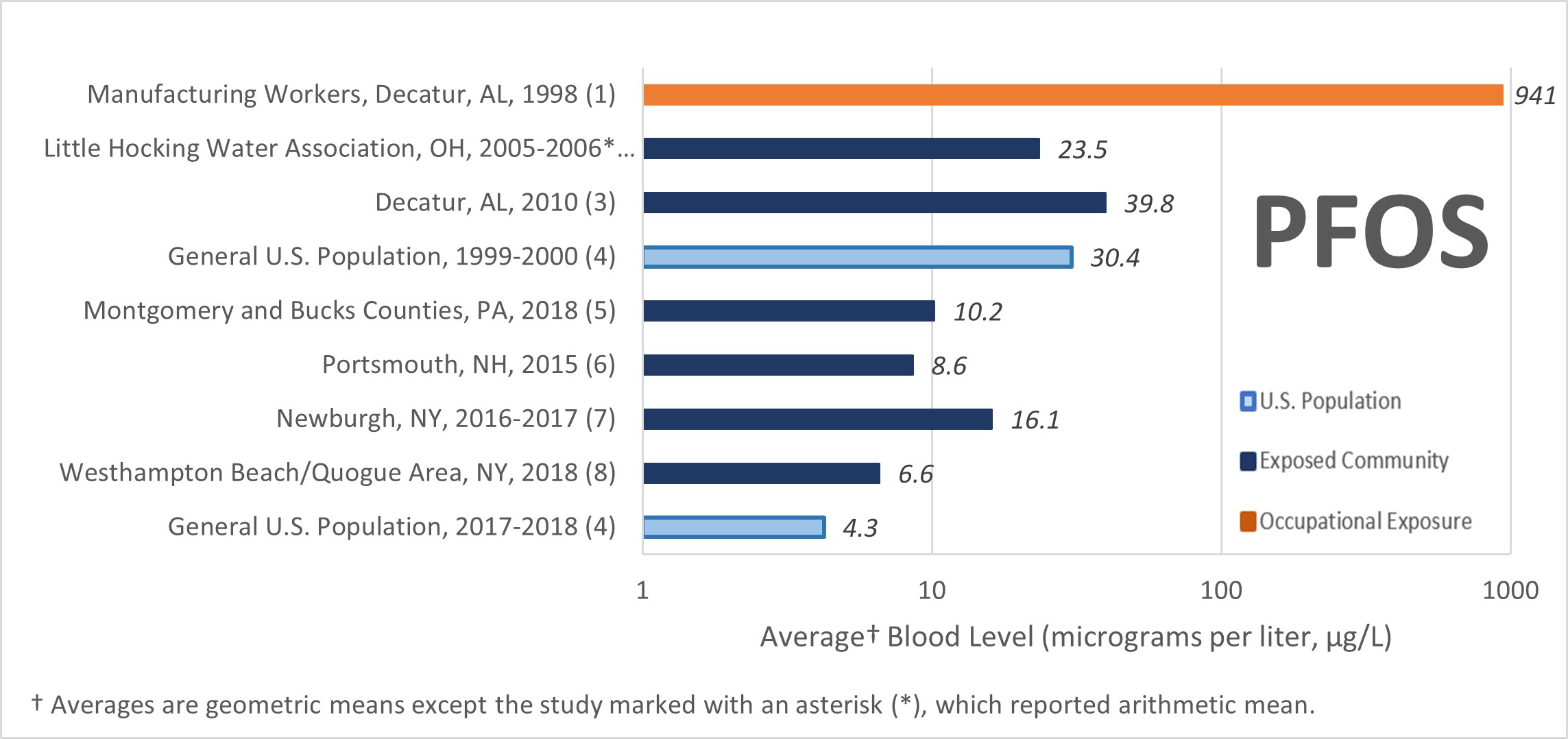
    The severity of chemical pollution is emphasized by the wide range of substances it encompasses and their persistence in the biosphere. Examples of chemical pollutants include volatile organic compounds (VOCs), heavy metals, air contaminants, persistent organic pollutants (POPs), pesticides, and PFAS (per- and polyfluoroalkyl substances), to name a few. Most of these chemicals do not break down over time; instead, they accumulate year after year, causing lasting damage to the Earth. They are found in everything from rivers to livestock, and according to the CDC, PFAS have been detected in the bloodstreams of about 97% of Americans. This is a global problem, too; a 2025 study conducted in Bihar, India, revealed that nearly 90% of children and 80% of pregnant women tested in the state had unsafe amounts of lead in their blood. Furthermore, the poor regulation of industrial waste and aging infrastructure in many regions of Africa and Southeast Asia allows toxic metals such as lead and mercury to contaminate drinking water and agricultural soil.

    PFOS (a specific type of PFAS) levels for various populations / Center for Disease Control ©

    Scientists have warned that chemical pollution has already crossed the limit for what is safe. The volume of synthetic chemicals currently in circulation has far exceeded the Earth’s capacity to manage them safely, and the sheer variety of synthetic compounds, over 350,000 globally, makes regulation nearly impossible without extensive global action.

    Effects on Health & Ecosystems

    For humans, exposure to chemical pollutants can cause cancer, sterility, developmental diseases, immune system damage, and disruption of brain and hormone function. Columbia University’s School of Public Health covered several significant ways chemical pollutants harm the body: DNA damage, genomic alterations and mutations, disrupted development in children, mitochondrial dysfunction, interference with regular bodily functions, endocrine disruption, increased susceptibility to allergies and infections, hindered neurotransmission, and impaired nervous system function.

    As for the environment, PFAS have been detected in livestock, fish, and crops, affecting food safety and biodiversity. Chemical spills pollute rivers and seas, killing aquatic life and disrupting ecosystems. Soil contaminated with pollutants becomes infertile, reducing agricultural efficiency.

    What’s Being Done

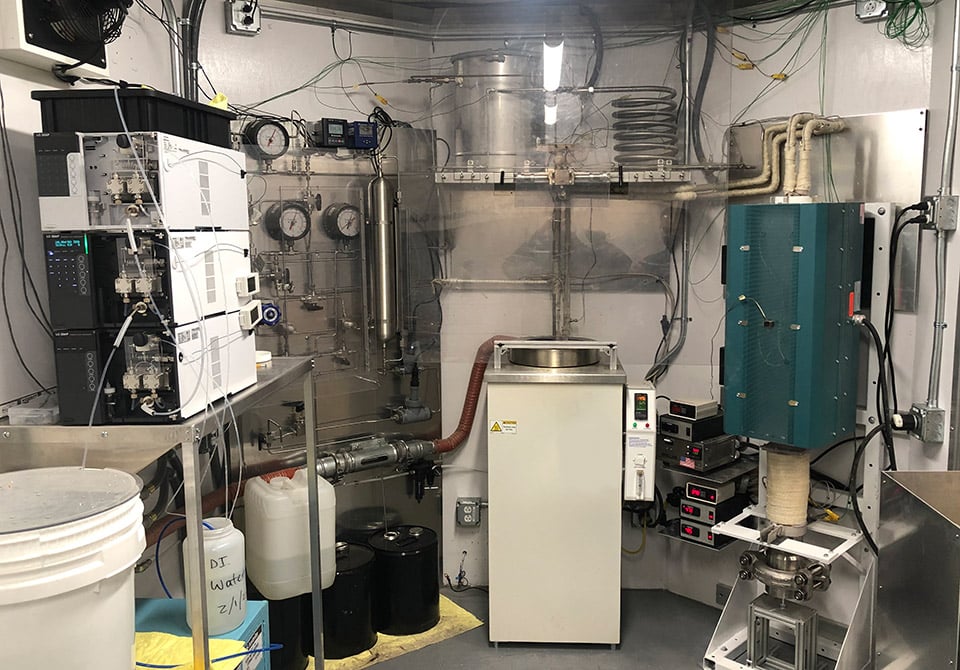
    Though serious, attempts to rectify the situation have been slow-going. The United States’ Environmental Protection Agency has recently introduced stricter drinking water standards for PFAS, with limits in the parts-per-trillion range. Several states have launched lawsuits against chemical manufacturers in order to force them to fund cleanup efforts. Meanwhile, in Europe, policymakers are moving to ban classes of harmful chemicals instead of regulating them one by one, a necessary approach given the scope of the crisis, according to scientists. The UN has begun negotiations for a plastics and associated chemicals treaty, which would be the first major international agreement to limit harmful substances since the Montreal Protocol on ozone-depleting chemicals in 1987. Moreover, researchers are in the process of developing technology aiming to destroy PFAS molecules previously thought to be indestructible.

    Mobile version of Battelle’s PFAS Annihilator technology / Battelle ©

    Even so, progress can be unsteady and quite slow. Many poorer nations lack the infrastructure to monitor chemical pollution as well as the political power to hold corporations accountable for any potential damage they cause.

    Since these chemicals can be found everywhere, phasing them out requires a great deal of effort, starting with change on a systematic scale.


    References

    Boztas, S. (2024, January 4). The race to destroy the toxic “forever chemicals” polluting our world. The Guardian. https://www.theguardian.com/environment/2024/jan/04/the-race-to-destroy-the-toxic-forever-chemicals-polluting-our-world
    Carrington, D. (2022, January 18). Chemical pollution has passed safe limit for humanity, say scientists. The Guardian. https://www.theguardian.com/environment/2022/jan/18/chemical-pollution-has-passed-safe-limit-for-humanity-say-scientists
    Centers for Disease Control and Prevention. (2024, November 12). Fast facts: Pfas in the U.S. population. ATSDR. https://www.atsdr.cdc.gov/pfas/data-research/facts-stats/index.html
    Eight ways chemical pollutants harm the body. Columbia University Mailman School of Public Health. (2021, March 8). https://www.publichealth.columbia.edu/news/eight-ways-chemical-pollutants-harm-body
    Gayle, D. (2025, August 6). Chemical pollution a threat comparable to climate change, scientists warn. The Guardian. https://www.theguardian.com/environment/2025/aug/06/chemical-pollution-threat-comparable-climate-change-scientists-warn-novel-entities
    Hogue, C. (2021, December 29). Pfas destruction technologies are starting to emerge. Chemical & Engineering News. https://cen.acs.org/environment/persistent-pollutants/PFAS-destruction-technologies-starting-emerge/100/i1
    TOI. (2025, August 11). Study finds widespread lead poisoning among children and pregnant women in bihar: Patna news – times of India. The Times of India. https://timesofindia.indiatimes.com/city/patna/study-finds-widespread-lead-poisoning-among-children-and-pregnant-women-in-bihar/articleshow/123222254.cms