About

Category: Engineering

  • The Pinnacle of Motorsport: F1’s Sustainable Future

    The Pinnacle of Motorsport: F1’s Sustainable Future

    By Aniela Coughlin

    ~ 7 minutes


    Formula 1 has been given many names. From the “Pinnacle of Motorsport” to the “Motorsport soap opera,” its high stakes and thrilling speeds have earned it many nicknames. Most recently, Formula 1 has also been dubbed a “tech lab on wheels”.1 This nickname is well-deserved, as the innovations brought to F1 in order to make the cars quicker or more efficient often carry over into every-day road vehicles. One example of this is the carbon-fibre monocoque chassis introduced by McLaren in 1981. This light but durable material is now ubiquitous; it is the basis of almost every supercar and is used in everything from spacecraft to golf clubs. This leads us to reflect on just how much Formula 1 has influenced our daily lives, and how different our world would be today without it. For decades, Formula 1 has served as a model for elite performance in road vehicles and has sparked a passion for engineering in many people.
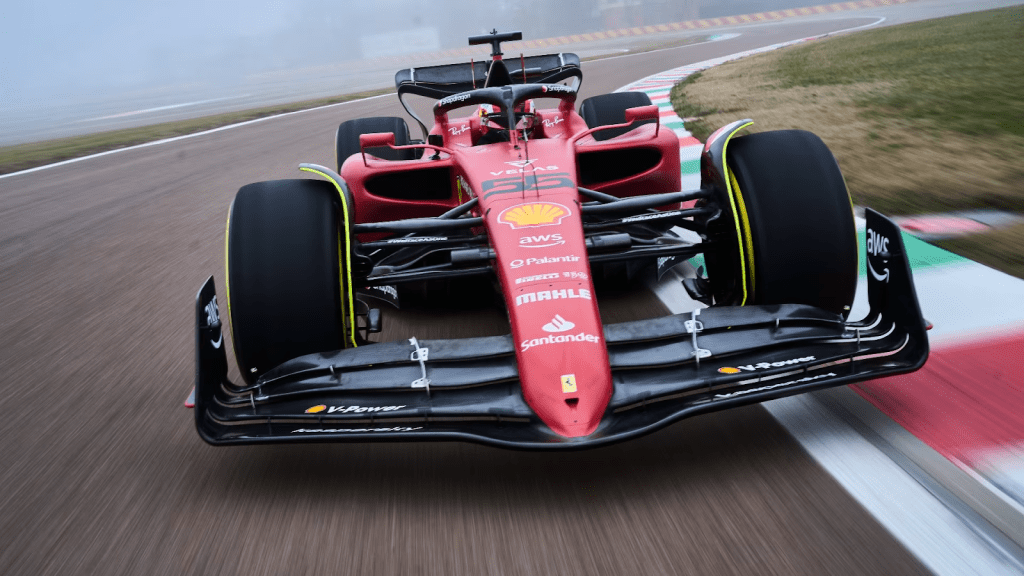
    Ferrari drivers Sainz and Leclerc shake down new F1-75 car at Fiorano / F1

    But with this attention comes a great responsibility for Formula 1. It must set the standard toward which the rest of the automobile industry strives. With global warming becoming an increasingly pressing issue in the global community, Formula 1 must find ways to keep racing at high speeds that are also sustainable for our environment. In 2026, Formula 1 seeks to radically change its regulations in order to reach its goal of going 100% carbon neutral by 2030.2 What do these new regulations mean for the sport, and, most importantly, what do they mean for us? 

    The new 2026 regulations encompass a wide variety of details, from aerodynamics to tyre size, and everything in between. Most of these will not have a tremendous impact on everyday road cars, as these regulations are focused more on getting these supercars to be even more “super”. One major change that does impact standard vehicles, though, is the new fuel regulations. Formula 1 cars use a hybrid of electric and hydrocarbon-fueled energy. Each of the (soon to be) eleven Formula 1 teams outsources their fuel to a third party. Ferrari famously partners with Shell, for instance, and Aston Martin works with Aramco. Throughout 2025, the petrol used in Formula 1 cars had to be ten percent bioethanol, a green alcohol fuel derived from biomass. But this requirement goes away in 2026, when the teams will have to supply their cars with 100% sustainable fuels.3 This means that no fossil carbons may be used, and the teams must produce net-zero carbon cars: they will have to extract carbon from pre-existing sources, instead of adding more into the atmosphere.

    What does this look like? Well, air-capture technologies for carbon already exist, but these are inefficient since only 0.04% of the air is carbon dioxide. Teams are instead looking toward non-food bio sources of carbon, such as excess from the wood or paper industries, or municipal waste. A caveat to this, however, is that they cannot compete with existing food sources. In an interview about Formula 1’s sustainable fuel plans, F1’s chief technology officer Pat Symonds explains,

    “You can make this fuel out of potato peelings, but not out of potatoes.

    Sustainable fuels are, ironically, still not financially sustainable options for “layman” car manufacturers. 100% sustainable fuel is much more expensive to produce than standard fossil fuels, which cost about $63 per barrel compared with the $300 for the sustainable fuel. Add that to the cost of experimenting with and researching new technologies, and you are looking at a budget that far exceeds what the average car manufacturer can afford. This is why Formula 1 is the optimal test hamster for sustainable technologies: its teams deal with huge budgets, which are designed to be spent on innovative technologies. Plus, in Formula 1, the goal is to produce the most efficient and high-performing car possible, not the cheapest. With some luck, these innovations in the way carbon fuels are sourced in Formula 1 will trickle down into the “real world.” 

    Another major change to occur in 2026 is the removal of the MGU-H unit. This component is part of the Energy Recovery System on an F1 car, along with the MGU-K and the energy store. The energy store is essentially a large lithium-ion battery that stores energy recovered from breaking or excess exhaust. The MGUs (Motor Generator Units) act as both motors and generators, depending on what the car necessitates. This works because providing energy to the motors causes them to spin, and spinning the motors causes them to generate energy. The MGU-K (Motor Generator Unit Kinetic) works alongside the car’s engine to provide extra power to the car. It harvests excess energy from braking, when the MGU-K is spinning solely due to the rotational energy of the wheels, and the still-rotating magnets inside the motor provide energy to the battery for later use. The MGU-H (Motor Generator Unit Heat), to be removed in 2026, supplies the same energy storage system. It works alongside the turbocharger so that when exhaust gas passes through the generator turbine of the MGU-H, the turbine spins, transforming kinetic energy into electric energy. The MGU-H can also supply electric energy to the turbocharger, and thus eliminate turbo lag in the engine.5
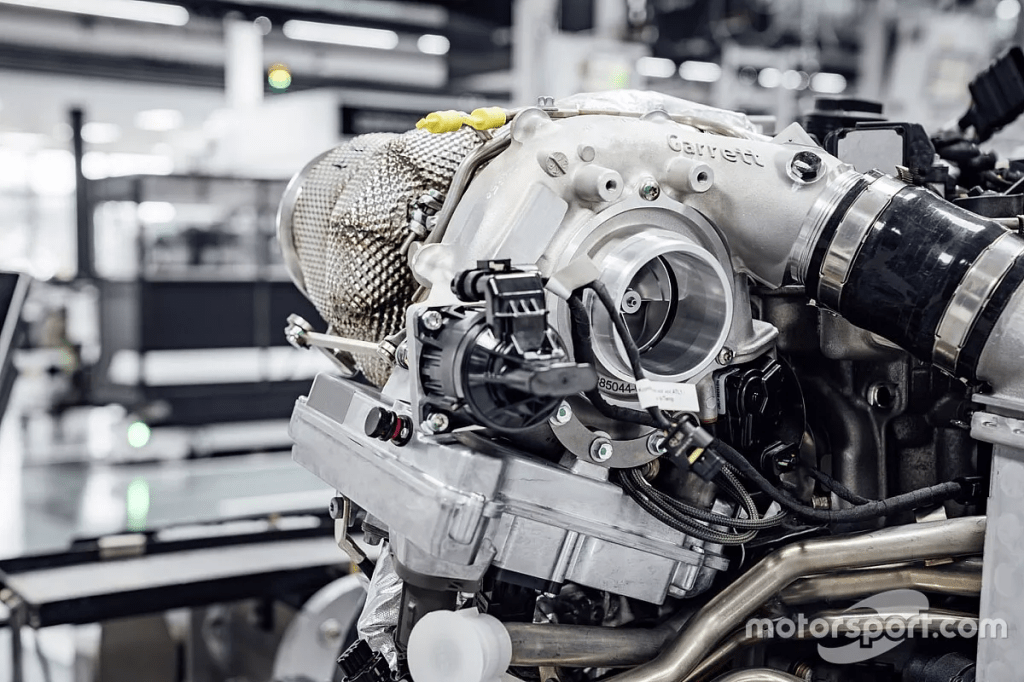
    Mercedes reveals first use of F1’s MGU-H in road cars / motorsport

    The MGU-H does serve a purpose, but only in the context of Formula 1. Everyday road cars do not travel at fast enough speeds to require a component to diminish turbolag; in fact, most hybrid cars do not have a turbocharger at all. This, coupled with the fact that the MGU-H is incredibly expensive to produce, is why the MGU-H will be removed from F1 cars in 2026. 

    But with the switch to a 50/50 ICE-electric engine in 2026, F1 cars still need an energy recovery system to boost performance and efficiency. The MGU-K is much more affordable to produce than the MGU-H because it is mechanically simpler. To compensate for the loss of the MGU-H, the MGU-K output nearly triples in 2026, with a jump from 120 kWh to 350 kWh. The impacts of this on the “real” world are that now everyday road cars have a realistic exemplar of what an efficient hybrid car looks like, and can look to F1 cars to minimize their carbon footprint. 

    Formula 1 is more than just a sport. At the pinnacle of speed, its cars are the role models for the maximized efficiency and performance to which most cars aspire. F1 cars have the responsibility to set the example for others by reducing their carbon footprint, and this is just what the 2026 regulations aim to do. With the implementation of 100% sustainable fuel and increased reliance on electrical power, Formula 1 is pioneering technologies that have the potential to lead the world to a more sustainable future. 

    Bibliography

    Explained: The chemistry behind F1’s sustainable fuel future.” Race Fans, 25 March 2023, Explained: The chemistry behind F1’s sustainable fuel future · RaceFans. Accessed 15 November 2025. 
    “FIA unveils Formula 1 regulations for 2026 and beyond featuring more agile cars and active aerodynamics.” FIA, 06 June 2024, FIA unveils Formula 1 regulations for 2026 and beyond featuring more agile cars and active aerodynamics | Formula 1®. Accessed 15 November 2025. 
    “Formula One Isn’t Just Racing – It’s A Tech Lab On Wheels.” DCB Editorial, 26 August 2025, Formula One Isn’t Just Racing-It’s A Tech Lab On Wheels. Accessed 09 November 2025. 
    “The game-changer in F1’s 2026 fuel evolution.” The Race, 17 September 2025, The game-changer in F1’s 2026 fuel revolution – The Race. Accessed 23 November 2025.
    “What Is ERS In F1? (How The MGU-H And MGU-K Work).” Flow Racers. Accessed 23 November 2025.

  • A Deep Dive into Computer Aided Design

    A Deep Dive into Computer Aided Design

    By Grace Liu

    ~10 minutes


    Computer Aided Design, or CAD, is essentially a platform for users to design, modify, and analyze a digital model. Its speed and efficiency rival traditional design methods, and the capabilities of CAD are continuously growing as technology advances. It is a space for unlimited creativity and endless possibility, and it is crucial to have an in-depth understanding of CAD to be able to fully harness its potential.

    How does it work?

    At the center of a CAD software program is its graphics kernel, or the processing core. It is a component of the graphical user interface (GUI) which has extensive uses on electronic devices beyond the capabilities of CAD. The GUI takes input from the user and transfers the data to the graphics kernel, which will then generate the geometries and display them on screen. 

    Types of CAD

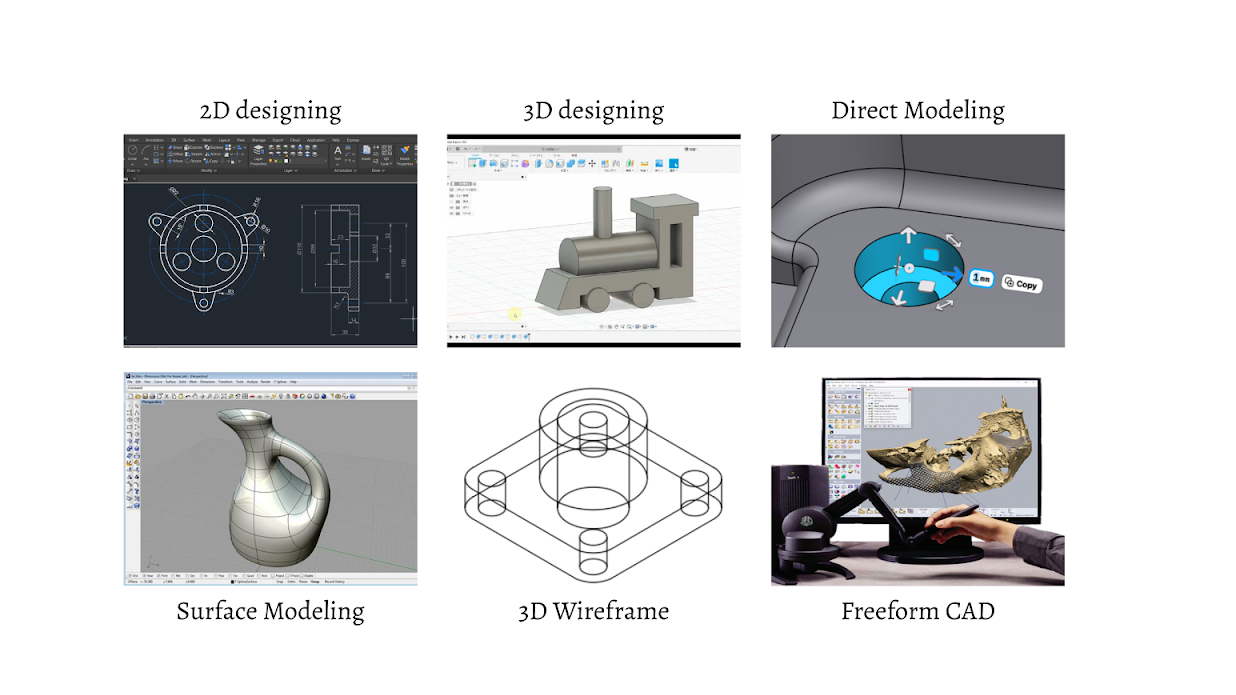
    There are two main categories of CAD: 2D and 3D. 2D designing is more similar to digital art with a different set of tools, often seen with digital drawing and sketching. The key difference is the use of measurement and parameters, a tool that sets a variable to a certain value in a design to be referenced later in other constraints. Parameters are extremely beneficial to create an adjustable, flexible design. 2D designing with Computer Aided Design is commonly used for landscaping, floorplans, and blueprints. On the other hand, 3D modeling offers more complex and realistic designs, and will be the focus of this article. It comes in tons of different forms, including direct modeling, surface modeling, 3D wireframe, and freeform CAD.

    Direct modeling is a type of CAD that doesn’t contain parameters and purely relies on the pushing and pulling of surfaces on unconstrained objects. It allows more freedom than parametric modeling, but becomes much more difficult when needing to adjust a design. For example, say you need to make an object twice as large as it currently is. In parametric modeling you would simply need to enlarge the base parameters for certain lengths that you set, and then all constraints using those parameters would automatically adjust. In direct modeling you would need to manually scale each surface to size up the object.

    Another form of CAD is surface modeling, which focuses on manipulating intricate external surfaces, more like a shell instead of a full 3D object. It uses curves and lines defined by mathematical formulas, calculated by the computer using input from the graphical workspace in the CAD program. Surface modeling helps display texture, material, and overall aesthetics for the design.

    A step down from surface modeling is 3D wireframe, which goes further to remove the surfaces on the object and models 3D structures using only its lines and curves. Without any actual surfaces or bodies, the design appears to be the skeleton of the object(s) or a wire framework, hence the name. It acts as the first 3D visualization of concept or design, providing a foundation that can be built into a full model later on. These designs are often the first pitch to an outside source that offers feedback on the base sketch, an efficient and effective method to communicate a design idea without having to fully create it.

    A unique but often overlooked type of CAD is freeform CAD. It acts more like clay, letting the user be more artistic and creative with their design. It utilizes digital brushes or styluses to sculpt the object, with a different set of tools and abilities in the workspace compared to the more common forms of CAD. Freeform CAD often involves the use of haptic devices instead of a mouse and keyboard. These devices will transmit the digital output from the computer to a physical attachment on the device through touch sensation that allows the user to “feel” their design as they sculpt. The physical attachment typically mimics brushes or scrapers, and can sometimes even be equipped with vibration.

    Different CAD platforms:

    The foundation of every CAD platform is similar, but each one has different unique features. Getting an overview of the platforms can help the user determine which one to choose that best suits their needs. Five of the most common ones include: Autodesk Fusion 360, Onshape, Blender, TinkerCAD, and SolidWorks.

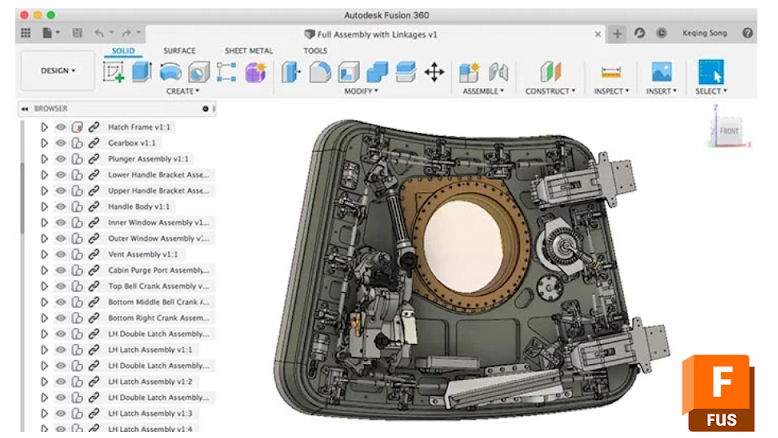
    September 4, 2019 Product Update – What’s New / Keqing Song / Autodesk Fusion ©

    Autodesk contains a multitude of CAD programs, but their most popular and versatile one is Fusion 360. It’s an industry level CAD software and combines different tools and abilities all into one place, allowing for (unlimited) creation. Fusion 360 contains a variety of workspaces including: Design and Generative Design, Rendering, Simulation, Animation, Electronics, and 2D Drawing. Just within the Design workspace Fusion 360 has hundreds of techniques to choose from when building like freeform, surface, parametric, and direct modeling along with sheet metal, mesh, plastic, etc. Its software platform allows for smooth collaboration by storing all files directly in the cloud and easy updates across designs, reducing the amount of time it takes to combine multiple designs. Fusion 360 is flexible, perfect for rapid prototyping, with an extensive tool kit that contains multiple shortcuts to make designing and modifying faster. Autodesk also has a free education license for students and educators, making it accessible to a larger audience.

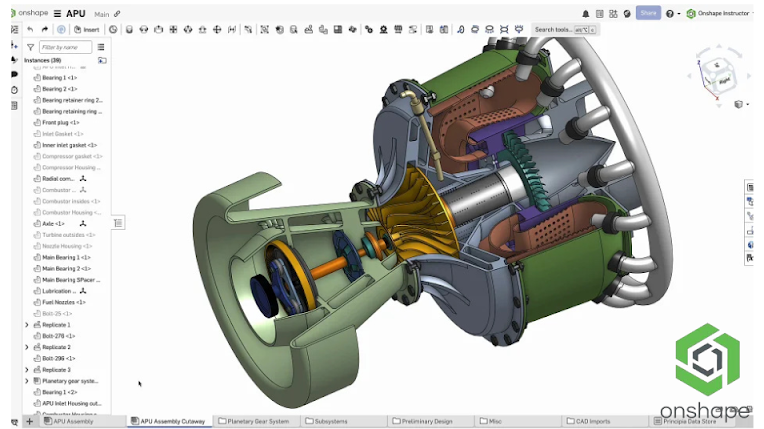
    Onshape, The CAD Of The Future / Nuts and Bolts / Substack ©

    OnShape is another one of the leading CAD platforms in the industry today, a top competitor with Fusion 360. Onshape includes diverse customization tools like FeatureScript, a programming language specific to Onshape that allows users to create custom CAD features or shortcuts usable in their designs. For example, you can code a custom feature that can create a mold on a separate body for any design, reducing the time it takes to manually create a mold each time. FeatureScript lays the groundwork for OnShape’s modeling and standard functions like Extrude, Fillet, and Helix are already written in as FeatureScript functions when you begin to branch out and create your own. Onshape has a built in Product Data Management (PDM) system which allows teams to edit the same design simultaneously, a feature not many CAD platforms can achieve. Alongside increasing efficiency, this also makes it easier to store parts and assemblies by eliminating files. You can long into your account anywhere, and have full access to all your designs in OnShape. Another unique tidbit about OnShape is that it does not require manual updates for the application, all updates run automatically in the background so you don’t have to worry about running the correct version of OnShape when fixing bugs in your design.

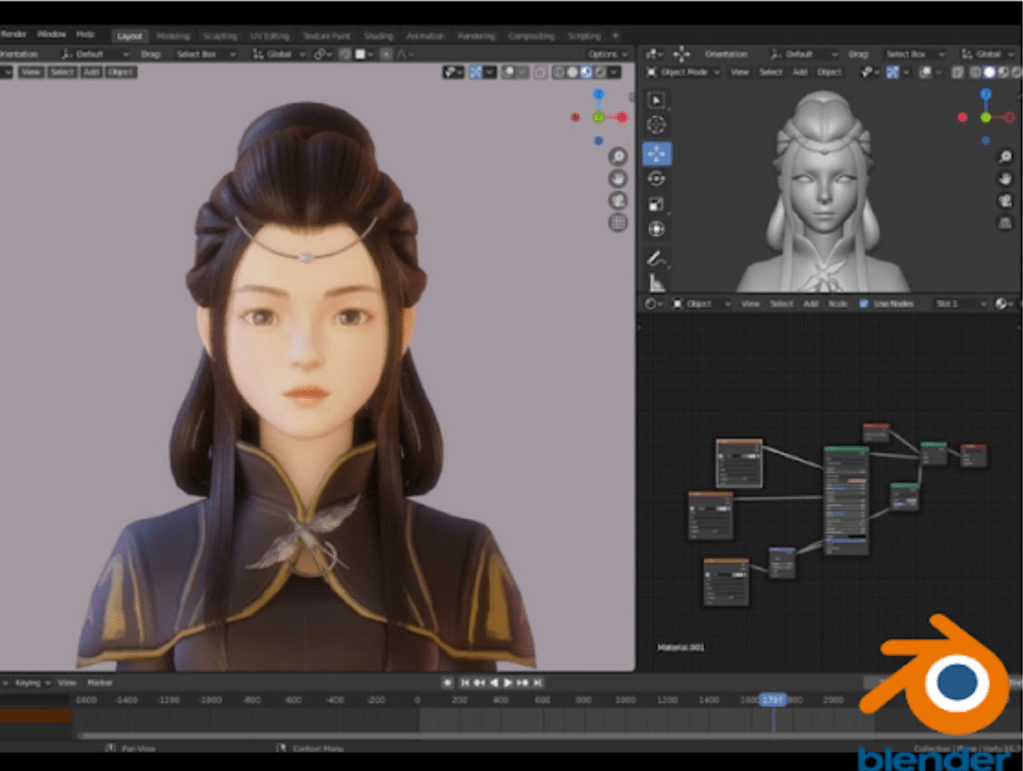
    Beginner’s Guide to 3D Character Creation Using Blender / DEZPAD ©

    Blender is a slightly different CAD platform; it focuses on and perfects the aesthetics of 3D modeling. It’s best for rendering and shading, animation, simulation, visual effects, and game development. Blender consists of 2 main rendering engines: Eevee and Cycles. Eevee is a real-time engine, best for quick rendering for fast iterations. In short, a real-time rendering engine computes the lighting, materials, plus other components of the image continuously at about 30-120 frames per second and provides an interactive output which allows the user to adjust the settings. Cycles is a path-tracing engine with high quality and realistic renders, but takes a much longer time. A “path-tracing” rendering engine means that the program simulates the physical behavior of light rays on the object frame by frame to create a realistic image. Cycles would typically be used for the final render, pristine and life-like, whereas Eevee would be used in-between iterations to help make improvements. The extensive simulation workspace in Blender can mimic unique bodies in nature like fluids, smoke, and fire. Another benefit of Blender is that it’s completely free, perfect for hobbyists or students.

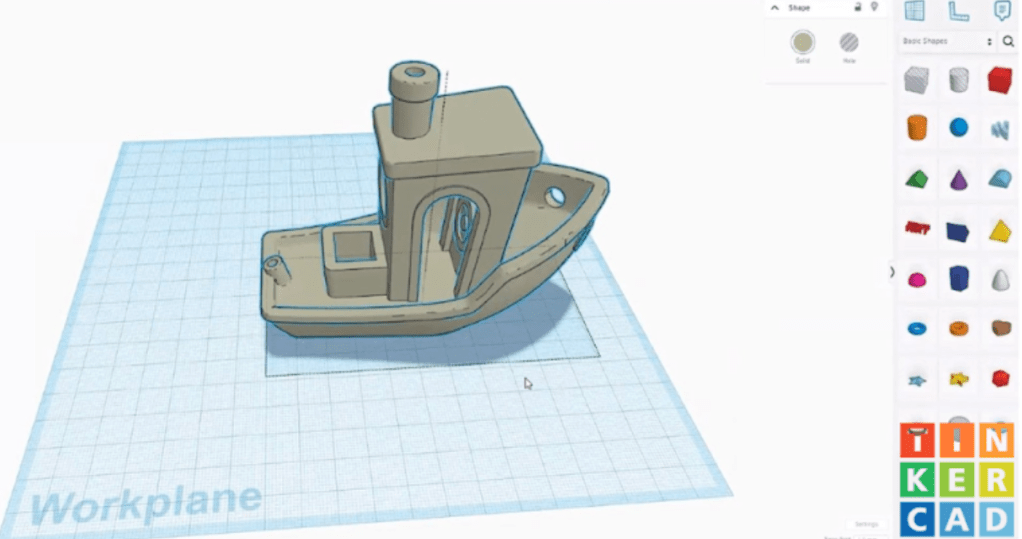
    TinkerCAD Basics: A Hands-On Workshop for Beginners! / San Carlos Life ©

    TinkerCAD is a much simpler CAD platform, but that also makes it best for beginners with its clear, straight-forward layout. It consists of a couple tabs with a set collection of 3D shapes along with other tools. It includes basic electronics simulation and serves as a good introduction to circuits and coding a real mechanism instead of just on a computer program. TinkerCAD is very popular in schools as it has built-in lessons and hands-on projects along with its easy format. Since it was designed to teach beginners, TinkerCAD has limited capabilities. It doesn’t have complex curves and restricts freedom on building custom shapes, as well as lower resolution models. TinkerCAD does not have advanced rendering, simulation, or animation so it might not be the best option for realistic modeling. These intentional restrictions keep TinkerCAD kid-friendly and focus on teaching the basics of 3D modeling before transitioning to something more advanced. It’s also compatible with online models in a specific file format,  so you can learn from and transfer designs on the internet to TinkerCAD. It’s good for simple 3D printing and laser cutting, allowing for a full introduction to the basics of engineering for beginners. 

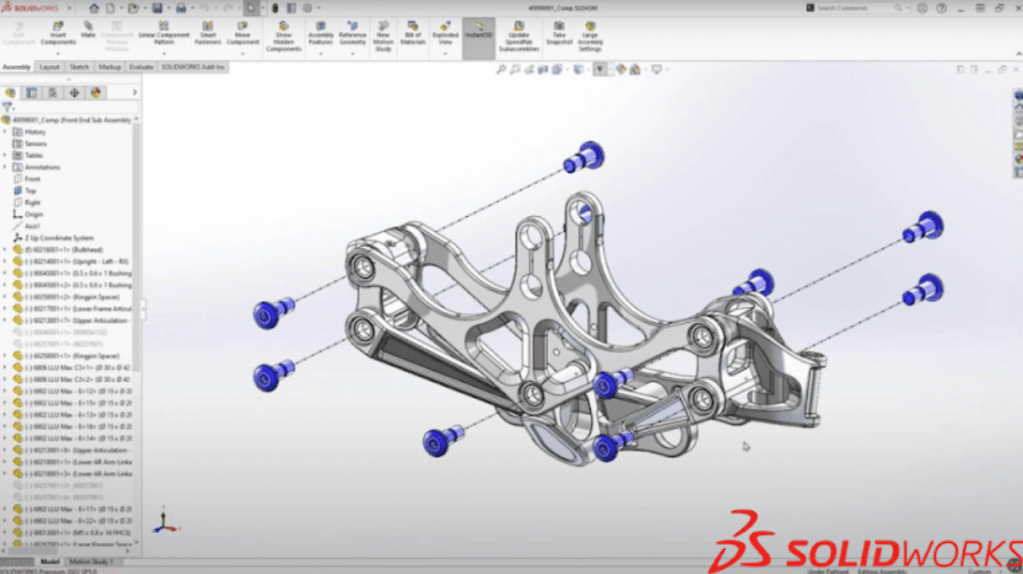
    Solidworks 2025 / DEVELOP3D ©

    SolidWorks is an industry grade CAD platform, and in a lot of aspects similar to Fusion 360. A key difference is that SolidWorks targets large engineering companies like Tesla and Lockheed Martin while Fusion 360 focuses on hobbyists, students, or startups that want a simple, but effective CAD platform to create 3D designs not quite as complex as a plane. SolidWorks makes drawing complicated 2D blueprints with details and labels much easier. It can utilize views, measurements, and calculations from the 3D design, and then transfer them to the 2D drawing. SolidWorks has a powerful simulation workspace for motion, stress, heat, and real-life scenarios that designs like cars, planes, or bridges need to withstand. Comparatively, SolidWorks is one of the more sophisticated 3D designing platforms and requires time to get familiar with, but it also offers lessons, tutorials, and even courses to help shorten the learning curve.

    Real-world applications of CAD

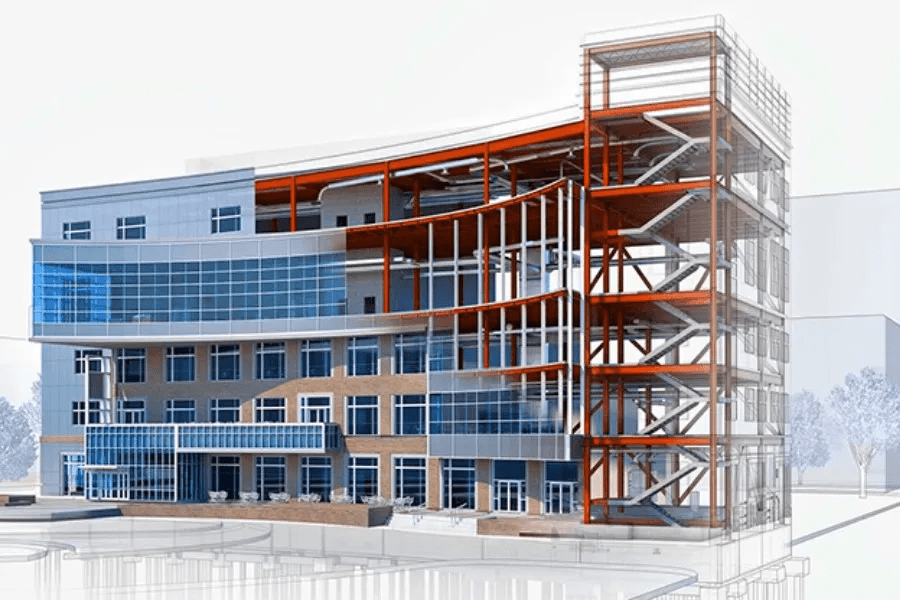
    Building Information Modeling (BIM) Explained / KENNMAR ©

    The most common place you see Computer Aided Design is in engineering, where it has become integrated throughout the design process, from designing and prototyping to manufacturing the product. It’s also present in architecture, so much so that there’s a type of CAD created specifically for 3D models of buildings. Building Information Modeling (BIM) is a CAD platform that creates a 3D model of all the components in a real-world building, and also replicates the entire timeline of the building from construction to long-term maintenance. It’s a digital version of the entire process of the building, and helps to check safety and functionality beforehand. CAD also pops up in unexpected places, like interior and exterior designing, fashion, and game design. Interior and exterior designing involves much of the same processes as industrial design, although with less moving parts in the assembly. Fashion mostly uses 2D CAD to make the drawing and sketching process faster and more efficient. Game design, as mentioned when discussing Blender, uses mostly the design, animation, and rendering workspaces in 3D CAD to make their characters and objects look as realistic as possible. 3D modeling can also be seen in medicine, specifically with imaging and x-rays. Machines in hospitals are being equipped with the ability to reconstruct 3D models of bones and structures within the human body, helping doctors to better treat the patient.


  • Aviation: Pros, Cons, and Innovations

    Aviation: Pros, Cons, and Innovations

    By Charlotte Lee

    ~ 7 Minutes


    Aviation facilitates long-distance travel, quick package delivery, and is essential to military operations. However, aviation plays a big part in daily life that often goes unappreciated. This can be both good and bad. Aviation enables quick medical transportation for operations like cross-state lung transplants, supports search and rescue operations, and creates jobs. However, it is also a significant factor in climate change, noise pollution, and airports can disproportionately affect the health and home values of residents nearby.

    What is Aviation?

    Aviation deals with the activities related to the flight, operation, and design of aircraft. Most commonly, the aviation industry is thought of as the commercial airline industry that is travel-based and includes brands like American Airlines, United Airlines, and Emirates.

    New model calculates how air transport connects the world / MIT News ©

    The Pros of Aviation:

    Transportation and Connection-

    Flying is the main source of transportation for international tourists, with 58% of travelers opting to fly. This connects people to their families, enables faster trips, offers a wider range of locations, and provides remote communities access to necessities like healthcare and education.

    Additionally, flight connects businesses to people across the globe, allowing them to ship their goods and reach new customers. The air freight industry is a large with approximately $ 6.8 trillion worth of goods relying on air cargo to reach their destinations. It also creates package delivery services like UPS, Amazon, and FedEx.

    Essential Services–

    Aviation facilitates emergency operations like disaster relief, search and rescue, and medical operations. In disaster relief, aviation allows for the delivery of supplies, outside personnel, and medical aid. 35,000 tons of food and 4,800 tons of health-related vital relief cargo were delivered using aircraft in 2023. Aircraft can also better aid in search and rescue because they are not obstructed by obstacles like difficult terrain or broken infrastructure. The equipment on search and rescue helicopters, like infrared cameras, saves lives by accelerating the process of locating survivors where time is of the utmost importance. This is why the Civil Air Patrol operates in about 90% of search and rescue missions in the US.

    Additionally, it is not always possible to transport the injured to medical care via a traditional ambulance. Air ambulances can reduce response time, access restricted areas, and provide life-saving care. They can also facilitate cross-state transplants where an organ may be available in one state and the receiving patient is in another. This can increase the pool and possibility for a person to receive the transplant that they need.

    Social and Cultural-

    Air travel connects people faster than any other transportation system. This allows for culture and traditions to spread across the globe, leading to international relations and a better appreciation for other countries. Ideas, books, and knowledge also pass through the aviation industry because every person who travels somewhere else has their unique ideas and important knowledge that they spread.

    Aviation Jobs and Careers / Technical Education Post ©

    Job Creation-

    The aviation industry creates about 86.5 million jobs internationally. Secure jobs drive international growth because they provide people with a stable source of income that can be invested back into their country’s economy and children’s education. This is especially growing in Africa and Latin America, where the number of jobs in the aviation industry is projected to double in Africa and increase by 20 million in Latin America by 2043. In North America alone, the industry has brought about 1.4 trillion dollars. 49.2 billion dollars were also invested in the building and renovation of airports, which created more construction.

    Fashion-

    Aviation Fashion is often supplemented by movies like Top Gun, The Aviator, and Catch Me If You Can, and social media. It combines practicality with fashion and has produced some of the most iconic pieces, like the Ray Ban aviator glasses. Some other notable pieces and brands are bomber jackets, pilot hats, and Aviator Nation.

    Bomber Jacket / Top Gun Store ©

    Cons of Aviation:

    Climate change impacts / National Oceanic and Atmospheric Administration

    Climate Change-

    Because there has been an increase in flights, emissions from aviation have grown more than any other type of transportation. Airplanes release CO2 when burning fossil fuels, but they also leave vapor trails, soot, water, and gases like Nitrogen Oxides, and Sulfur dioxide. These combined create contrail cirrus or artificial clouds, which can increase greenhouse gases. While climate change is usually connected to CO2 levels, these non-CO2 effects from aircraft have contributed twice as much to global warming as aircraft CO2 emissions.

    Uneven medical disparities-

    Aircrafts release CO2, NOx, and SOx, which can negatively affect the people living there, as shown through the higher respiratory disease, morbidity, and mortality rates among people who live near airports. The noise pollution from the airplanes not only lowers the value of homes nearby but also has detrimental effects on residents. It can lead to stress, negative results in children’s cognitive development, and increased rates of hypertension, cardiovascular disease, and hyperactivity.

    Innovations:

    So many advances have been made since the first airplanes. The average flight today already produces 54% less CO2 than a flight in 1990. Innovations continue to be made to decrease CO2 emissions.

    SAFs (sustainable aviation fuels)-

    A lower-carbon alternative to jet fuel, first commercially used by United Airlines. SAF, or sustainable aviation fuel, has 85% lower GHG emissions.  They are produced by converting renewable or waste materials—such as agricultural residues and used cooking oil—into fuel, sometimes using renewable energy in the process. This approach helps reduce both emissions and waste. 

    NextGen Aircraft Design is Key to Aviation Sustainability / NASA ©

    Recycling and Aircraft Design-

    Reducing fuel burn and greenhouse gas emissions are critical to minimizing the effects of climate change. This is accomplished through more efficient aircraft designs. One way of making the aircraft more efficient is with truss-based wings, as seen in the picture above. These wings produce as much lift as traditional wings, but much less drag, resulting in less fuel consumption. Another way of making the aircraft more efficient is by using recycled materials to build the plane. When made this way, aircraft are lighter, less expensive, stronger, and easier to repair.

    Airports are also doing their part in using recycled materials. The Galapagos Ecological Airport’s terminal is made of 80% recycled materials. It also runs entirely off of renewable energy and has its own desalination plants that allow the airport to use local seawater. This airport is the first ecologically friendly airport and has inspired other airports to be environmentally friendly, like the Bohol-Panglao Airport in the Philippines.

    Water usage-

    Water usage is an aspect often not associated with aviation, but aircraft need to be cleaned for hygiene, safety, and efficiency (since dirt and grime on the plane can make it heavier and increase fuel consumption). The traditional cleaning process can use up to 13,000 tons of water. However, innovations such as dry washing aircraft have lowered that amount by 95%.

    Dry washing, which Emirates Airlines introduced in 2016, uses little to no water. It is a liquid cleaning product that is manually applied and wiped off with a microfiber cloth. It also leaves a film on the airplane that allows planes to stay cleaner for longer and for Emirates to save 11 million liters of water a year.


    References

    Admin, T. O. C. (2018, April 19). Air Cargo: Facts & Figures. TOC Logistics International, LLC. https://www.toclogistics.com/air-cargo-facts-figures/
    Aviation-o-holic – By Kush. (2024, August 15). The Climate Change & Aviation Crisis | In 5 Minutes. YouTube. https://www.youtube.com/watch?v=lyvshz4VOMU
    Banke, J. (2020, April 16). NextGen Aircraft Design is Key to Aviation Sustainability – NASA. NASA. https://www.nasa.gov/aeronautics/nextgen-aircraft-design-is-key-to-aviation-sustainability/
    Biscontini, T. (2024). Environmental impact of aviation | EBSCO. EBSCO Information Services, Inc. | http://Www.ebsco.com. https://www.ebsco.com/research-starters/environmental-sciences/environmental-impact-aviation
    Dodd, H. (2023). Supporting economic & social development | ATAG. Atag.org. https://atag.org/industry-topics/supporting-economic-social-development
    Egere-Cooper, M. (2015, August 4). This airport runs on wind. CNN. https://edition.cnn.com/travel/article/galapagos-ecological-airport-wind-and-solar-power/index.html
    Emirates showcases environment friendly aircraft cleaning technique. (n.d.). Aviationbenefits.org. https://aviationbenefits.org/newswire/2017/06/emirates-showcases-environment-friendly-aircraft-cleaning-technique/
    Keller, R. (2023). Social and Environmental Impacts of Commercial Aviation. Social and Environmental Impacts of Commercial Aviation
    Lee, S. (2025). How Sustainable Aviation Innovations Create a Greener Flight. Numberanalytics.com. https://www.numberanalytics.com/blog/sustainable-aviation-innovations-greener-flight
    SDG 6: Clean Water and Sanitation. (n.d.). Aviationbenefits.org. https://aviationbenefits.org/un-sustainable-development-goals/sdg-6-clean-water-and-sanitation/
    SDG 7: Affordable and Clean Energy. (n.d.). Aviationbenefits.org. https://aviationbenefits.org/un-sustainable-development-goals/sdg-7-affordable-and-clean-energy/
    SDG 12: Responsible Consumption and Production. (2019). Aviationbenefits.org. https://aviationbenefits.org/un-sustainable-development-goals/sdg-12-responsible-consumption-and-production/
    SDG 13: Climate Action. (n.d.). Aviationbenefits.org. https://aviationbenefits.org/un-sustainable-development-goals/sdg-13-climate-action/
    T&E. (2024, April 19). Airplane pollution. http://Www.transportenvironment.org. https://www.transportenvironment.org/topics/planes/airplane-pollution
    Transportation Review. (2025, January 16). Transportation Review |The Role of Aviation in Emergency Response and Humanitarian Aid. Transportation Review. https://www.transportationreview.com/news/the-role-of-aviation-in-emergency-response-and-humanitarian-aid-nwid-636.html
    United Airlines. (2023). Our Sustainable Aviation Fuel (SAF) Program. United.com. https://www.united.com/en/us/fly/company/responsibility/sustainable-aviation-fuel.html