Imagine a world where every surface—the walls, the roof of your car—harnesses the sun to power your surroundings. Not with stiff, bulky solar panels, but with something as simple and inconspicuous as paint.
Thanks to new and evolving technology, this vision inches closer and closer to reality. Perovskite-based photovoltaic paint is a developing technology with the potential to turn any paintable surface into a solar panel.
What are Perovskites?
Perovskites are a class of crystalline materials with the structural formula ABX₃. ABX₃ means that perovskites have a Large Cation(A), a Smaller Cation(B), and an Anion(X₃, often a halide). Their unique structure makes them incredibly efficient at converting sunlight into electricity, with recent developments reaching over 25% efficiency (25% of energy from the sun was converted into electricity), while traditional solar panels usually have 15-25% efficiency.
The Parts of Perovskite Solar Paint:
Perovskite-based solar paint must be applied in multiple layers. The six main layers, in order, are: the transparent conductive layer (front/top electrode), electron transport layer, perovskite absorber layer, hole transport layer, back electrode, and substrate.
The transparent conductive layer functions as the front electrode. It must be transparent, to allow sunlight to pass through, and conductive, to carry the extracted electrons.
Next is the electron transport layer, which extracts and transports electrons from the perovskite layer to the electrode and prevents holes from moving in the wrong direction.
The perovskite absorber layer is located at the center and is made of a perovskite compound that absorbs sunlight to create electron-hole pairs (excitons). It acts as the photoactive layer where sunlight is converted into electricity.
The hole transport layer lies below, which extracts and transports holes (the positive charges) to the back electrode and blocks electrons from going backward, aiding in charge separation.
The back electrode then collects the holes and completes the electrical circuit, allowing current to flow through an external device.
Finally, the substrate is the surface being painted (can be glass, plastic, metal, etc.) and provides structural support.
How Perovskite Solar Paint Works:
Sunlight first hits a perovskite layer, and the perovskite material absorbs photons. This excites electrons from the valence band to the conduction band, creating electron-hole pairs (excitons). In perovskites, excitons require little energy to separate into electrons and holes, which improves efficiency. Electrons are pushed toward the electron transport layer and holes toward the hole transport layer. The front and back electrodes collect the charges, and because oppositely-charged electrons and holes are separated and collected on different sides, a voltage builds up between the two electrodes. When the painted solar surface is connected to a circuit, the voltage drives electrons through the wire, powering a device or charging a battery.
A Game-Changer for Clean Energy
Perovskite-based photovoltaic paint could radically transform the solar energy industry. Unlike traditional silicon, which requires high temperatures and vacuum conditions for production, perovskite materials are cheap and efficient. Perovskite paint can also be applied to a wide variety of surfaces, allowing homeowners to harness solar power in places where solar panels are impossible.
The Challenges to Implementation
As promising as perovskite solar paint is, several significant challenges stand in the way of widespread implementation. Current perovskite materials are highly sensitive to moisture, heat, and UV light, meaning they degrade quickly outdoors. While silicon panels can last 25 years or more, early perovskite prototypes can lose efficiency after months or just weeks. Researchers are working on protective coatings and new formulations to address this, but achieving long-term durability remains a hurdle. Most high-efficiency perovskite formulas also contain lead or other toxic heavy metals, raising concerns about environmental contamination and safe handling.
Efforts to develop lead-free perovskites are ongoing (tin being a promising alternative), though they currently offer lower efficiency and a shorter lifespan. While perovskite solar paint and panels work well in laboratory settings, scaling up to commercial production is complex. A uniform coating that ensures proper perovskite crystallization must be applied over large areas, and surfaces must be treated to ensure adhesion and conductivity. In addition, regulatory bodies are still developing safety and performance standards for perovskite technologies. Gray areas remain about how these materials will be certified/recycled at the end of their lifespan.
Global Progress and Investment
In the U.S., the Department of Energy recently allocated over $40 million to perovskite R&D, focusing on improving durability and scaling up production methods. Startups like SolarPaint, Oxford PV, and Saule Technologies compete to bring the first market-ready products to consumers, while well-known companies like Mercedes-Benz seek to implement solar paint in their newest vehicles.
Conclusion
Perovskite-based photovoltaic paint is still in the early stages, but it represents one of the most exciting frontiers in renewable energy. If challenges like stability and toxicity can be solved, any painted surface could soon become a power source. Keep an eye on your walls—they might power the world someday.
Glossary
Valence Band:
The highest range of electron energies where electrons are normally present at low energy (ground state)
Valence electrons reside in the valence shell of atoms
In any given material, atoms are packed closely together so their valence shells overlap and form the valence band
Electrons here are bound to their atoms and don’t move freely.
Band Gap:
The energy gap between the valence band and conduction band.
Electrons must absorb enough energy (like from sunlight) to jump across this gap.
The larger the gap, the more energy it takes to jump across, and the less conductive a material is
Semiconductors like perovskites have a small gap(1-2 electron volts) and can conduct electricity if energy is added(sunlight)
Conduction Band:
The higher energy band where electrons are free to move through the material.
Electrons in this band can carry electricity.
Electron-hole pairs:
When a photon(light) hits the perovskite, it transfers energy to an electron, exciting it from the valence band to the conduction band.
The excited electron in the conduction band moves freely and can conduct electricity.
The “hole” is the spot the electron left behind—a positive charge in the valence band.
There is now an electron-hole pair
Exciton:
An exciton is the state where an electron and a hole are bound together, still attracted to each other by opposing charges
Formed right after light absorption, before the electron fully separates from the hole/jumps to the conduction band.
Neutral overall, so they don’t conduct electricity until they break apart.
Common in some perovskites
Front and Back Electrode:
They collect and transport electrical charges (electrons and holes) generated by sunlight.
They’re like the “wires” of the solar paint that let electricity flow out into a usable circuit.
Front electrode: Lets light in and collects electrons or holes(depends on design, usually electrons)
Back electrode: Collects the opposite of what the front electrode does(back electrode usually collects holes) and helps drive current through an external circuit
Electron transport layer:
Extracts and transports electrons to the correct electrode
Hole transport layer:
Extracts and transports holes to the correct electrode
The transport layers guide the charges(electrons(-) and holes(+)) to the correct electrodes, helping to prevent recombination (when electrons and holes meet and cancel each other out).
Voltage:
Voltage is defined as the electric potential difference between two points.
It tells you how much “push” electrons are getting.
Measured in volts (V)
Voltage is like water pressure in a pipe. The higher the pressure, the more push the water (electrons) is getting
Current:
Definition: Current is the rate at which electric charge flows past a point.
Measured in amperes (A), or amps
More current = more electrons moving through the wire per second
Current is like the amount of water flowing through the pipe. The wider or faster the flow, the higher the current.
Power:
Definition: Power is the rate at which electrical energy is used or produced
Measured in watts
Formula: Power (P) = Voltage (V) × Current (I)
Power is like how much water pressure × amount of water is turning a waterwheel—how much work is being done.
Alanazi, T. I. (2023). Current spray-coating approaches to manufacture perovskite solar cells. Results in Physics, 44, 106144. https://doi.org/10.1016/j.rinp.2022.106144
Bishop, J. E., Smith, J. A., & Lidzey, D. G. (2020). Development of Spray-Coated Perovskite Solar Cells. ACS Applied Materials & Interfaces, 12(43), 48237–48245. https://doi.org/10.1021/acsami.0c14540
Chowdhury, T. A., Bin Zafar, Md. A., Sajjad-Ul Islam, Md., Shahinuzzaman, M., Islam, M. A., & Khandaker, M. U. (2023). Stability of perovskite solar cells: issues and prospects. RSC Advances, 13(3), 1787–1810. https://doi.org/10.1039/d2ra05903g
Khatoon, S., Kumar Yadav, S., Chakravorty, V., Singh, J., Bahadur Singh, R., Hasnain, M. S., & Hasnain, S. M. M. (2023). Perovskite solar cell’s efficiency, stability and scalability: A review. Materials Science for Energy Technologies, 6, 437–459. https://doi.org/10.1016/j.mset.2023.04.007
Aviation facilitates long-distance travel, quick package delivery, and is essential to military operations. However, aviation plays a big part in daily life that often goes unappreciated. This can be both good and bad. Aviation enables quick medical transportation for operations like cross-state lung transplants, supports search and rescue operations, and creates jobs. However, it is also a significant factor in climate change, noise pollution, and airports can disproportionately affect the health and home values of residents nearby.
What is Aviation?
Aviation deals with the activities related to the flight, operation, and design of aircraft. Most commonly, the aviation industry is thought of as the commercial airline industry that is travel-based and includes brands like American Airlines, United Airlines, and Emirates.
Flying is the main source of transportation for international tourists, with 58% of travelers opting to fly. This connects people to their families, enables faster trips, offers a wider range of locations, and provides remote communities access to necessities like healthcare and education.
Additionally, flight connects businesses to people across the globe, allowing them to ship their goods and reach new customers. The air freight industry is a large with approximately $ 6.8 trillion worth of goods relying on air cargo to reach their destinations. It also creates package delivery services like UPS, Amazon, and FedEx.
Essential Services–
Aviation facilitates emergency operations like disaster relief, search and rescue, and medical operations. In disaster relief, aviation allows for the delivery of supplies, outside personnel, and medical aid. 35,000 tons of food and 4,800 tons of health-related vital relief cargo were delivered using aircraft in 2023. Aircraft can also better aid in search and rescue because they are not obstructed by obstacles like difficult terrain or broken infrastructure. The equipment on search and rescue helicopters, like infrared cameras, saves lives by accelerating the process of locating survivors where time is of the utmost importance. This is why the Civil Air Patrol operates in about 90% of search and rescue missions in the US.
Additionally, it is not always possible to transport the injured to medical care via a traditional ambulance. Air ambulances can reduce response time, access restricted areas, and provide life-saving care. They can also facilitate cross-state transplants where an organ may be available in one state and the receiving patient is in another. This can increase the pool and possibility for a person to receive the transplant that they need.
Social and Cultural-
Air travel connects people faster than any other transportation system. This allows for culture and traditions to spread across the globe, leading to international relations and a better appreciation for other countries. Ideas, books, and knowledge also pass through the aviation industry because every person who travels somewhere else has their unique ideas and important knowledge that they spread.
The aviation industry creates about 86.5 million jobs internationally. Secure jobs drive international growth because they provide people with a stable source of income that can be invested back into their country’s economy and children’s education. This is especially growing in Africa and Latin America, where the number of jobs in the aviation industry is projected to double in Africa and increase by 20 million in Latin America by 2043. In North America alone, the industry has brought about 1.4 trillion dollars. 49.2 billion dollars were also invested in the building and renovation of airports, which created more construction.
Fashion-
Aviation Fashion is often supplemented by movies like Top Gun, The Aviator, and Catch Me If You Can, and social media. It combines practicality with fashion and has produced some of the most iconic pieces, like the Ray Ban aviator glasses. Some other notable pieces and brands are bomber jackets, pilot hats, and Aviator Nation.
Climate change impacts / National Oceanic and Atmospheric Administration
Climate Change-
Because there has been an increase in flights, emissions from aviation have grown more than any other type of transportation. Airplanes release CO2 when burning fossil fuels, but they also leave vapor trails, soot, water, and gases like Nitrogen Oxides, and Sulfur dioxide. These combined create contrail cirrus or artificial clouds, which can increase greenhouse gases. While climate change is usually connected to CO2 levels, these non-CO2 effects from aircraft have contributed twice as much to global warming as aircraft CO2 emissions.
Uneven medical disparities-
Aircrafts release CO2, NOx, and SOx, which can negatively affect the people living there, as shown through the higher respiratory disease, morbidity, and mortality rates among people who live near airports. The noise pollution from the airplanes not only lowers the value of homes nearby but also has detrimental effects on residents. It can lead to stress, negative results in children’s cognitive development, and increased rates of hypertension, cardiovascular disease, and hyperactivity.
Innovations:
So many advances have been made since the first airplanes. The average flight today already produces 54% less CO2 than a flight in 1990. Innovations continue to be made to decrease CO2 emissions.
SAFs (sustainable aviation fuels)-
A lower-carbon alternative to jet fuel, first commercially used by United Airlines. SAF, or sustainable aviation fuel, has 85% lower GHG emissions. They are produced by converting renewable or waste materials—such as agricultural residues and used cooking oil—into fuel, sometimes using renewable energy in the process. This approach helps reduce both emissions and waste.
Reducing fuel burn and greenhouse gas emissions are critical to minimizing the effects of climate change. This is accomplished through more efficient aircraft designs. One way of making the aircraft more efficient is with truss-based wings, as seen in the picture above. These wings produce as much lift as traditional wings, but much less drag, resulting in less fuel consumption. Another way of making the aircraft more efficient is by using recycled materials to build the plane. When made this way, aircraft are lighter, less expensive, stronger, and easier to repair.
Airports are also doing their part in using recycled materials. The Galapagos Ecological Airport’s terminal is made of 80% recycled materials. It also runs entirely off of renewable energy and has its own desalination plants that allow the airport to use local seawater. This airport is the first ecologically friendly airport and has inspired other airports to be environmentally friendly, like the Bohol-Panglao Airport in the Philippines.
Water usage-
Water usage is an aspect often not associated with aviation, but aircraft need to be cleaned for hygiene, safety, and efficiency (since dirt and grime on the plane can make it heavier and increase fuel consumption). The traditional cleaning process can use up to 13,000 tons of water. However, innovations such as dry washing aircraft have lowered that amount by 95%.
Dry washing, which Emirates Airlines introduced in 2016, uses little to no water. It is a liquid cleaning product that is manually applied and wiped off with a microfiber cloth. It also leaves a film on the airplane that allows planes to stay cleaner for longer and for Emirates to save 11 million liters of water a year.
“Some experts in the field predict that the first quantum computer capable of breaking current encryption methods could be developed within the next decade. Encryption is used to prevent unauthorized access to sensitive data, from government communications to online transactions, and if encryption can be defeated, the privacy and security of individuals, organizations, and entire nations would be under threat.” – The HIPAA Journal
Introduction
The cybersecurity landscape is facing a drastic shift as the increasing power of quantum computers threatens modern encryption. Experts predict a quantum D-day (Q-day) in the next 5-10 years, when quantum computers will be sufficiently powerful to break through even the strongest of cybersecurity mechanisms. Meanwhile, few companies have begun to prepare against the threat, developing quantum resistant cybersecurity methods. However, to fully combat the threat, we need to act now.
Encryption Today
Modern cryptography is dominated by two major algorithms that transform ordinary text into ciphertext:
1. Rivest-Shamir-Adleman (RSA)
Dating back to 1977, the RSA algorithm relies on the factoring of large numbers. RSA can be separated into two parts, a private and public key. The public key, used for encoding, is a pair of numbers (n, e)where n is the product of 2 large prime numbers (p•q=n). The value of e can be any number that is co-prime to (p-1)(q-1), meaning that the GCF of (p-1)(q-1) and e is 1. The private key (d), used for decoding, is the reciprocal of the least common multiple of (p-1)(q-1) and e and can also be found by solving the equation 1= d • e • (p-1)(q-1) for d.
For decades, RSA has provided security for digital data because large scale of (n, e) numbers in addition to the variability of e means that it is nearly impossible to decipher (p, q) from (n, e). However, quantum computing brings forth the ability to quickly factor large numbers, allowing (p, q) to be determined from just the public key.
2. Elliptic Curve Cryptography (ECC):
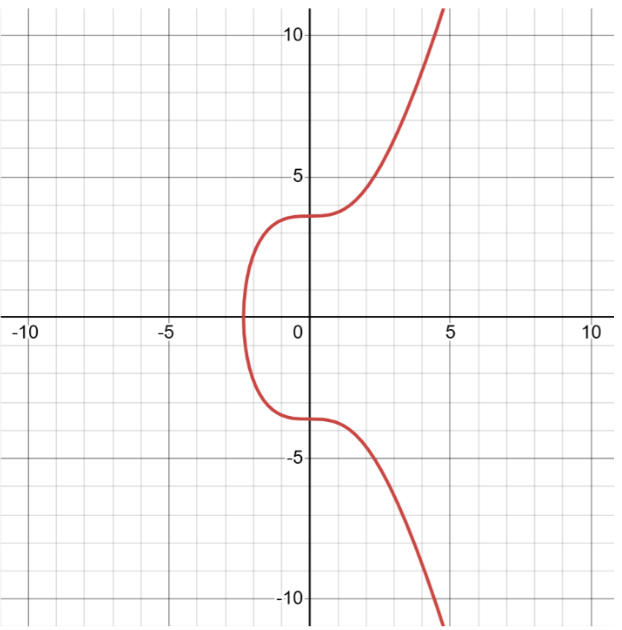
Since 1985, ECC algorithms have been favored over RSA’s due to their greater complexity and faster encryption, with ECC’s capabilities proving to be up to ten times faster. ECC algorithms use an elliptical curve of the form y2=x3+ax+b over a finite field of not necessarily real numbers (Fp). A field Fp includes numbers from 0 to p-1, where p is prime.
Figure 1: The elliptic curve
Figure 2: The elliptic curve over F11
For the purpose of illustration, let us take the elliptical equation y2=x3+13 and a field F11. Figure 1 shows the elliptical curve while figure 2 shows the solutions to y2 =x3+13 (mod 11). The order of the curve is the number of points, including the arbitrary one at infinity, that satisfy the equation over a specific field (12 points in figure 2). The private key is some value k between 1 and the order of the curve. The public key can be calculated by taking one of the points, called the generator point (G), and multiplying it by k (kG). This system then encrypts the information using the public key (kG) and can only be decrypted by those who know k.
For example, let us take a value of k=5 and the point (9,4) as the generator point (G). When we multiply 5G, we are given the point (9,7), which would be the public key. However, just given the 2 points, it is extremely difficult to find the value of k.
ECC algorithms have long been considered nearly unbreakable due to the elliptic curve discrete logarithm problem , or the ‘ECDLP’. The ECDLP is a mathematical problem that asks: Given two points (P, Q) on an elliptic curve, what operation or algorithms could be used to find the specific constant k such that k multiplied by P equals Q?
The key issue in solving this lies in point multiplication, where a tangent line is drawn to a point on the elliptical curve (P) as part of the operation. Wherever that line intersects the elliptical curve again is point Q’. When Q’ is reflected across the x-axis of the equation (not necessarily y=0), the result is Q which equates to 2P. This process is continued until KP is reached. While it is straightforward to find Q given P and K, it is nearly impossible to find K given P and Q because there is currently no known inverse operation to undo, or solve for the coefficient in point multiplication.
Ultimately, RSA and ECC algorithms are what encrypt all of digital data and communication. They keep everything secure from classified government data to something as simple as a text message. Encryption allows private information to remain private and large national or international systems to continue functioning. It acts as a barrier against bad actors looking to hack or exploit this private data. Without encryption, there would be no safeguard for any data. Imagine if everything you ever put on a device, whether private photos or bank information, suddenly became public. You would no longer be able to trust digital privacy and safety if these algorithms were to fail.
To understand the momentous advancements in quantum computing, it is important to take a step back and examine the field’s origins as well as how quantum mechanics have evolved over time. Written in 1900 by Max Planck, the ‘Quantum Hypothesis’ explored the idea that rather than the conventionally accepted continuously flowing energy, energy was actually emitted in non-connected packets called quanta. His work laid the foundation for an exploration into what has become the field of quantum mechanics. Both Einstein’s 1905 work on the Photoelectric effect and Niels Bohr’s 1913 work on the atom further supported this claim by suggesting quantum leaps and the particle-like behaviors of a photon.
In 1927, Heisenberg formulated his uncertainty principle, which stated that it is impossible to simultaneously know the position and the speed of a particle with perfect accuracy. Einstein, Podolsky, and Rosen each published various works in 1935, questioning quantum mechanics via entanglement, or the influence of the state of one particle on the state of another simultaneously over great distances. Recent works have shown that entanglement can connect particles even between a satellite and the Earth. John Bell later proved entanglement by conducting experiments in search of violations of the Bell inequalities in 1964.
In 1926 Schrodinger created a system of wave equations that accurately predicted the energy levels of electrons in atoms. Neumann built on this alongside Hilbert’s work to create the mathematical framework for quantum mechanics, formalizing quantum states and creating a method to understand the behavior of quantum systems. In the 1940s Feynman, Schwinger, and Tomonaga developed their theory of Quantum Electrodynamics (QED) which described the interactions of light and matter.
The 1980 conference of physicists, mathematicians, and computer scientists was the turning point from quantum theories into quantum applications, laying the foundation for all of quantum computing. While the first working laser was created in the 1950s, quantum mechanics was not explored much further untilPaul Benioff’s 1980 description of a quantum computer,the first step towards quantum computing.
Quantum Computing: What is it and how does it work?
Superposition: The state of being in multiple states or places at once. Superposition is mostly commonly seen with overlaps of waves, but at a quantum level can be understood as a particle being in both state 1 and state 0 at the same time. However, when measured these particles must settle at either state 1 or state 0. The most commonly known analogy to explain this is the Schrodinger’s cat analogy: If you were to put a cat inside of a box with a substance that has an equal chance of killing or not killing the cat within an hour, then after one hour you could say that the cat is both dead and alive until you measure it, at which point it must be either dead or alive.
Entanglement: A phenomenon by which two particles become connected such that the fate of one affects the other, irrespective of the distance between the two. Prior to any measurement, two particles will always be in a state of superposition, meaning that the particles can be in both state 0 and state 1 at the same time. However, when measured, the state of one particle will directly affect the state of the other. This principle was proven by John Bell via the Bell inequalities.
Quantum computing allows storage of more information and more efficient processes, creating opportunities to infinitely increase the rate at which many modern machines work. While they face setbacks in these developing stages, they make it possible to perform multiple simultaneous operations rather than being limited by the tunnel effect that limits most modern machines to straightforward operations.
Quantum systems use qubits as the fundamental unit of information transfer instead of the traditional bit. Qubits allow for the superposition of ones and zeros making it possible for quantum computers with very few qubits to perform billions of operations per second, over a million times faster than the best computers on the market today. In addition, the entanglement of multiple qubits means that information capacity grows exponentially rather than linearly.
Compare and Contrast: Quantum Computers vs. Traditional Computers
The Quantum Threat to Cryptography
While current computers may not be strong enough to carry out an attack on cryptography, the emerging field of quantum computing poses a risk to all of modern encryption.
Is the threat just theoretical?
Even as an emerging technology, quantum computing poses a very real threat to cryptography. While many people would be more than willing to write it off as a threat of the future, that future may be closer than you believe. Quantum computing has shown its strength through many algorithms which could potentially result in the compromisation of sensitive data.
The most prominent algorithm in regards to cryptography is Shor’s ‘Factoring Algorithm’ from 1994. Specifically, Shor’s Factoring Algorithm (SFA) is a major threat to RSA cryptography systems. As I mentioned earlier, RSA systems rely on the creation of large numbers as the product of two prime numbers, basing security over the inability to efficiently factor those numbers.
According to Thorsten Kleinjung of the University of Bonn, it would take around two years to factor N = 135066410865995223349603216278805969938881475605667027524485 14385152651060485953383394028715057190944179820728216447155137368041970396419174 304649658927425623934102086438320211037295872576235850964311056407350150818751067 6594629205563685529 475213500852879416377328533906109750544334999811150056977236 890927563 with under 2 GB of memory.
Shor’s Algorithm could exponentially speed this up by working as follows:
Start with the large number (N) and a guess (g). If g is a factor of N or shares a factor with N then we have already found the factors.
If g is foreign to N, then we use the property that for any 2 prime numbers (a,b) there exists one power (n) and one multiple (m) such that an= mb+1. Applying this here we get gn= mN + 1. We can further rewrite this as (gn/2-1)(gn/2+1)= mN. We can now change our objective from searching for values of g to searching for values of n.
This is where quantum computing makes a vital difference. By testing many possible values of n, the quantum system starts in a superposition of states. After attempting to solve for n using the above equation (mod N), we begin to take advantage of the fact that if gx mod(N) = r then gx+pmod(N) =r if p is the period of the equation ( gp=1). When we utilize superposition, we test to see what values of x produce the same remainder, as the distance between those x values will be the period.
We can derive from this the frequency (f=1/p)
Here we can apply a Quantum Fourier Transform (similar to a classical Fourier Transform): When we absorb all the constructive and destructive interference of the superposition, 1/p is the remaining frequency.
Now that we have a candidate for p, we calculate our best guess for gp and iterate as necessary to correct quantum error.
Aside from algorithms, many corporations have made recent advancements towards building quantum computers as well. As recently as June 2025, Nord Quantique, a Canadian startup, announced their breakthrough ‘bosonic qubit’ which has built in error correction. This creates the potential to produce successful, encryption breaking 1000-qubit machines by 2031, far more efficient than the previously estimated 1 million-qubits.
The ‘Harvest Now, Decrypt Later’ Tactic
Another major reason why quantum mechanics is a threat to cryptography includes the ‘harvest now, decrypt later’ (HNDL) tactic. As the predicted Q-day nears (2035), threatening actors have begun to collect and store encrypted data, with the goal of decrypting it in the future with sufficiently powerful quantum machines. The attackers may not be able to decrypt the data, but they can intercept communications to steal encrypted data.
While it is easy to dismiss these attacks as something that could only be effective on nation-state levels, this assumption only feeds a false sense of security. For bad actors, corporate information could enable them to threaten economic chaos and large-scale disruptions. In fact, experts believe that these attacks have become increasingly focused on businesses as they hold the people’s data and the power to create mass economic instability.
Matthew Scholl, Chief of the Computer Science at NIST described the threat by saying,
“Imagine I send you a message that’s top secret, and I’ve encrypted it using this type of encryption, and that message is going to need to stay top secret for the next 20 years. We’re betting that an adversary a) hasn’t captured that message somehow as we sent it over the internet, b) hasn’t stored that message, and c) between today and 20 years from now will not have developed a quantum machine that could break it. This is what’s called the store-and-break threat.”
The most concerning aspect of these HNDL attacks is that it is nearly impossible to know when your data has been stolen, until it comes into effect with the rise of quantum computing. By then, the damage will be irreversible. While not all data will be of high value over a decade from now, attackers are threatening specific data that they believe will hold long-term value.
Over the past 10 years, incidents have arisen that resemble HNDL attacks:
In 2016, Canadian internet traffic to South Korea, was being rerouted through China
In 2020, data from many large online platforms was rerouted through Russia
A study by HP’s Wolf Security discovered that one third of the cyber attacks conducted by nation-states between 2017 and 2020 were aimed at businesses
Post Quantum Cryptography ( PQC)
However, companies and nations have already begun to look into ways to protect data from quantum attacks. Post-Quantum encryption algorithms focus on encrypting data in a way that will be equally difficult for quantum machines to break as it is for the classic computer.
The Deputy Secretary of US Commerce, Don Graves said,
“The advancement of quantum computing plays an essential role in reaffirming America’s status as a global technological powerhouse and driving the future of our economic security. Commerce bureaus are doing their part to ensure U.S. competitiveness in quantum, including the National Institute of Standards and Technology, which is at the forefront of this whole-of-government effort. NIST is providing invaluable expertise to develop innovative solutions to our quantum challenges, including security measures like post-quantum cryptography that organizations can start to implement to secure our post-quantum future. As this decade-long endeavor continues, we look forward to continuing Commerce’s legacy of leadership in this vital space.”
One example of a potentially powerful PQC algorithm is CRYSTALS-Kyber, which the NIST declared the best for general encryption in 2022. They added HQC to their list of PQC algorithms in 2024, giving us a grand total of five algorithms that have met the standard.
The NIST has named their standards for PQCs and urges people to work towards incorporating them now, because the full shift to PQCs may take as long as developing those quantum computers will take. Their key goals in this endeavor are to not only find algorithms that are resistant to quantum computing, but to diversify the types of mathematics involved to mitigate the risk of compromised data. They search for algorithms that are both able to be easily implemented and improved so that they maintain a ‘crypto-agility’.
Many companies support PQCs and believe that they will safeguard the future of cryptography. Whitfield Diffie, cryptography expert, explains that
“One of the main reasons for delayed implementation is uncertainty about what exactly needs to be implemented. Now that NIST has announced the exact standards, organizations are motivated to move forward with confidence.”
Companies such as Google, Microsoft, IBM, and AWS are actively working to develop better resistance to quantum threats, helping to build some of the most powerful PQC algorithms. IBM is currently advocating for a Cryptography Bill of Materials (CBOM), a new standard to keep tabs on cryptographic assets and introduce more oversight into the system. Microsoft has become one of the founding members of the PQC Coalition, a group whose mission is to step forward and provide valuable outreach alongside education to support the shift towards PQC as the primary form of encryption.
While PQCs could be a valuable resource against quantum threats, there are still setbacks that make people question the validity of the whole effort. The Supersingular Isogeny Key Exchange (SIKE) algorithm, one of the NIST finalists for the PQC standard, failed due to a successful attack by a classical computer, rendering many of the fundamental mathematical assumptions false. In addition, many of these algorithms suffer due to a lack of extensive testing and uncertainty regarding how much quantum machines will actually be able to accomplish.
Conclusion
While the timeline of PQC development might be uncertain, it is imperative that we work now. Quantum computing is no longer a threat looming in the future, but a present reality with significant impacts.It is imperative that we begin shifting towards these safer systems as a community. We cannot wait until the threat has come, we need to prepare now.
Rob Joyce, the Director of the National Security Administration’s Cybersecurity has stated that,
“The transition to a secured quantum computing era is a long-term intensive community effort that will require extensive collaboration between government and industry. The key is to be on this journey today and not wait until the last minute.”
Above all, it is crucial to recognize the threat and take action. Educating the people is the first step towards group action. Let awareness be our first line of defense.
Science, Technology, Engineering, and Mathematics. STEM. These cornerstones of development drive 69% of America’s GDP, fuel two-thirds of national jobs, and bring in 2.3 trillion dollars of tax revenue according to IEEE USA 2020. One critical engine lies within these numbers: education.
Strong STEM programs like the Every Student Succeeds Act powered generations of American workforce and provided the U.S. with an edge in global competition. As the Fiscal Year 2026 “skinny budget” jeopardizes funding at the Department of Education, it becomes crucial to protect funding that supports national progress (Haring 2025).
Graph showing funding cuts at the National Science Foundation through May 21, 2025 / New York Times
The Problem:
As the United States continues to cut STEM from its federal budget, America faces barriers in empowering underserved populations and boosting national advancements. The FY 2026 federal budget reflects how national priorities are shifting away from education: In 2025: the government cut nearly five billion dollars from the National Science Foundation, which aims to increase STEM access (Acenet 2025). Additionally, 773 million dollars in research grants were cut at the NSF (Miller 2025).
But why do education cuts hit STEM the most? Science and technology require hands-on labs, updated equipment, and specialized teachers. These factors demand substantial investment. If funding evaporates, so does support for minorities in STEM; programs serving Black students and those with autism have already been cut (Miller 2025). Educational budget cuts harm minorities considerably, as they often rely the most on federal funding. Other underprivileged populations, including women, are also on the chopping block.
Moreover, cuts to the support for academics interfere with national interests. STEM increases America’s global competitiveness and supports domestic economies as it drives technological innovations that set America as the leader in tech. When STEM declines federally, talented innovators may relocate to another country for better funding. Without STEM education funding, America risks deepening existing inequities in education and a fall from grace in the global race for innovation.
President Obama signing the Every Student Succeeds Act into effect on Dec. 10, 2015 / USA Today
Diving Into STEM Programs:
One of the most effective federal education programs is the Every Student Succeeds Act (ESSA), which upholds education for high-need students (Office for Civil Rights 2025). Specifically, Title IV Part A of the act is a Student Support and Academic Enrichment (SSAE) program that funds state and local agencies. SSAE grants provide an estimated $1.38 billion of funding to improve learning conditions and boost technology use (OESE 2025).
Despite the program’s benefits, it faces severe challenges in funding. Although the program was authorized in Congress to receive up to $1.6 billion, it only reached $1.38 billion in 2024 (Sutton 2020). Falling short of the authorized amount means less funding for each district. Even worse, the federal budget for FY 2026 dissolves the program through its consolidation with seventeen other grants. The grants will be merged into one K-12 Simplified Funding initiative, eliminating $4.5 billion of funding (Lieberman & Stone, 2025). The removal of SSAE grants means a lack of federal enforcement on STEM-related spending. Wealthier districts may still support STEM initiatives through other channels, but low-income districts relying on federal funds are left further behind.
Students using school Chromebooks at Andrew Lewis Middle School / Virginia Department of Education
Even when SSAE was active, Section 4109 of ESSA restricted funds for purchasing devices, software, or planning digital learning activities to 15% (“Title IV, Part A Statute,” 2025). In America, 92% of jobs require digital skills, and pay increases by 45% for workers who have them (National Skills Coalition 2023).The 15% cap is a deadly trap for low-income students and limits their career opportunities and economic mobility. Issues with SSAE perpetuate a cycle of inequity, entrenching students further in poverty and weakening America’s future workforce.
The Solution:
Addressing the decline in SSAE programming requires a two-pronged legislative solution:
Revive SSAE grant and raise to authorized 1.6 billion level.
Lift the 15% cap on tech spending
Together, these actions allow for more funding allocation to STEM. More funding directly counters cuts in STEM spending. The steps protect specialized programs funded by SSAE and close the education wealth gap. Districts will receive adequate support and decide how to prioritize STEM. Low-income districts may choose to upgrade student Chromebooks, while wealthier ones may choose to hire more STEM teachers. All states can prepare the future workforce well and maintain America’s global competitive edge.
The status quo of underfunded classrooms, outdated technology, and limited opportunity leaves millions of students behind and weakens national economic foundations. The education of today is the workforce of tomorrow. We must not trade long-term growth for short-term cuts – the time to act is now.
National Skills Coalition. (2023, February 6). New Report: 92% of Jobs Require Digital Skills, One-Third of Workers Have Low or No Digital Skills Due to Historic Underinvestment, Structural Inequities. https://nationalskillscoalition.org/news/press-releases/new- report-92-of-jobs-require-digital-skills-one-third-of-workers-have-low-or-no-digital-skills-due-to-historic-underinvestment-structural-inequities/.
The United States is currently facing its greatest measles surge in almost thirty years, with 1200+ Americans testing positive for the disease so far this year. While some experts blame international travel, others believe vaccine hesitancy is the primary reason for this surge. However, to stay protected and stop the spread, we must first understand the science behind measles and what it takes to stay protected.
What is measles?
First documented in the early 12th century, measles ran rampant for centuries with hundreds of millions infected every year. An endemic disease, measles perpetually circulated and would flare up into cyclical outbreaks every 2-3 years. According to the National Library of Medicine,
“Measles […] caused more than 6 million deaths globally each year.”
To put this tremendous number into perspective, 6 million annual deaths is comparable to the population of the entire Dallas-Fort Worth metroplex getting wiped out every single year. Children under 15 were most vulnerable, and it was almost expectation that kids would experience the routine fever, cough, and blotchy rash before reaching adulthood.
How the Virus Spreads
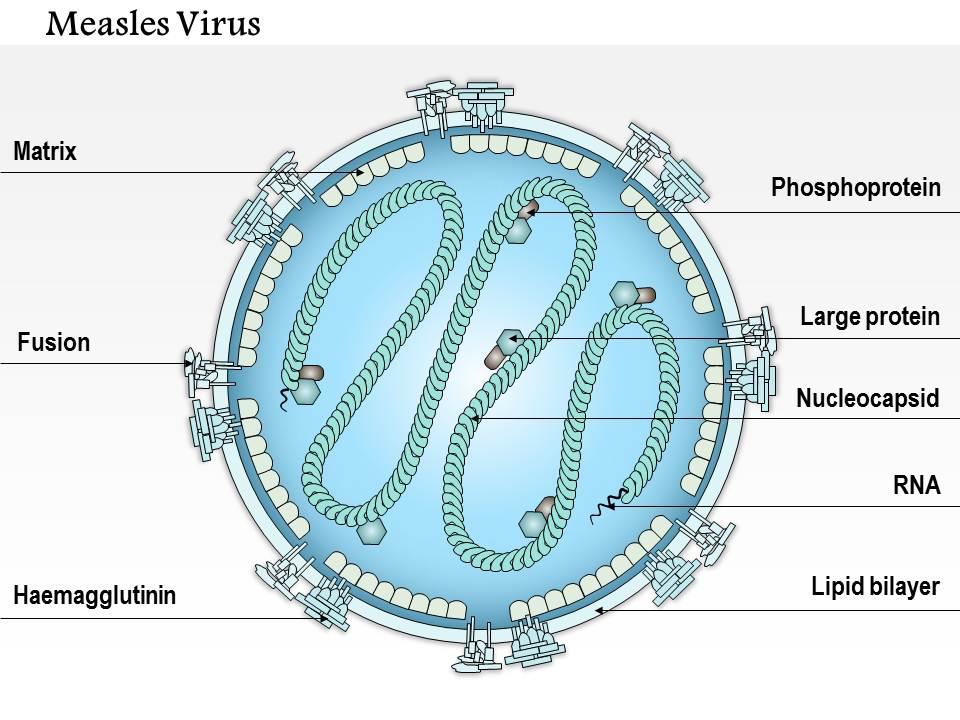
Often confused with smallpox and chickenpox, measles is an airborne pathogen that attacks cells in your respiratory tract as you breathe in the disease. The virus itself is composed of a single negative-sense RNA strand that is unreadable to human cells. However, measles carries a special enzyme that converts the previously unreadable virus into a positive-sense RNA, allowing proteins in our body to replicate and spread the disease.
The speed at which measles hijacks cells prevents the immune system from responding immediately, and groups measles together with other fast, aggressive negative-sense RNA viruses including influenza, rabies, and ebola.
Furthermore, measles is categorized as an enveloped virus. This means a lipid membrane envelops each cell and allows for easier access to infect healthy host cells. However, the measles virus exhibits one key vulnerability: soap and detergent can easily break down the fatty envelope, destroying its ability to infect.
Washing your hands and clothes significantly reduces the risk of virus from ever reaching your system, but remember, because measles is primarily airborne, sanitation does not completely prevent transmission.
How does the vaccine counteract the virus?
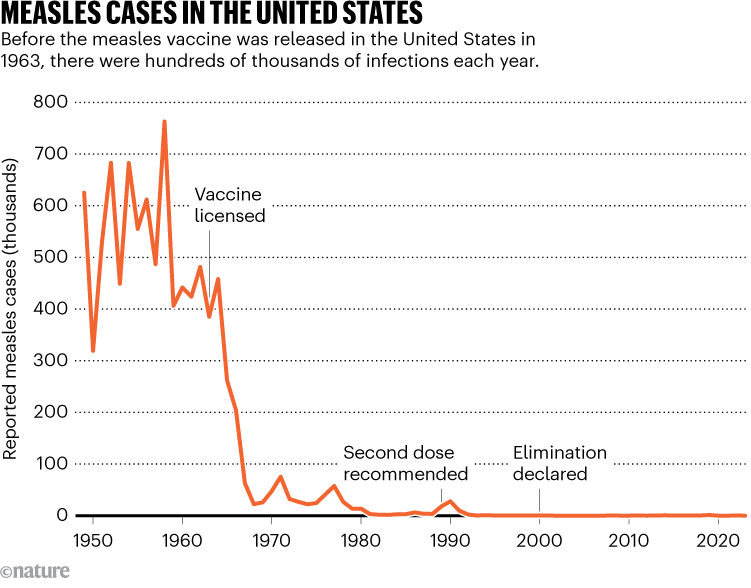
Though measles took the world by storm for centuries, in 1963 Dr. John Enders and his team developed the first measles vaccine. Often coined ‘the father of modern vaccines,’ Enders formulated the Edmonston-B strain, a killed virus vaccine.
The vaccine took the live measles virus and deactivated the disease’s genetic RNA so it could not reproduce, while preserving the outer proteins of the cell so the immune system could produce antibodies to combat the virus.
Despite its revolutionary effects, the Edmonston-B vaccination also presented major drawbacks. Immunity wore off over time, and people even developed ‘atypical measles,’ a form of measles with heightened symptoms including higher fevers, pneumonitis, and pain not typical of regular measles.
Therefore, 5 years after the initial Edmonston-B strain was drafted, in 1968 microbiologist Dr. Maurice Hilleman developed the Edmonston-Enders strain. This vaccine used an attenuated form of the 1963 Edmonston-B strain, by allowing the virus to grow in chick embryos, first. As the measles virus mutated to survive in chick cells, it slowly lost the ability to cause full-blown disease in human cells.
The final product? A live virus that infected your cells enough to train your immune system, but not enough to cause the atypical disease and heightened side-effects of the 1963 Edmonston-B strain.
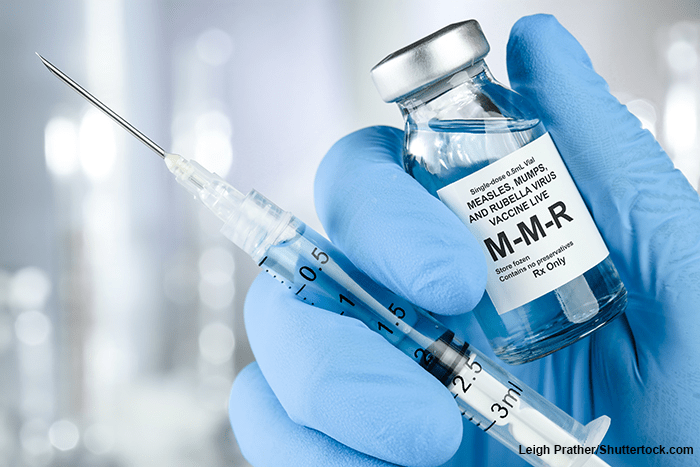
A few years later, the MMR vaccine was created, combining defense against measles, mumps, and rubella in one shot. Two doses produced a 97% chance of protection against the diseases. Today, it is still recommended that children take two doses of the MMR vaccine; one dose as an infant, and another between 4 and 6 years old.
So why is there suddenly a spike in US measles cases?
As I write this article, there have been 1227 confirmed measles cases so far this year, with the biggest outbreak taking place in West Texas. There, 97 people have contracted the disease with two unvaccinated children dying, the first measles-related deaths in the US since 2015.
Overall, this spike in cases is accredited to decreased vaccination rates since the COVID-19 pandemic. According to John Hopkins University,
“Out of 2,066 studied [U.S.] counties, [in] 1,614 counties, 78%, reported drops in vaccinations and the average county-level vaccination rate fell 93.92% pre-pandemic to 91.26% post-pandemic-an average decline of 2.67%, moving further away from the 95% herd immunity threshold to predict or limit the spread of measles.”
During the COVID-19 pandemic, public health staff were pulled from routine duties like immunizations to focus on COVID testing, contact tracing, and hospital coordination. According to UNICEF USA,
“As access to health services and immunization outreach were curtailed [due to the pandemic], the number of children not receiving even their very first vaccinations increased in all regions. As compared with 2019, […] 3 million more children missed their first measles dose.”
Centers for Disease Control and Prevention / New York Times
Going forward, efforts to close the immunity gap will depend on identifying under-vaccinated populations and ensuring routine and follow-up vaccinations. As more people understand measles transmission and how the vaccine works, we will be better equipped to respond, and the risk of future outbreaks can be reduced significantly.
Gastañaduy, P. A., Goodson, J. L., Panagiotakopoulos, L., Rota, P. A., Orenstein, W. A., & Patel, M. (2021, September 30). Measles in the 21st century: Progress toward achieving and sustaining elimination. The Journal of infectious diseases. https://pmc.ncbi.nlm.nih.gov/articles/PMC8482021/
Sabsay, K. R., & Te Velthuis, A. J. W. (2023, December 20). Negative and ambisense RNA virus ribonucleocapsids: More than protective armor. Microbiology and molecular biology reviews : MMBR. https://pmc.ncbi.nlm.nih.gov/articles/PMC10732063/










 Youth Stemline