
By Katherine Mao
~6 minutes
If you haven’t heard already, NASA’s Artemis II mission is a historic 10-day crewed spaceflight that launched on April 1, 2026, and traveled around the moon. This mission marks the first time humans have traveled beyond low Earth orbit since 1972, and carried four astronauts: Reid Wiseman, Victor Glover, Christina Koch, and Jeremy Hansen aboard the Orion spacecraft. Through Artemis II, NASA set a new record for the greatest distance humans have ever traveled from Earth.
What was the point of the launch?
The launch of Artemis II was vital to proving that the Orion spacecraft and its life support, navigation, and communication systems can safely support astronauts during a 10-day mission around the moon and back. During the flight, astronauts took control of the Orion capsule to test its manual flying capabilities and participated in biological studies examining radiation effects on human cells. They surveyed the lunar surface, taking over 7,000 photos, including lunar craters, the far side of the Moon, and a solar eclipse where Earth blocked the Sun. Artemis II is a follow-up to Artemis I, an uncrewed test flight that launched in November 2022, and is the precursor to future Artemis missions with the goal of landing on the moon.
Meet the Astronauts
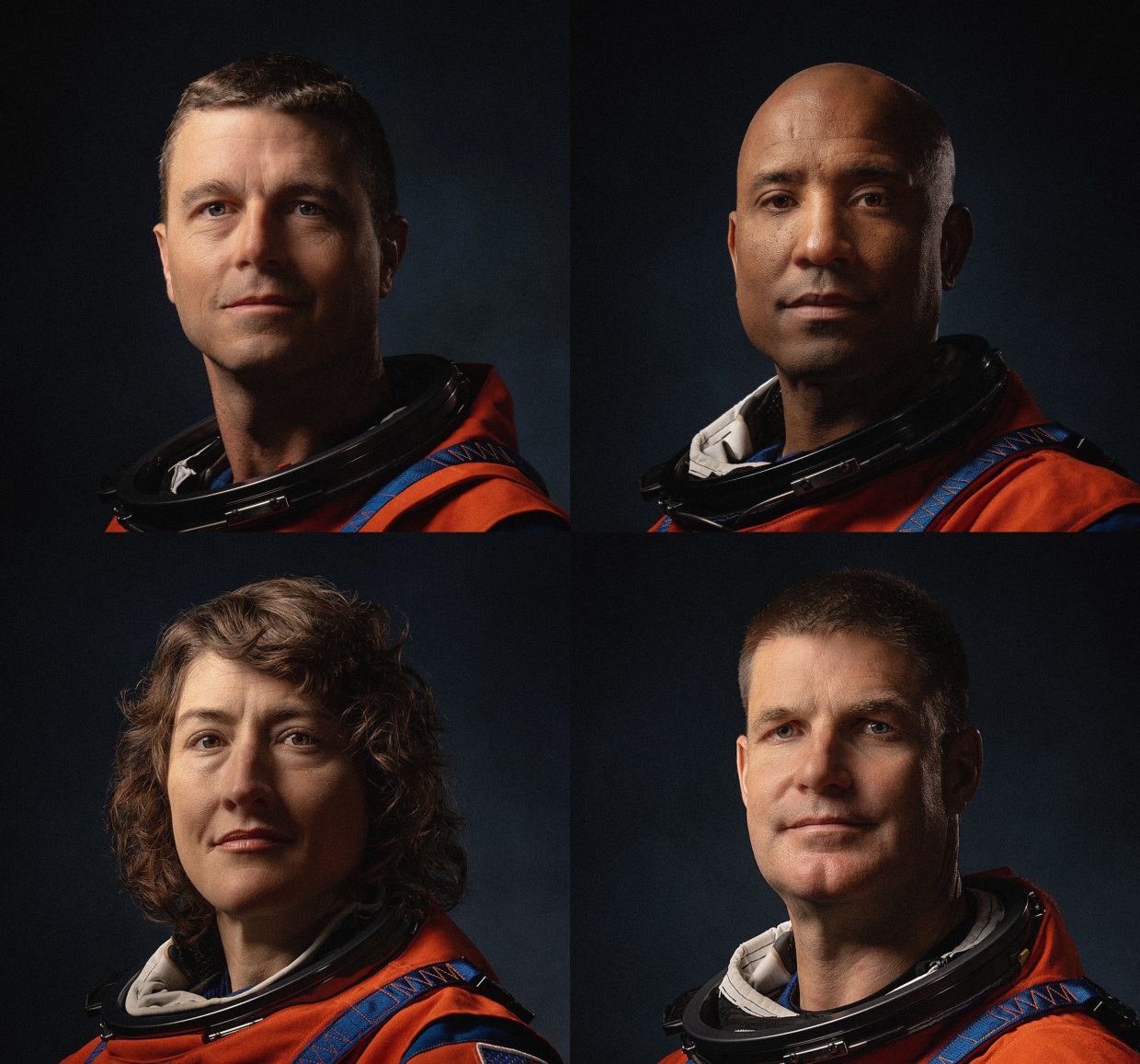
The Artemis II crew is composed of 4 astronauts: 3 Americans and 1 Canadian. Reid Wiseman, 50, is the captain of Artemis II. Formerly a Navy pilot, Mr. Wiseman went to the International Space Station in 2014 and served as NASA’s chief of the astronaut office. Victor Glover, 49, is the pilot for the Artemis II flight. Also a former Navy pilot, he served as pilot for a SpaceX flight to the International Space Station, and is now the first Black person to travel around the moon. Christina Koch, 47, spent nearly a year aboard the International Space Station, took part in the first all-female spacewalk, and is now the first woman to fly around the moon. Jeremy Hansen, 50, is a Canadian astronaut who traveled to space for the first time aboard Artemis II and became the first non-American to go around the moon.
The Space Launch System:
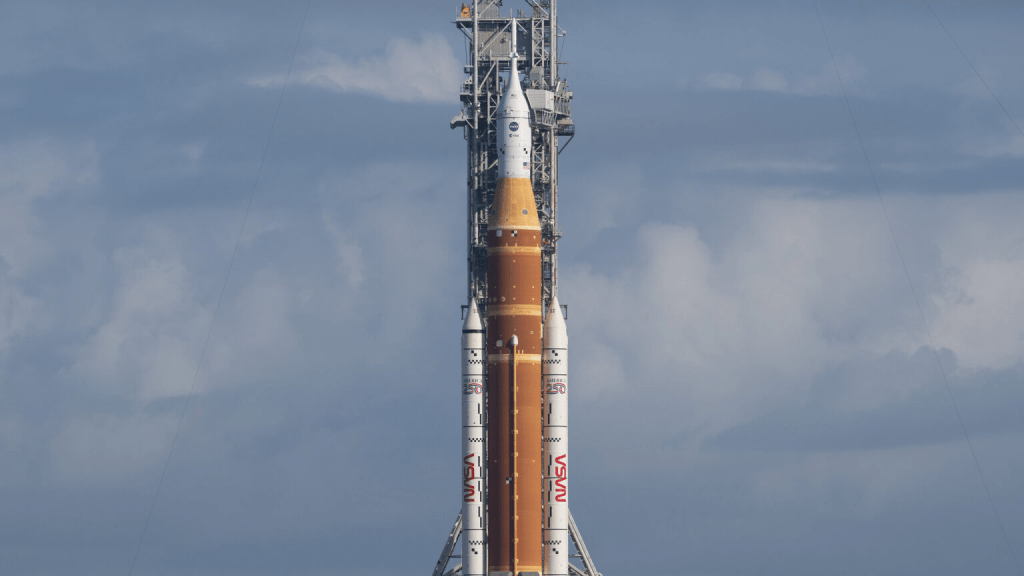
The rocket that launched Orion into space(the SLS) is 322 feet tall and weighs 5.75 million pounds when filled with fuel. Though capable of sending nearly 60,000 pounds to the moon, the design is not cutting-edge. The rocket is mostly composed of technologies from space shuttles developed in the 1970s. Partially built by Lockheed Martin and the European Space Agency, Orion is the spacecraft the astronauts will live in for their trip to the moon and back.
Mission Day 1:
Artemis II blasted off on Wednesday, April 1, at 6:35 p.m. Eastern at NASA’s Kennedy Space Center in Florida. Eight minutes after liftoff, the crew was in space and ready to begin their flight to the moon. Known as 39B, the launch site was originally built for rockets used during the Apollo moon missions.
Mission Day 2:
On the second day, the Orion spacecraft performed its translunar injection burn. The burn breaks the spacecraft out of Earth’s orbit and sends it on a trajectory towards the moon. The flight course was designed to return in a loop around the moon and shoot back towards Earth without the need for another large engine burn
Mission Day 3:
On their way to the moon, the third day will be spent practicing the tasks the crew needs to perform during the 3-hour lunar flyby in zero gravity. The astronauts also prepared for a minor correction burn to keep the trajectory on course and performed some safety demonstrations, such as CPR procedures.
Mission Day 4:
On Day 4, Orion will perform another small correction burn. The rest of the day was spent running standard operations like communications with mission control and taking pictures of both Earth and the moon.
Mission Day 5:
Halfway through the mission, Artemis II entered lunar space(when the moon’s gravitational pull becomes stronger than Earth’s) and began preparing for a lunar flyby the next day. The astronauts will spend the first half of the day practicing putting on their spacesuits, which are worn during launch and reentry in case of cabin depressurization. Before the day ended, Orion conducted the final correction burn.
Mission Day 6:
The astronauts have set the record for humans to fly the farthest from Earth, a distance of 248,655 miles, set by the Apollo 13 mission in 1970. That occurred at 1:56 p.m. Eastern time on Monday.
They went a bit farther as they went around the far side of the moon, ending up 252,756 miles from Earth at 7:02 p.m., before looping back toward the planet.
On day 6, Artemis II reached the moon with a closest approach between 4000 and 6000 miles above the moon’s surface. The astronauts then spent around 3 hours making detailed scientific observations about never-before-seen parts of the moon, then emerged from a planned 40 minute communications blackout and took pictures of a solar eclipse. At 1:56 p.m Eastern time, the astronauts set the record for humans to fly the farthest from Earth at a distance of 248,655 miles, then broke their own record at 7:02 pm, 252,756 miles away from Earth.
Mission Day 7:
Orion exited lunar space on the morning of Day 7, and spent part of the day relaying information on everything from Orion’s performance to the astronauts’ physical experiences to scientists on Earth. The astronauts briefly contacted their colleagues aboard the International Space Station before initiating the first of 3 small correction burns to keep the trajectory on the journey back
Mission Day 8:
Day 8 was relatively quiet, with astronauts performing an exercise to demonstrate Orion’s maneuverability with both six and three degrees of freedom altitude controls
Mission Day 9:
The astronauts spend most of Day 9 preparing for reentry, including a small trajectory correction burn, several technology demonstrations, and trying on orthostatic intolerance garments, which help counteract effects on the body after returning from a microgravity environment.
Mission Day 10:
Orion performed its final correction burn on the way back to Earth. With the astronauts strapped in and suited up, Orion’s heat shield endured temperatures of 3,000 degrees Fahrenheit caused by the friction of reentry through Earth’s atmosphere. Three parachutes were deployed during the final descent, slowing Orion’s fall to 17mph as it hit the water off the coast of San Francisco, where a U.S Navy ship collected the spacecraft and astronauts onboard. Despite concerns about a design flaw in Orion’s heat shield, the astronauts used a modified re-entry angle that exposed them to heat for a shorter period of time and completed a successful journey.
 Youth Stemline
Leave a comment