
By Wanni Zhu
~10 minutes
Though seemingly unrelated, cow farts, climate change, and coffee have unexpected connections. For starters, cow farts produce methane – and lots of it. In fact, a single cow can produce a massive amount of methane – usually 250-500 liters per day. Now, think of how many cows we have here on Earth (I’ll give you a hint: it’s 1.5 billion). And while CO2 gets all the attention when it comes to climate change, methane has twice the effect on a per-unit basis. But we can’t just blame climate change on the cows: other livestock also contribute to the greenhouse gases that warm our planet. Well, it’s a good thing that climate change is a widely known issue around the world, right? We know that these gases will cause the heating of the Earth, resulting in ice melting and oceans rising. However, while these problems may take years to manifest, other negative effects won’t be nearly as delayed. One impending problem is the devastation that this heat will bring to both weather patterns and crops. Warmer temperatures cause more evaporation, meaning more water in the atmosphere and more storms. Many plants, coffee included, can’t grow in these changing and unstable climates. And while scientists are doing all that they can to fix these problems, individual citizens are unlikely to act unless they understand the full extent of what is going on.
What Is Climate Change?
Climate change is a universal issue backed by scientific evidence and recognized by most of the public. The Earth is warming, and rapidly at that. According to NASA, the average global temperature on Earth has increased by at least 1.1° Celsius (1.9° Fahrenheit) since 1880, and the majority of the warming has occurred since 1975, at a rate of roughly 0.15 to 0.20°C per decade. It may not seem like much, but the environment is not accustomed to adapting quickly, and if this goes on, the results could be devastating.
Greenhouse Gases
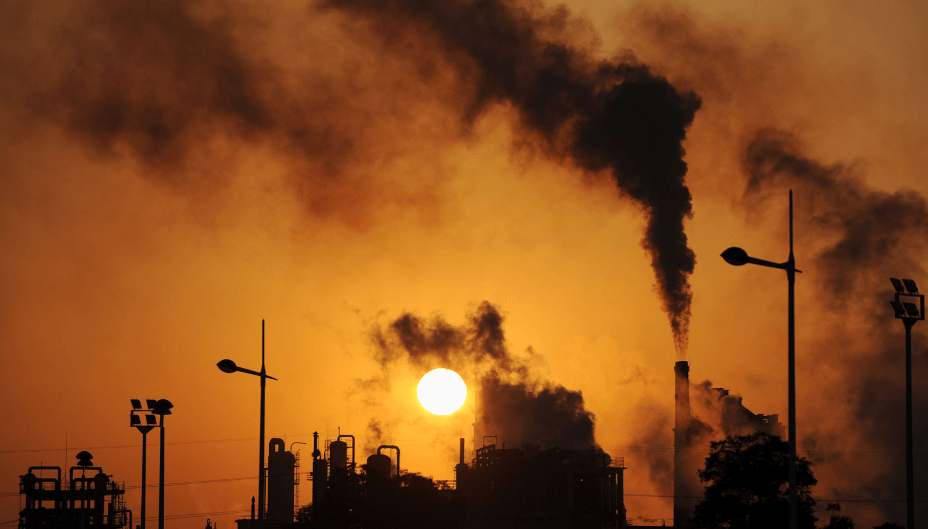
Greenhouse gases – let’s call them GHGs for short – are essential for our survival, but could very well be the key to our doom. The most common GHGs include water vapor, carbon dioxide, methane, and nitrous oxide. They absorb heat from the Sun and trap the warmth, preventing it from escaping into space. It’s the reason why life on Earth is possible: just like their name, these gases basically function as the glass in a greenhouse, raising the temperature so that we can thrive.
But greenhouses can also get too hot. The more gases in the atmosphere, the more effective the heat-trapping process is. This excess heat-trapping is precisely what has been occurring over the past few decades, especially since the Industrial Revolution

So, what is causing the surplus of GHGs warming our Earth?
One cause is transportation, which accounts for 14% of GHGs. Cars, buses, trains, airplanes – most of them use gasoline, diesel, or jet fuel to function. Burning these materials releases many harmful gases, the most relevant of them carbon dioxide, methane, or nitrous oxide. In some countries, like the US, transportation may be the leading cause of GHG emissions. However, there are many ways to combat these effects. You’ve most likely heard that walking and public transportation will reduce emissions, and they can! Even electric vehicles will help if you’re using clean electricity. Additionally, biofuels and hydrogen can replace fossil fuels in aviation and shipping.
Another significant cause is electricity and heat production, which accounts for a fourth of total GHGs alone. These processes still rely heavily on burning fossil fuels, such as coal, oil, and natural gas. Now that more and more homes and buildings are being constructed, there is a higher electricity demand than before. As a result, more fuel is burned – unless we switch to cleaner sources such as wind, solar, or hydro power. Transmission losses (electricity lost as it travels over power lines) require extra generation, further increasing emissions. Therefore, improving efficiency in buildings and the power grid could reduce the demand and associated GHGs.
Buildings can cause around 6-7% of GHG emissions. The production of materials like cement, steel, and aluminum all release gases such as carbon dioxide, and use the process of burning fossil fuels. According to the BBC, cement production contributes 8% of global GHGs. Not to mention, transporting those materials and the use of heavy machinery and equipment while building them also adds to emissions.
These are all large and well-known reasons that contribute to GHG emissions, so let’s take a look at something lesser known. Agriculture.
What About Cows?
Let’s be honest: your answer to the question about major sources of GHGs was probably not cows. But, in truth, these adorable creatures that we raise account for around 14.5 percent of greenhouse gases that warm our planet. Of course, it’s not cows alone: other livestock, including chickens, horses, pigs, and more, are all included in that percentage. We’re looking at cows specifically because a breakthrough with them could lead to resulting solutions with the other animals, and cows are large and easy to work with.
Cows make methane in two ways: through their digestive process and their waste. They are part of a group of animals called ruminants, with four distinct stomach chambers. The first is called the rumen, a home for microorganisms that break down the starch and sugar from plants. The next chamber is called the reticulum, where hard-to-digest plant materials are stored. The next chamber is called the omasum, which mechanically breaks the food down further. Finally, the last chamber is called the abomasum, which absorbs the nutrients from the food.
In the rumen, a process called enteric fermentation takes place. This is where the previously stated microorganisms and bacteria break down complex carbohydrates and turn them into sugars. The resulting products include volatile fatty acids (used as a major energy source for the cows), as well as GHGs such as carbon dioxide and methane. The gases are released from the cows either as burps or farts.
What Are We Doing About It?

Scientists are attempting to find the most effective solution to this large problem. There have been many different approaches to this issue, some of which are below.
One method that has been used is seaweed in the cow feed. A 2018 study focused on mixing a seaweed species called Asparagopsis armata with hay and small amounts of molasses. Animal science professor Ermias Kebreab says they’re hoping that the seaweed can inhibit an enzyme that’s involved in producing methane in a cow’s gut, a chemical reaction discovered by researchers in Australia. After a day of eating this feed, the cow’s methane emission dropped by a drastic 50%. However, they also discovered a small dent in the amount of food consumed, as well as milk produced, due to the seaweed’s ocean smell. The next steps of this experiment are to find ways so the cows don’t notice the seaweed, and plan an experiment to use beef cattle instead of dairy cattle. Though there is still a long way before this can be implemented on a large scale, even the smallest start can lead to a bigger solution.
Another study from 2019 discovered that selective breeding can lead to a “cleaner cow.” Project’s leaders and co-author Professor John Williams says: “What we showed is that the level and type of methane-producing microbes in the cow is to a large extent controlled by the cow’s genetic makeup.” By selecting cattle that produce less methane than their counterparts, it may be possible to create a livestock industry that generates fewer GHGs. However, the breeding will also depend on other desired characteristics, such as meat quality, milk, and disease resistance.
Finally, Argentina’s National Institute of Agricultural Technology (INTA) created the cow-fart-backpack (the picture shown above). This device captures the methane from these cows through a tube in their skin, which scientists claim is painless. The gas is then condensed and ready to provide power for the farm. By utilizing this gas for power, farms would consume less purchased gas and thereby reduce the total emissions.
Where Does Coffee Come In?
Even with all these solutions, climate change is still one of the biggest issues out there. One common outcome that you may have heard of is the rising ocean levels. Because of the rapid heating, the northern and southern reaches of the planet are warming faster than any area on Earth, with the temperatures there rising twice as much as elsewhere. This damages the fragile ecosystems there, leaving less space for animals such as polar bears, seals, and penguins to venture. Not only that, but the sheer amount of ice that is melting each year has increased ocean levels drastically. According to NASA, the ocean levels have risen 10.1 centimeters since 1992.
But there’s another effect that’s less heard of. Agriculture will also be greatly impacted by climate change, as some plants need very specific temperatures and weather conditions to grow.
Let’s take a closer look at coffee.
Some plants need very specific temperatures and weather conditions to grow, and now that it’s all changing, the locations where the plants grow would need to change with it. For example, the coffee plant grows in temperatures of around 15-24 C, or 60-70 F. Areas such as Hawaii, Africa, and Brazil are all large coffee exporters, but if the temperatures keep rising, coffee would cease to grow in those places. Coffee plants are highly sensitive to temperature and moisture changes, and stress leads to lower yields and flavor quality. But, it’s okay, right? We can just plant coffee in different areas that are now suitable for coffee growth!
Not quite. Coffee takes 3-4 years to grow, and needs to be processed after. Processing plants will take even longer to build, not to mention the cost and GHG emissions. So, in that time, global coffee supply shortages would lead to higher coffee prices, affecting consumers and businesses. Millions of jobs in farming, processing, transport, and retail depend on coffee, leading to unemployment in producing regions. Countries that rely on coffee exports would suffer major losses in GDP and stability.
Now think of this on a large scale. Not just coffee, but other plants as well. The world would be in chaos: jobs lost, prices increased drastically, and businesses shut down. These are the results of climate change.
Conclusion
Ultimately, climate change is affecting our world fast. With the temperatures rising each year and GHG emissions growing, the world is in dire need of a solution. Though there isn’t a single “correct” fix to this problem, everything that we do to prevent it counts. The effects of climate change can be disastrous – environments are being destroyed, oceans are rising, and plants are dying. But…if everyone helps, if everyone contributes, and understands just how dangerous and volatile climate change can be…perhaps we can prevent the problem that we are causing in the first place.
 Youth Stemline
Leave a comment